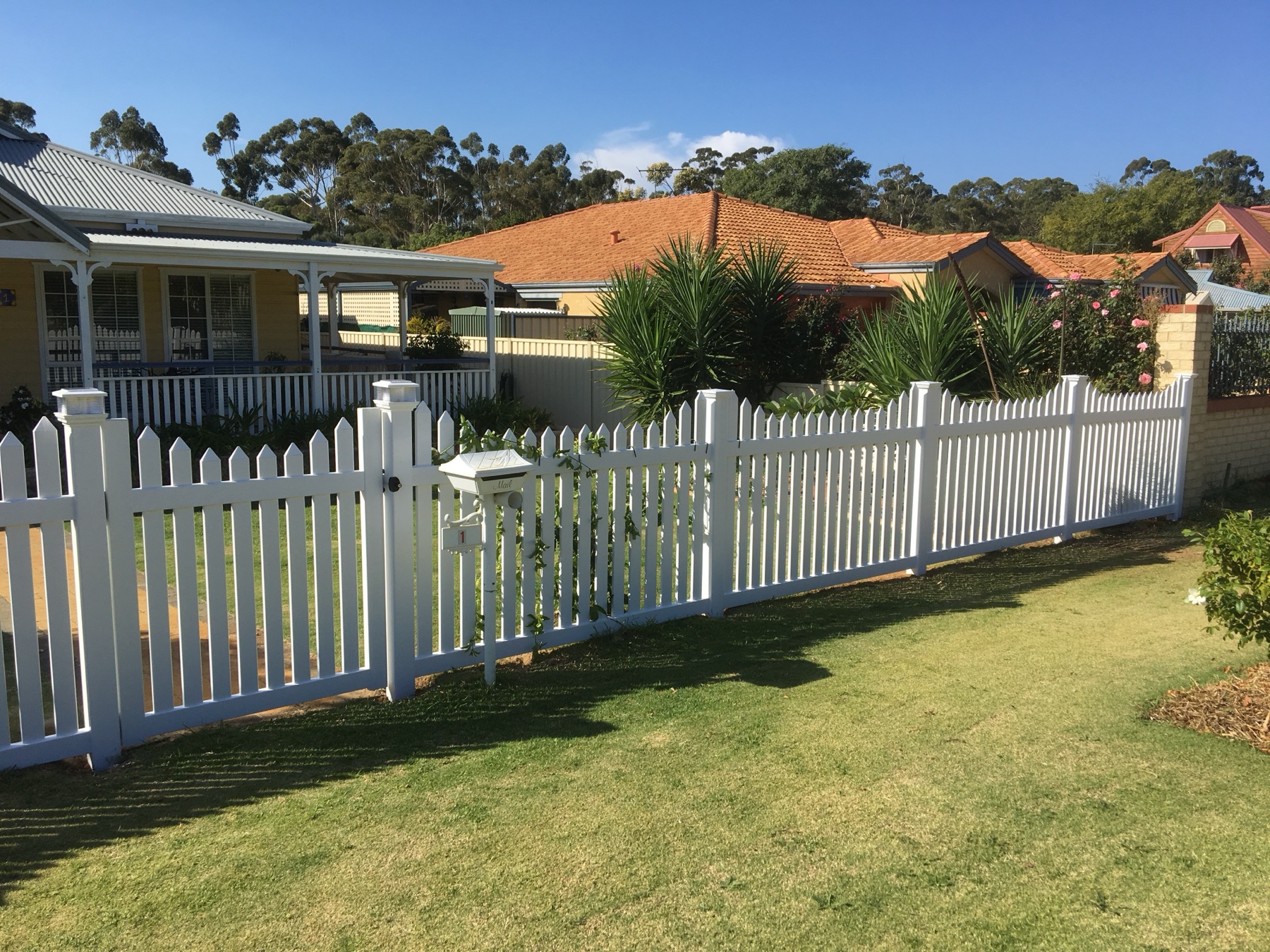
Claremont is a straightforward council to work with for most fencing jobs, but the front fence rules have a few details worth knowing before you quote or start building. The Town updated its Fencing Local Law in 2024, and one thing that stands out is that PVC panel fencing is explicitly listed as an approved material for residential dividing fences – it's right there in Schedule 2. Planning a new fence in Claremont? This guide covers the rules for the Town of Claremont, including the Swanbourne side that falls under their jurisdiction.
We've pulled this from the Town of Claremont Fencing Local Law 2024, Local Planning Policy 117 (Front Fences), Local Planning Policy 124 (Heritage), and the WA Residential Design Codes (R-Codes). It was current as at March 2026, but council rules do get updated – always confirm with the Town's planning team before you start work.
Quick reference: In standard residential areas, your front fence can be up to 1.2 metres without council approval, provided more than 50% of it is visually permeable (gaps that allow a line of sight through the fence). Side and rear fences can go to 1.8 metres. PVC panel is one of the approved materials listed by name in the local law.
Front Fence Rules – The Basics
These apply across the Town of Claremont on standard residential lots (outside heritage areas).
Under Local Planning Policy 117, a front fence up to 1.2 metres in height does not need council approval, provided it meets all of the following:
- No point of the fence is higher than 1.8 metres above the footpath
- More than 50% of the fence is visually permeable (open to allow views from the dwelling to the street)
- The fence is articulated both vertically and horizontally
- Piers do not exceed 2.1 metres in height, including capping
If the fence exceeds 1.2 metres or doesn't meet those requirements, you'll need a development application (DA).
What "visually permeable" actually means
The R-Codes definition applies here:
- If your gaps are 50mm or wider, at least one-third of the total fence surface needs to be open space.
- If your gaps are narrower than 50mm, at least half the total fence surface needs to be open.
A standard picket fence with evenly spaced pickets and gaps will meet these requirements comfortably. If you're using a slatted or louvre-style design with narrower gaps, check that the 50% open rule is met before you commit to the design.
Claremont's local policy is slightly stricter than some other councils – it specifies more than 50% permeable regardless of gap width. So even with wider gaps, aim for at least half the fence face being open to be safe.
Driveway sightlines
Where your fence is next to a driveway, it must be truncated (cut back at an angle) with a minimum dimension of 1,500mm, or the fence must be reduced in height to no more than 750mm. This is a safety requirement and the Town enforces it.
Corner lots
Where two streets intersect, a front fence above 750mm must be truncated with a minimum dimension of 6 metres. If the fence is next to an access road (under the Australian Road Hierarchy classification), the truncation drops to 3 metres. Within the front setback area (the area between your front boundary and the main building line) on the secondary street, the standard front fence rules apply for the first 6 metres back from the front boundary.
Beyond that 6-metre mark on the secondary street frontage, you can go to an average height of 1.8 metres and a maximum of 2.1 metres to provide privacy for open space within the lot – provided the solid section doesn't extend more than 75% of the frontage where private open space faces the street.
Just replacing a side or rear fence? Most backyard fence jobs in Claremont are straightforward – up to 1.8 metres, no approval needed. The section below covers it. The front fence and heritage rules further down only apply if your fence faces a street.
Front Fences on High-Traffic Streets
If your property faces a street identified as carrying high volumes of traffic (listed in Appendix XI of Local Planning Scheme No. 3), the Town will consider approving a solid front fence – which is a significant difference from the standard 50% permeability requirement.
To qualify, the fence needs to meet all of these:
- Articulated both vertically and horizontally
- Average height no more than 1.8 metres, maximum height no more than 2.1 metres
- Ornaments or lighting no more than 2.3 metres
- Set back a minimum of 0.5 metres from the front boundary, with landscaping provided and maintained to soften the fence from the street
This is worth knowing for contractors quoting properties on busier roads in the Claremont area. A solid PVC privacy fence up to 1.8 metres on a high-traffic street is something the Town will look at favourably, as long as you include the half-metre landscaping setback.
Side and Rear Fences
Away from the front of the property, the rules are more straightforward:
- Residential lots: maximum height of 1.8 metres, measured from the higher ground level.
- Non-residential lots: maximum height of 2.2 metres.
- Where a fence sits on the boundary between a residential and non-residential lot, the residential standard (1.8 metres) applies unless the Town approves otherwise.
- No development approval needed for standard dividing fences within these height limits, built from approved materials.
Panel systems (including PVC) need to have the lower supporting frame supplemented with a barrier below to prevent stormwater flow and sand drift into the neighbouring property. This is specifically mentioned in Schedule 2 of the local law.
Masonry fences (brick, block, stone, concrete) over 1.8 metres require structural engineer certification. And if the Building Surveyor requires it, any fence design may need to be certified by a structural engineer as being structurally suitable.
Gates
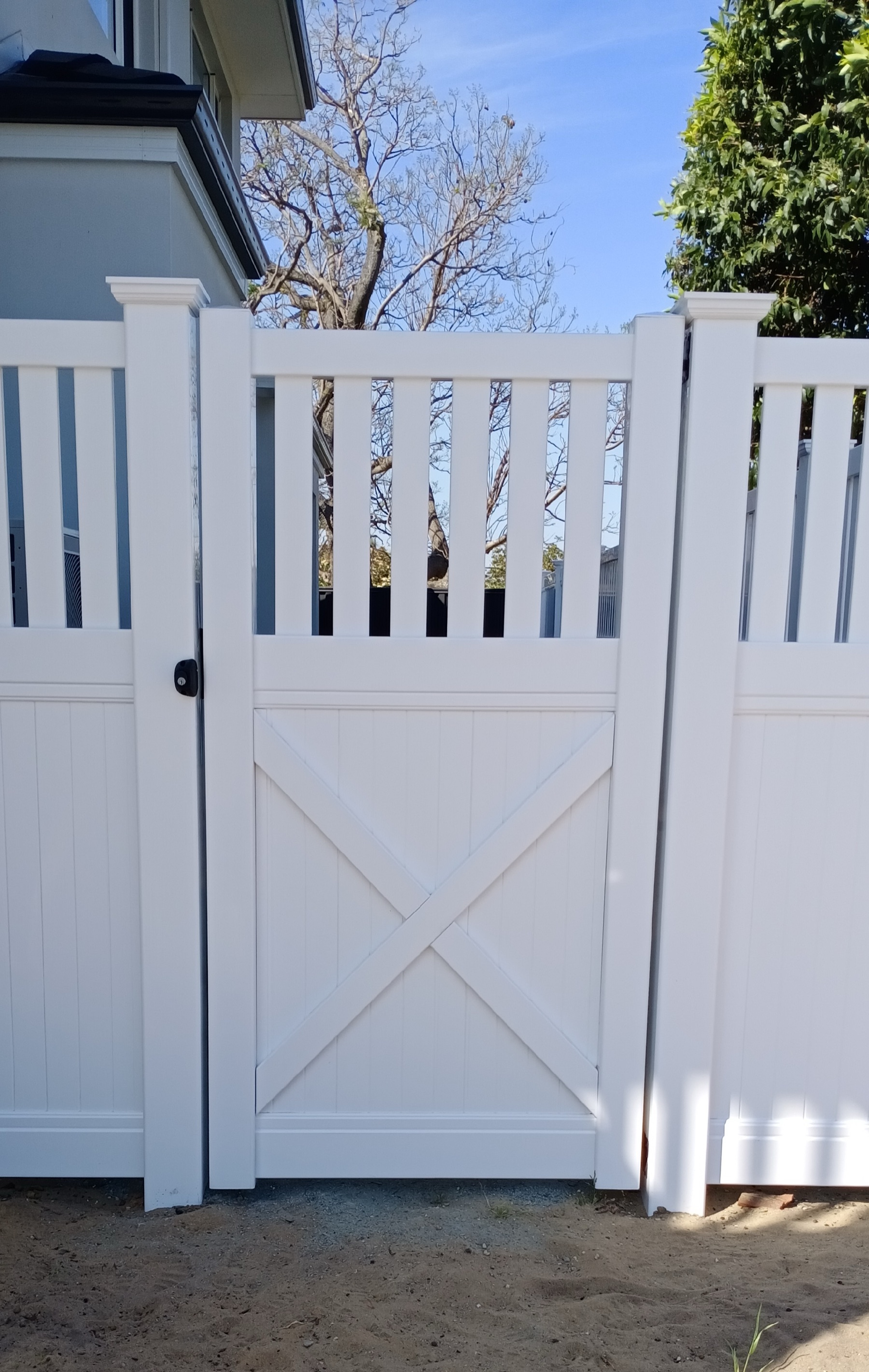
Gates must open into the lot, or slide parallel to and on the inside of the lot boundary. If you want a gate that opens outward – onto a footpath or verge – you need council approval. This applies to all gates, including sliding gates.
Heritage Areas
Claremont has two designated heritage areas, both governed by their own local planning policies:
- Bay View Terrace Heritage Area – land along Bay View Terrace between Gugeri Street and Stirling Highway (governed by LPP 208)
- Claremont Crescent Heritage Area – land along the northern side of Claremont Crescent between Franklin Street and Saladin Street (governed by LPP 209)
If your property is on the Heritage List or within either of these areas, the front fence rules are stricter:
- Original front fences and gates should be retained and conserved where possible.
- If the original fence can't be retained, the replacement must complement the style and materiality of the heritage place.
- The fence must be visually permeable above 1.2 metres to maintain views to the heritage place from the street.
- Where possible, the replacement should replicate a fence style consistent with the architectural style of the heritage period.
- Development approval is required for all front fence work on heritage-listed properties.
The Town may require a Heritage Assessment, photographs of the existing front elevation, a street elevation showing the proposed fence alongside adjoining lots, and a schedule of proposed external colours and finishes. It's more paperwork than a standard fence job, so factor that into your quoting.
Mike Balfe Heritage Maintenance Grants
Heritage property owners in Claremont can apply for the Mike Balfe Heritage Maintenance Grants, which are available for qualified conservation work. If you're replacing a heritage front fence with an appropriate style, it's worth asking the Town whether the grant applies.

Pool Fencing
Pool barriers in Claremont follow the statewide rules under the Building Act 2011 and Australian Standard AS 1926.1:
- Minimum barrier height: 1.2 metres, measured from the outside ground level
- Maximum gap under the fence: 100mm from finished ground to the bottom of the fence
- Maximum gap between vertical bars or panels: less than 100mm
- Non-climbable zone: 900mm on the outside of the pool fence, free of climbable objects (garden beds, furniture, pot plants, trees)
- Gate: self-closing, self-latching, must open outward (away from the pool)
- Gate latch height: at least 1,500mm above ground level (or shielded if lower)
- A building permit is required before installing a pool or spa
- A "pool" includes any structure with water deeper than 300mm – including portable and blow-up pools
PVC pool fencing can comply with AS 1926.1 requirements provided it meets the height, gap, and non-climbable zone specifications. The Town has the power to conduct pool barrier inspections to ensure compliance, and pool owners are required to maintain their barriers in good working order at all times.
When Do You Need Planning Approval?
You don't need a DA for:
- Front fences up to 1.2 metres that meet the permeability, articulation, and pier height requirements in LPP 117
- Side and rear boundary fences up to 1.8 metres on residential lots, built from approved materials
- Side and rear boundary fences up to 2.2 metres on non-residential lots, built from approved materials
You do need a DA for:
- Front fences exceeding 1.2 metres in height
- Front fences that don't meet the visual permeability requirements
- Front fences on heritage-listed properties or within a heritage area
- Solid front fences on high-traffic streets (even though the Town will consider these favourably, approval is still required)
- Fences abutting Regional Open Space or Public Open Space reserves
- Fences that exceed the maximum heights for side/rear boundaries
- Fences using materials not listed in the approved schedules
- Fences using pre-used (second-hand) materials
Applications are lodged with the Town of Claremont Planning Department. Fees are set in accordance with the Town's current fee schedule. If works are not completed within two years of the approval date, the approval lapses and you'll need to reapply.
Materials – PVC Is Explicitly Approved
This is the detail that matters most for PVC fencing in Claremont. The Town's Fencing Local Law 2024 specifically lists approved materials for residential dividing fences in Schedule 2:
- Corrugated fibre-reinforced pressed cement sheeting
- Timber palings
- Masonry (brick, stone, concrete)
- Factory coloured sheet metal post and panelled fence
- PVC panel (e.g. Duralock)
- Any combination of the above
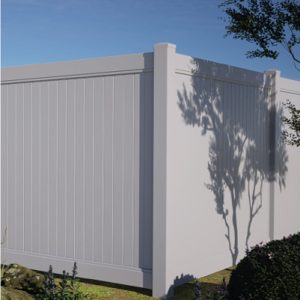
PVC panel fencing is named right there alongside timber, Colorbond, and masonry as one of the approved materials. For contractors, this means there's no ambiguity when a customer or neighbour asks whether PVC is allowed – the local law says it is.
Why this matters: Not every council in Perth explicitly names PVC as an approved fencing material in their local law. Claremont does. If you're quoting a job in the Town of Claremont and a neighbour raises a question about whether PVC is an acceptable dividing fence material, you can point them directly to Schedule 2 of the Fencing Local Law 2024.
Prohibited materials
The following are specifically banned:
- Broken glass or any potentially harmful projections
- Asbestos fibre
- Any material likely to collapse or fall
- Razor wire
- Barbed wire and electric fences (in residential areas)
Pre-used (second-hand) fencing materials cannot be used without council approval. If approved, the Town may require the material to be painted or treated.
The Coastal Angle
Claremont sits along the river rather than the ocean, but the Swan River foreshore and the proximity to the coast means properties still get regular salt air exposure – particularly in Swanbourne, which is right on the coast. The sea breeze that comes through every afternoon in summer carries salt from the Indian Ocean across the western suburbs, and Claremont is right in its path.
PVC handles these conditions well. It doesn't rust, it doesn't corrode, and there's no coating to scratch through. Colorbond in areas with salt air exposure will eventually show rust spots where the coating is damaged – near the coast, that can happen within a few years. Timber in salt air needs regular treatment and still deteriorates.

For a suburb like Swanbourne where the ocean is a few hundred metres away, or for riverside properties in Claremont that get the daily sea breeze, PVC is a practical choice that won't need replacing or recoating down the track.
A Note on Swanbourne
Swanbourne is split between two local government areas. The western and northern portion falls within the Town of Claremont, while the eastern and southern portion falls within the City of Nedlands. If you're working on a property in Swanbourne, you need to confirm which council the property falls under before applying any fencing rules – the regulations are different between the two councils.
The Town of Claremont's website states it is "the local government authority for the beautiful, leafy, riverside suburbs of Claremont and Swanbourne." But if the property is on the Nedlands side, you'll need to check the City of Nedlands fencing requirements instead.
For contractors, this is worth confirming at the start of the quoting process. A quick check of the property address on the relevant council's website or a phone call to either council will sort it out in a few minutes.
What This Means for PVC Fencing in Claremont
Here's a quick summary of how the rules above translate to actual product choices for Claremont properties:
Front fences (standard areas):
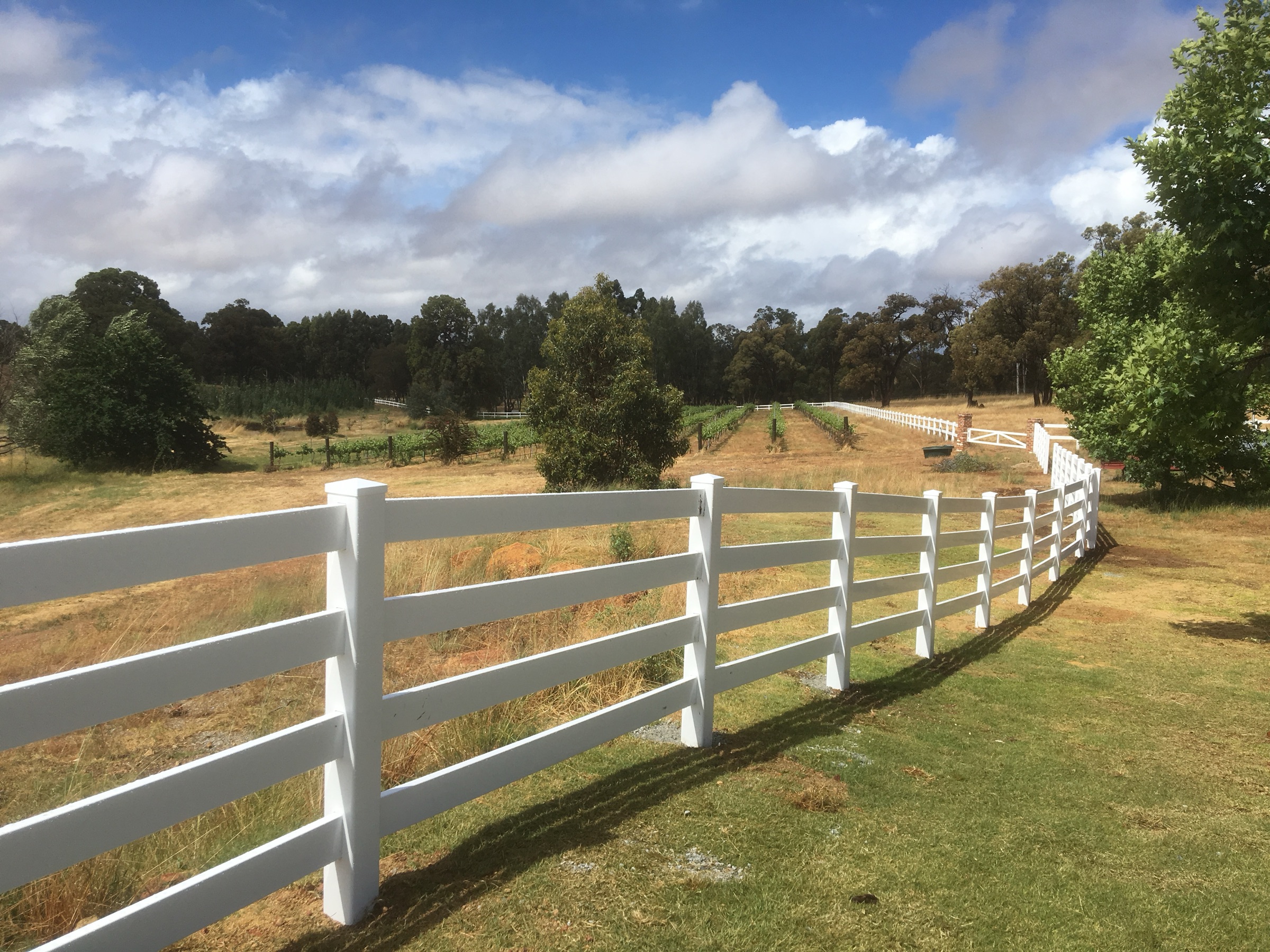
PVC picket fencing is the natural choice for front fences in Claremont, where more than 50% of the fence needs to be visually permeable. Federation, Colonial, Hampton, and Modern picket styles all meet the permeability requirements comfortably. The solid base can go up to 1.2 metres without approval, with picket above to the full 1.8 metres.
Front fences (heritage areas):
The fence must be visually permeable above 1.2 metres and complement the heritage character. PVC picket styles that suit the architectural period of the heritage place work well here – Colonial and Federation picket are popular choices for Claremont's character homes.
Front fences (high-traffic streets):
Solid PVC privacy fencing up to 1.8 metres is something the Town will consider on designated high-traffic streets, provided the fence is set back 0.5 metres from the boundary with landscaping in front. This is one of the few situations where a solid front fence is an option in Claremont.
Side and rear fences:
PVC privacy fencing up to 1.8 metres on residential lots – no DA needed, and PVC is one of the explicitly approved materials. Hampton's Privacy and Hampton's Semi Privacy are the go-to options here. On non-residential lot boundaries, the height limit increases to 2.2 metres.
Pool surrounds:
PVC is a practical material for pool barriers. It meets the minimum 1.2 metre height requirement and handles pool chemicals (chlorine, salt) without corroding or staining the way metal fencing can.
For Probuild trade partners: If you're quoting a job in Claremont and need to check product specifications against the permeability requirements or want to confirm which profiles work best for a heritage property, give us a call. We can help you match the right product to the council's requirements.
Before You Quote – Checklist for Contractors
- Check if the property is heritage-listed. Use the Town's heritage places page or call the planning team. If it is, you'll need a DA for any front fence work.
- Check which heritage area it's in. Bay View Terrace and Claremont Crescent each have their own local planning policies (LPP 208 and LPP 209).
- Confirm it's actually Claremont. If the job is in Swanbourne, check whether the property falls under the Town of Claremont or the City of Nedlands – the rules are different.
- Check if it's a high-traffic street. Properties on streets listed in Appendix XI of Local Planning Scheme No. 3 may qualify for a solid front fence with the 0.5 metre landscaping setback.
- Measure for permeability. Front fences need more than 50% visually permeable – know the gap widths and surface area ratios before you specify a product.
- Factor in the DA. If approval is needed, add the application fee and processing time to the job. Let the customer know upfront. Approvals lapse after two years.
- Check for the stormwater barrier. PVC panel systems in Claremont need a barrier below the lower supporting frame to prevent stormwater and sand drift. Factor this into your installation.
- Confirm with the council. If there's any doubt, call the Town of Claremont on (08) 9285 4300. A quick call can save you a rejected application.
Before You Start – Checklist for Homeowners
- Work out if your property is heritage-listed by checking the Town's heritage places page or calling the planning team.
- Know your front fence limits – up to 1.2 metres without approval, provided more than 50% is visually permeable. In heritage areas, the fence must complement the heritage character and be permeable above 1.2 metres.
- For side and rear fences, you can generally go up to 1.8 metres without any approval, as long as you use approved materials. PVC panel is one of the materials listed by name in the local law.
- If you're in Swanbourne, check whether your property falls under the Town of Claremont or the City of Nedlands before you start planning.
- Talk to your neighbours before you start, especially for boundary fences. Under the Dividing Fences Act, you generally share the cost equally for a "sufficient fence" – which in Claremont is a fence built to the Schedule 2 standard (up to 1.8 metres, from approved materials including PVC).
- If you want an installer who knows the product, we can connect you with an experienced local contractor who works with PVC fencing regularly. Give us a call or organise an installer through the website.
Need a hand? If you're planning a fence in Claremont and want to talk through your options, give us a call. We can help you work out what style and height suits your property, and if you need an installer, we'll connect you with someone who knows the product inside out.
Contact the Town of Claremont
| General enquiries | (08) 9285 4300 |
| toc@claremont.wa.gov.au | |
| Address | 308 Stirling Highway, Claremont WA 6010 |
| Post | PO Box 54, Claremont WA 6910 |
| Office hours | Monday – Friday, 8:30am – 5:00pm |
| Website | claremont.wa.gov.au |
| Heritage places | Heritage listings |
| Planning & building | Planning page |
This guide is based on the Town of Claremont Fencing Local Law 2024, Local Planning Policy 117 (Front Fences), Local Planning Policy 124 (Heritage), and the WA Residential Design Codes as at March 2026. Council rules can change – always confirm with the Town's planning team before you start work. Probuild PVC Fencing is not a planning authority and this is general guidance only.