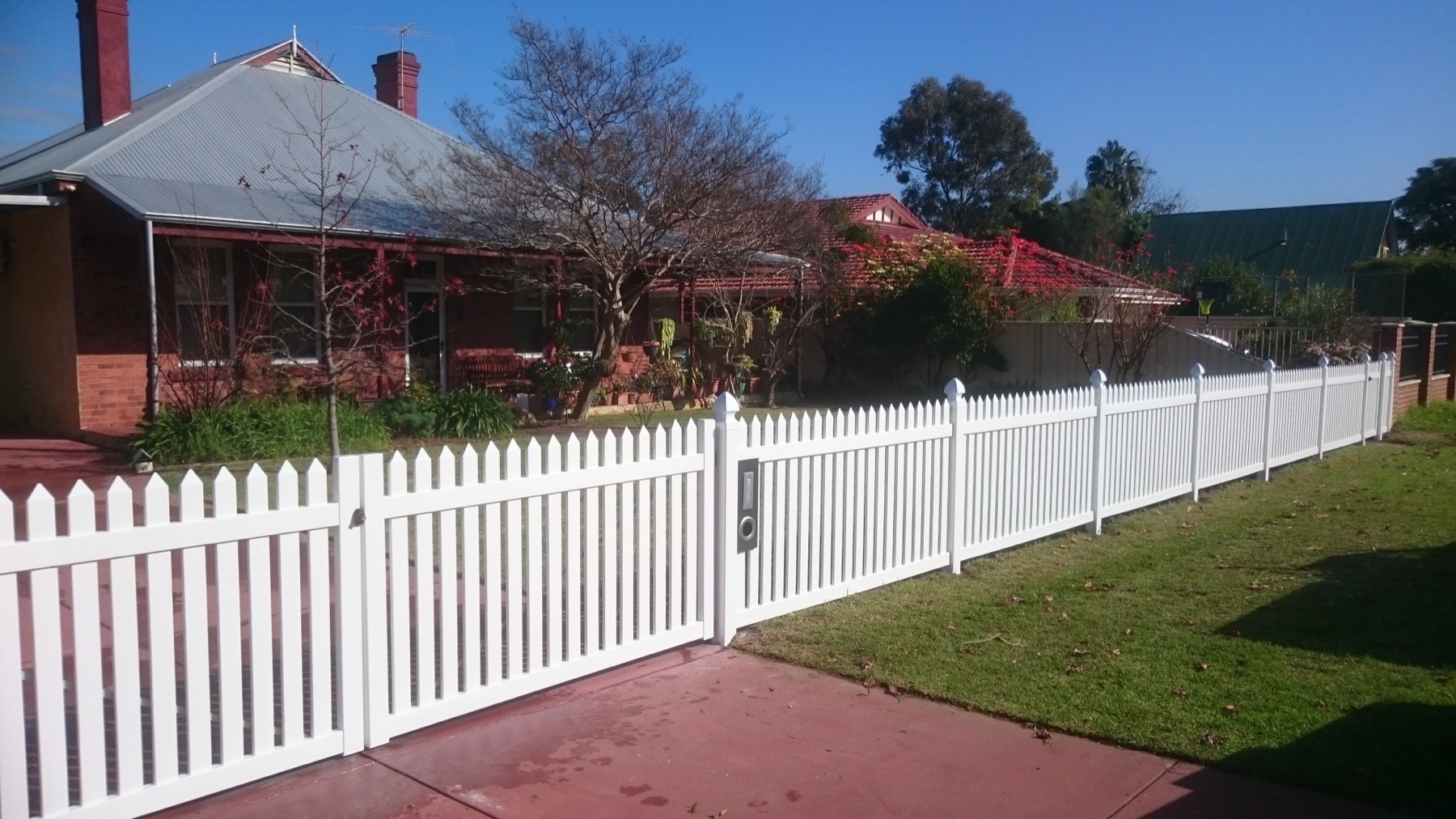
Cottesloe is a small council area, but the fencing rules aren't as simple as you'd expect. The Town has its own Fencing Local Law from 2001, a significant number of heritage-listed properties, and the R-Codes sitting over the top of it all. Here is what the Town of Cottesloe requires for residential fencing — from Marine Parade through to Broome Street. This guide covers what you need to know before you start work.
We've also included Peppermint Grove at the end — it's a separate shire with its own rules, but most people think of it as part of the same area, so it makes sense to cover both.
This is based on the Town of Cottesloe's Fencing Local Law 2001, Local Planning Scheme No. 3, and the WA Residential Design Codes (R-Codes). It was current as at March 2026, but council rules do get updated — always confirm with the Town's planning team before you start work.
Quick reference: In standard residential areas, your front fence can be solid up to 1.2 metres. The Fencing Local Law requires an "open aspect" between 900mm and 1.8 metres. Above 1.2 metres, it has to be visually permeable under the R-Codes. Heritage properties need development approval for any fencing work — and Cottesloe has 430 heritage-surveyed places. (Visually permeable means gaps that allow a line of sight through the fence.)
Front Fence Rules — The Basics
Front fences in Cottesloe are governed by both the Fencing Local Law 2001 and the WA Residential Design Codes (R-Codes, Clause 5.2.4). The two work together — the R-Codes set the standard height and permeability limits, and the local law adds Cottesloe-specific requirements including the "open aspect" rule.
Solid fencing can go up to 1.2 metres above natural ground level on the street side. Above that, the fence has to be visually permeable — meaning it needs gaps that allow a clear line of sight through the fence.
Total height for a front fence is 1.8 metres, including the permeable section. Piers can also go up to 1.8 metres, but they're limited to 400mm x 400mm in size.
The "open aspect" rule
Cottesloe's Fencing Local Law adds its own requirement on top of the R-Codes. Between 900mm and 1.8 metres above natural ground level, a front fence must be of "open aspect" — that means it has to allow visibility through it. You can't run a solid panel in that zone.
In practice, the R-Codes visual permeability requirement (which kicks in at 1.2 metres) and the local law's open aspect rule (which kicks in at 900mm) overlap. The local law is stricter, so that's the one to work to.
What "visually permeable" means
The R-Codes definition is the one the Town uses when assessing compliance:
- If your gaps are 50mm or wider, at least one-third of the total fence surface needs to be open space.
- If your gaps are narrower than 50mm, at least half the total fence surface needs to be open.
A standard picket fence with evenly spaced pickets and gaps will comfortably meet these requirements. If you're using a slatted or louvre-style design with narrower gaps, you'll need to check that the 50% open rule is met.
For contractors: measure the gaps and calculate the total surface area ratio before you quote. Getting this wrong means a rejected application or a fence that has to come down.
Driveway sightlines
Within 1.5 metres of where your driveway meets the street, the fence can't be higher than 750mm. The same applies where a right-of-way or street intersection meets the boundary. One pier up to 1.8 metres is allowed in that zone, but it can't exceed 350mm x 350mm.
Corner lots
On corner lots, the secondary street frontage is treated as a front fence for height and permeability purposes within the secondary street setback area. Within 1.5 metres of a street intersection, the fence can't exceed 750mm — the same sightline rules apply as for driveways.
Just replacing a side or rear fence? Most backyard fence jobs in Cottesloe are straightforward — up to 1.8 metres, no approval needed. The section below covers it. The front fence and heritage rules further down only apply if your fence faces a street.
Side and Rear Fences
Away from the front of the property, the rules are more straightforward:
- Maximum height: 1.8 metres above natural ground level.
- No development approval needed for standard boundary fences up to 1.8 metres behind the front setback line (the area between your front boundary and the main building line).
- PVC, timber, Colorbond, and fibre cement fences up to 1.8 metres generally don't need a building permit either.
- Masonry fences (brick, block, stone) need a building permit once they go above 750mm.
- Fences above 1.8 metres need local government approval and neighbour agreement.
If the fence sits on top of a retaining wall, the combined height is measured together. As a general rule, the total combined height shouldn't exceed 1.8 metres above natural ground level on the higher side. Where it does — for example, a 600mm retaining wall plus a 1.8 metre fence giving you 2.4 metres from the lower side — development approval and a building permit may both be required. Retaining walls above 500mm need a building permit in their own right.
Heritage Areas — And Cottesloe Has Plenty
Heritage is a big factor in Cottesloe. The Town has 430 places on its Local Heritage Survey and 27 places on the State Register of Heritage Places. The dominant architectural style is Federation — the Australian version of Edwardian — and the Town takes the character of those streetscapes seriously.
Unlike some councils that designate broad heritage precincts, Cottesloe's heritage listing is property-specific. That means you need to check whether the individual property is on the Heritage List or State Register before planning any fencing work. Don't assume that because the house next door needed approval, yours will too — or that it won't.
Heritage categories and what they mean for fencing
| Category | What it means | Fencing implications |
|---|---|---|
| State Register of Heritage Places (27 places) | Protected under the Heritage Act 2018 — Heritage Council approval required | Development approval needed from both the Town and the Heritage Council of WA |
| Heritage List (LPS 3) | Protected under the Local Planning Scheme — development approval required | Development approval needed from the Town for most works, including fencing |
| Local Heritage Survey only (remainder of 430) | No direct legal protection, but informs planning decisions | No additional fencing requirements, though the survey may be considered in DA assessments |
What the Town expects on heritage properties
For properties on the Heritage List or State Register, fencing has to be sympathetic to the heritage character of the property and streetscape. For Federation-era properties, that typically means:
- Low, open-style front fences that allow the house to be visible from the street
- Picket fencing is generally preferred — timber or iron picket traditionally, though PVC picket in a sympathetic style, proportion, and colour may be acceptable
- Colours and materials consistent with the era of the dwelling
- A Heritage Impact Statement may be required as part of the development application
If you're considering PVC picket fencing on a heritage property in Cottesloe, talk to the Town's planning department before lodging an application. Federation, Colonial, and Hampton picket styles are worth discussing — they suit the character of the area and the proportions are right for what the Town typically approves.
Key heritage streets
Heritage character is spread across Cottesloe, but some streets have a particularly high concentration:
- Broome Street — the Town's main administrative street, including the Civic Centre
- Forrest Street — significant heritage streetscape
- Marine Parade — the beachfront, including the Beach Hotel and Beach Precinct
- Jarrad Street — includes John Curtin's House and the Sea View Golf Course
- John Street — near Cottesloe Beach, including Pine Lodge
- Rosendo Street, Barsden Street, Salvado Street — several significant heritage residences
- Napier Street — St Philip's Anglican Church
Pool Fencing
Pool barriers in Cottesloe follow the statewide rules under the Building Act 2011 and Australian Standard AS 1926.1:
- Minimum barrier height: 1.2 metres from finished ground level on the outside of the pool area
- Maximum gap: less than 100mm between vertical members and under the barrier
- Non-climbable zone: 900mm on the outside of the barrier, free of climbable objects (garden beds, furniture, pot plants, trees)
- Gate: must open outward (away from the pool area), be self-closing from any open position, and self-latching with the latch at least 1.5 metres above ground
- A building permit is always required before installing a pool or spa
- The Town inspects pool barriers at least once every four years
- Penalties for non-compliance can reach $5,000, and a Building Order may be issued
- A "pool" includes any structure with water deeper than 300mm — including portable and blow-up pools
PVC pool fencing is an accepted material, provided it meets AS 1926.1 in full. The gaps between pickets must be less than 100mm, and the fence can't have any footholds or handholds that could assist climbing within the non-climbable zone.
When Do You Need Planning Approval?
You don't need a development application (DA) for:
- Side and rear boundary fences up to 1.8 metres (non-masonry, behind the front setback line)
- Front fences where the solid portion is up to 1.2 metres, the rest is visually permeable, total height is up to 1.8 metres, and driveway sightlines are met
You do need a DA for:
- Front fences where the solid portion exceeds 1.2 metres
- Fences exceeding 750mm within 1.5 metres of a driveway, right-of-way, or street intersection
- Fences on Heritage List properties
- Fences on State Register properties (Town DA plus Heritage Council approval)
- Any fence that doesn't meet the standard R-Codes height and permeability limits
If a DA is required for a fence that exceeds the standard height or permeability limits, you'll need to submit a cover letter with the application explaining why the variation should be approved, supported by the R-Codes design principles.
DA fee for fences: $147 (set by state regulations for works under $50,000).
Processing time: The statutory timeframe is 60 days (90 days if advertising is required). Simple fence DAs are typically processed within four to six weeks.
Materials
The Town of Cottesloe's Fencing Local Law 2001 follows the standard WA fencing local law template. A "sufficient fence" on a residential lot is typically one of the following: timber, corrugated fibre-reinforced cement or steel sheet (Colorbond), brick, stone, or masonry.
PVC isn't specifically named in the 2001-era local law template, but it's not prohibited either. Modern PVC fencing that meets the height, structural, and visual permeability requirements will generally be accepted. For dividing fences, a PVC fence agreed upon by both neighbours that complies with the local law is a sufficient fence.
In heritage areas, the Town expects materials to be sympathetic to the heritage character of the property. PVC picket fencing in an appropriate style and colour is worth discussing with the planning department — it can suit Federation-era streetscapes when the proportions are right.
Materials that are prohibited in residential areas include barbed wire, razor wire, electrified fencing, and anything the Town considers dangerous, unsightly, or not fit for purpose.
Because PVC fencing up to 1.8 metres doesn't require a building permit, contractors can get started sooner than they could with masonry, which needs a permit at just 750mm.
The Coastal Angle
Cottesloe sits directly on the Indian Ocean. Every property in the Town is within a couple of kilometres of the water, and most are within a kilometre. The sea breeze comes through daily, carrying salt spray that affects every fence, gate, and outdoor structure in the area.
PVC handles these conditions well. It doesn't rust, it doesn't corrode, and there's no coating to scratch through or repaint. Colorbond in coastal areas will eventually show rust spots where the coating is damaged — and that close to the ocean, it can happen within a few years. Timber in salt air needs regular treatment and still deteriorates over time.
For a suburb where the ocean is the main feature, choosing a fencing material that won't be affected by salt air is a practical decision that saves money and maintenance over the life of the fence.
What This Means for PVC Fencing in Cottesloe
Here's how the rules above translate to actual product choices for Cottesloe properties:
Front fences (standard areas):
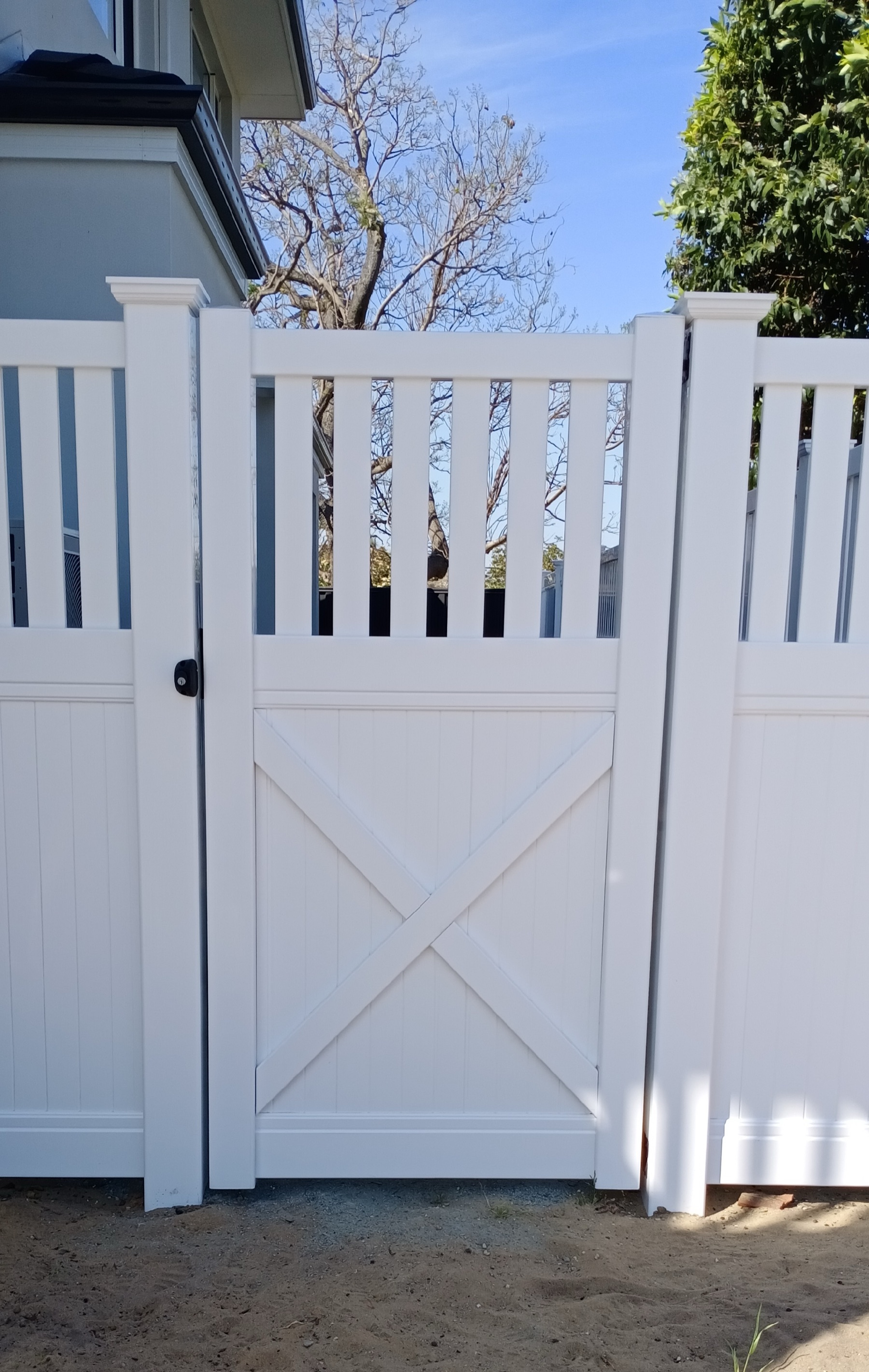
PVC privacy fencing works up to 1.2 metres for the solid base. Above that, PVC picket fencing meets the visual permeability and open aspect requirements and can take the fence to the full 1.8 metres. The combination of a solid base with picket above is a clean look that complies with both the Fencing Local Law and the R-Codes.
Front fences (heritage properties):
PVC picket fencing in a Federation, Colonial, or Hampton style suits the character of Cottesloe's older properties and meets the permeability rules. Talk to the Town's planning department before lodging an application — they'll want to see that the style, proportions, and colour are sympathetic to the heritage character.
Side and rear fences:
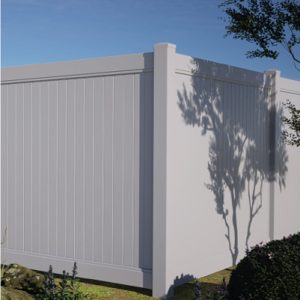
PVC privacy fencing up to 1.8 metres — no DA needed, no building permit needed. This is where most residential PVC fencing goes in Cottesloe.
Pool surrounds:
PVC is an accepted material for pool barriers. It meets the minimum 1.2 metre height requirement and handles pool chemicals (chlorine, salt) without corroding or staining the way metal fencing can.
For Probuild trade partners: If you're quoting a job in Cottesloe and need to check product specifications against permeability requirements, give us a call. We can confirm which profiles meet the gap and surface area ratios for the front setback zone.
Before You Quote — Checklist for Contractors
- Check if the property is heritage-listed. Cottesloe's heritage listing is property-specific, not precinct-based. Contact the Town's planning department or check their website for the Heritage List. If the property is listed, you'll need a DA for any fencing work.
- Check whether it's Heritage List or State Register. State Register properties need approval from both the Town and the Heritage Council of WA — that's a longer process.
- Measure for permeability. The Fencing Local Law requires open aspect above 900mm, and the R-Codes require visual permeability above 1.2 metres. Know the gap widths and surface area ratios before you specify a product.
- Check driveway sightlines. Within 1.5 metres of the driveway, the fence can't exceed 750mm. Factor this into the design.
- Factor in the DA. If approval is needed, add $147 and four to six weeks of processing time to the job. Let the customer know upfront.
- Check for retaining walls. Combined height rules apply. Retaining walls over 500mm need a building permit and may need a structural engineer.
- Confirm with the council. If there's any doubt, call the Town on (08) 9285 5000 during office hours (8:30am – 4:30pm, Monday to Friday). It takes five minutes and can save you a rejected application.
Before You Start — Checklist for Homeowners
- Work out if your property is heritage-listed by checking the Town's heritage page or calling the planning team on (08) 9285 5000.
- Know your front fence limits — 1.2 metres solid in standard areas, with open aspect required above 900mm and visually permeable above 1.2 metres, up to 1.8 metres total.
- If you need a DA, the application fee is $147. You can submit by email to town@cottesloe.wa.gov.au or in person at 109 Broome Street, Cottesloe.
- For side and rear fences, you can generally go up to 1.8 metres without any approval (non-masonry materials).
- Talk to your neighbours before you start, especially for boundary fences. Under the Dividing Fences Act, you generally share the cost equally for a "sufficient fence" — which in Cottesloe is typically a 1.8 metre non-masonry fence.
- If you want an installer who knows the product, we can connect you with an experienced local contractor who works with PVC fencing regularly. Give us a call or organise an installer through the website.
Need a hand? If you're planning a fence in Cottesloe and want to talk through your options, give us a call. We can help you work out what style and height suits your property, and if you need an installer, we'll connect you with someone who knows the product inside out.
Contact the Town of Cottesloe
| General enquiries | (08) 9285 5000 |
| town@cottesloe.wa.gov.au | |
| Office hours | Monday – Friday, 8:30am – 4:30pm |
| DA submissions | Email to town@cottesloe.wa.gov.au or in person |
| Address | 109 Broome Street, Cottesloe WA 6011 |
| Heritage information | cottesloe.wa.gov.au — Heritage |
| Pool inspections | (08) 9285 5000 or town@cottesloe.wa.gov.au |
Bonus: Peppermint Grove (Shire of Peppermint Grove)
Peppermint Grove is a separate local government area — the Shire of Peppermint Grove — with its own fencing rules. It's a small shire, but the rules are worth knowing because they differ from Cottesloe's in a few important ways.
The Shire has its own Fencing Local Law (updated in 2021) and a specific Local Planning Policy for residential fences (LPP 12). Where the two overlap, the planning policy prevails for front fences within the primary street setback area.
Front fence rules
Front fences in Peppermint Grove can go higher than in most Perth councils:
| Element | Maximum height | Notes |
|---|---|---|
| Overall front fence height | 2.1 metres | Above mean natural ground level on the street side |
| Solid lower portion | 900mm | Maximum height for the non-permeable base |
| Above 900mm | Must be visually permeable | Open aspect consistent with "Garden Shire" character |
The 2.1 metre total height is more generous than Cottesloe's 1.8 metres, but the solid base is capped at 900mm (compared to Cottesloe's 1.2 metres). The Shire puts a strong emphasis on maintaining the "Garden Shire" character — they want houses to be visible from the street, with established gardens and open streetscapes.
Where the front fence exceeds 1.2 metres, the Fencing Local Law requires the fence on each side of the driveway to be angled into the lot for at least 1.5 metres — a driveway truncation requirement. Factor this into your design.
Fences exceeding 1.8 metres in height need structural certification to Australian Standards and the Building Code.
Side and rear fences
Standard sufficient fence height is 1.8 metres, the same as Cottesloe. Dividing fence disputes are handled under the Dividing Fences Act — the Shire has no jurisdiction over them.
Heritage
Peppermint Grove has extensive heritage character for such a small shire — 179 heritage-listed places and seven on the State Register. Front fencing on heritage properties should be of a "complementary design, scale and material" to the heritage place, and development approval is required. A heritage report may be required where the works would affect the heritage values of the property.
Pool fencing
The same statewide requirements apply — AS 1926.1, Building Act 2011, Building Regulations 2012. No additional local requirements beyond the state and national standards.
What this means for PVC in Peppermint Grove
The 900mm solid base plus permeable section to 2.1 metres makes PVC a good fit. You can run PVC privacy fencing for the bottom 900mm and transition to PVC picket above that, giving you a tall front fence that meets the Garden Shire character requirements. For side and rear boundaries, PVC privacy fencing up to 1.8 metres works as it does across most of Perth.
On heritage properties, PVC picket in Federation or Colonial styles is worth discussing with the Shire's planning department — the proportions suit the established character of the area.
Contact the Shire of Peppermint Grove
| Phone | (08) 9286 8600 |
| admin@peppermintgrove.wa.gov.au | |
| Address | 1 Leake Street, Peppermint Grove WA 6011 |
| Fencing information | peppermintgrove.wa.gov.au — Fencing |
This guide is based on the Town of Cottesloe's Fencing Local Law 2001, Local Planning Scheme No. 3, and the WA Residential Design Codes, along with the Shire of Peppermint Grove's Fencing Local Law 2021 and Local Planning Policy 12, as at March 2026. Council rules can change — always confirm with the relevant planning team before you start work. Probuild PVC Fencing is not a planning authority and this is general guidance only.