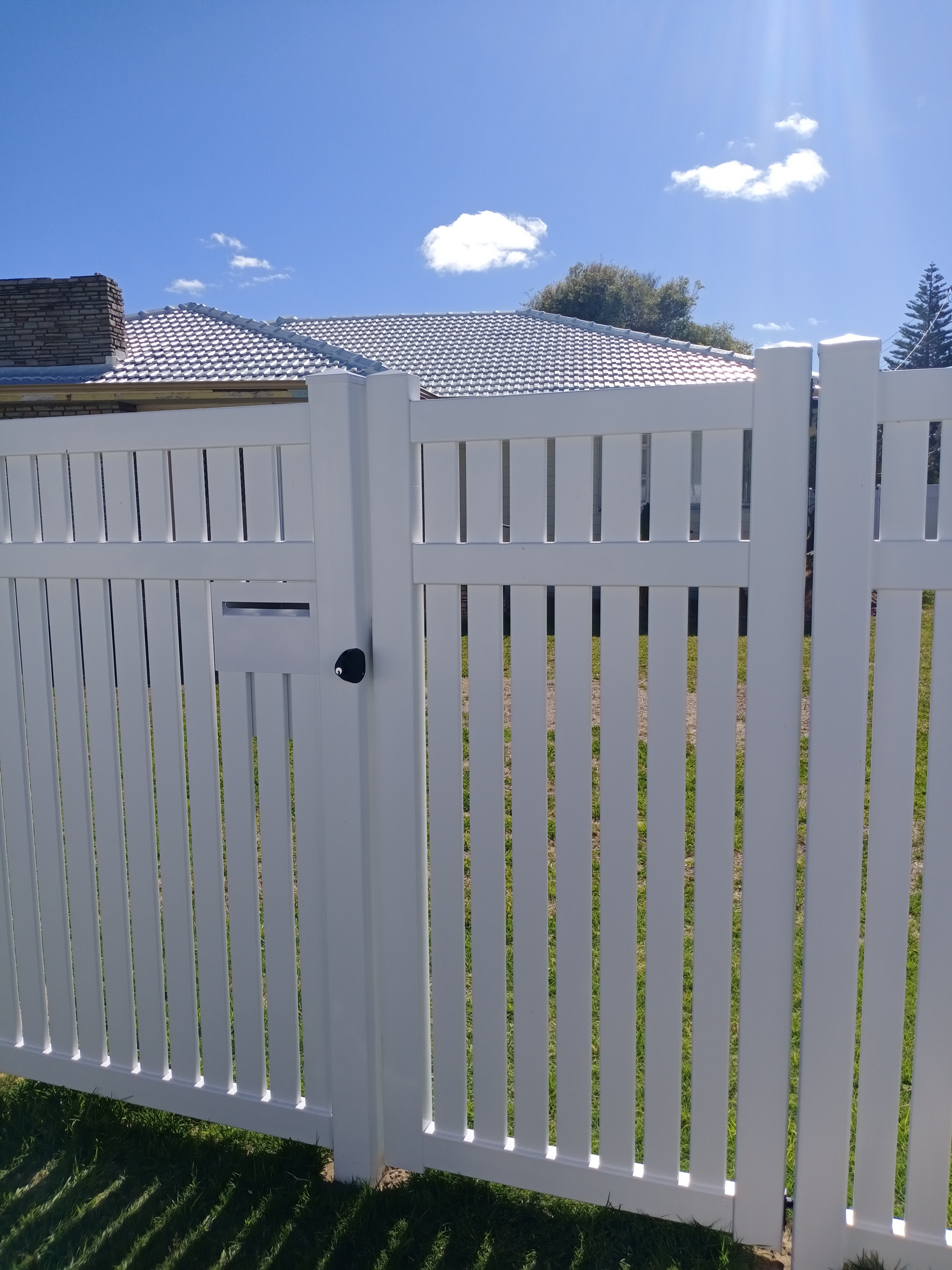
The Town of Cambridge is one of the stricter councils in Perth when it comes to front fences. Unlike most local governments that simply regulate what you can build, Cambridge actively prefers that you don't build a front fence at all. Their streetscape policy explicitly says the preferred outcome is no front wall or fence. If you are going to build one, it needs to be low and open. This guide covers how the rules work across the Town of Cambridge – City Beach, Floreat, Wembley, West Leederville, and Mount Claremont.
We've pulled this from the Town's Local Planning Policy 3.1 (Streetscape), Policy 2.1 (Exemptions), the Private Property Local Law 2016, and the Residential Design Codes (R-Codes). It was current as at March 2026, but council rules do get updated – always confirm with the Town's planning team before you start work.
Quick reference: Cambridge discourages front fences entirely and prefers open streetscapes. If you do build one, the general maximum is 1.2 metres, with strict open-to-solid ratios – up to 80% open for taller fences. Side and rear fences can go up to 2.5 metres without planning approval, which is notably generous compared to most Perth councils.
Front Fence Rules – Cambridge Prefers No Fence at All
This is the first thing to understand about fencing in Cambridge: the Town doesn't just regulate front fences, it actively discourages them. Local Planning Policy 3.1 states that "the preferred streetscape is one without front walls or fences" and that low, open styles give "the most desirable outcome." Many streets in City Beach and Floreat reflect this – open front yards, established gardens, and minimal fencing.
If you are building a front fence, the general maximum height is 1,200mm (1.2 metres) from natural ground level. With approval, a solid wall can go up to 2,000mm (2.0 metres), but the higher it goes, the more open it needs to be – and the open-to-solid ratios at that height are demanding.
Piers can go up to 1,800mm (1.8 metres), with maximum dimensions of 350mm x 350mm.
The landscaping requirement
A minimum of 60% of your front setback area (the area between your front boundary and the main building line) must be landscaped. This isn't a suggestion – it's a policy requirement that reinforces the Town's preference for green, open streetscapes. It limits how much of your front yard can be taken up by hardstand, paving, or fencing.
Open-to-Solid Ratios – The Sliding Scale
Cambridge uses a sliding scale for visual permeability: the higher you want your fence, the more open it has to be. This is the core principle that governs all front fencing in the Town.
| Fence height / type | Minimum open-to-solid ratio | What this means |
|---|---|---|
| Lower fences (up to ~1.2 m) with pickets | 1:2 | At least 33% of the fence surface must be open |
| Higher fences / more open designs | 4:1 | At least 80% of the fence surface must be open |
That 80% open requirement for taller fences is much stricter than what you'll find in most Perth councils. In practical terms, it means a tall front fence in Cambridge has to be almost entirely see-through.
Picket and slat specifications
- Pickets: maximum 75mm width
- Railings or slats: maximum 50mm width and 15mm depth
These dimensions are specific to Cambridge – if you're used to quoting in other council areas, don't assume the same profiles will comply here. Check the widths against the spec before you commit to a product.
The R-Codes baseline
The state-wide R-Codes definition of "visually permeable" still applies as a baseline: continuous gaps of at least 50mm wide making up at least one-third of the fence face, or where gaps are narrower than 50mm, at least half the fence face. Cambridge's own open-to-solid ratios sit on top of this and are generally stricter.
Driveway sightlines
Within 1.5 metres of where your driveway meets the street, the solid portion of the fence can't be higher than 750mm. Piers within this zone can go to 1.8 metres provided they're no more than 350mm x 350mm. This is a safety requirement – drivers need to see pedestrians and other vehicles when backing out.
Corner lots
Where two streets meet, fences near the intersection need to be truncated (cut back at an angle) so drivers can see oncoming traffic. The standard R-Codes truncation provisions apply, and the Town will specify requirements if you submit a DA.
Combinations along the fence line
The policy allows different design treatments along different sections of the same fence. For example, you might have a short solid section for a meter box or letterbox, with the rest of the fence open. This is worth knowing when you're planning the layout – you don't have to apply the same treatment across the entire frontage.
Just replacing a side or rear fence? Most backyard fence jobs in Cambridge are straightforward – up to 2.5 metres, no planning approval needed. The section below covers it. The front fence and permeability rules only apply if your fence faces a street.
Secondary Street Fences – City Beach and Floreat Are Stricter
If you're on a corner lot with a secondary street frontage, the rules depend on which suburb you're in.
Wembley and West Leederville
Boundary fences in the secondary street setback are exempt from planning approval provided the overall height doesn't exceed 1,800mm (1.8 metres). This is straightforward and similar to most other Perth councils.
City Beach and Floreat
Here's where it gets stricter. In City Beach and Floreat, boundary fences in the secondary street setback are exempt from planning approval provided the height doesn't exceed 1,800mm (1.8 metres) for a maximum of 60% of the fence length. The remaining 40% has to be lower or more open.
This means you can't run a solid 1.8 metre fence the full length of your secondary street boundary in City Beach or Floreat – at least 40% of it needs to step down or open up. For contractors, this affects how you quote and design the job, so factor it in early.
Side and Rear Fences
Behind the primary street setback, the rules are more generous than most of Perth:
- Maximum height: 2,500mm (2.5 metres) from natural ground level – no planning approval needed.
- This is measured as the overall height, including any retaining wall or attached privacy screen.
- Building permit required for any fence over 1,800mm regardless of material, and for masonry fences over 500mm.
That 2.5 metre allowance is notably generous. Most Perth councils cap side and rear fences at 1.8 metres without approval. If a client needs extra height for privacy or noise reduction, Cambridge gives you room to work with.
Fencing above retaining walls
Where a fence sits on top of a retaining wall, the combined height counts as the overall fence height. The fence portion above the retaining wall should be a maximum of 1,500mm (1.5 metres) and 50% visually permeable.
Sufficient fence standard
Under the Private Property Local Law 2016, a "sufficient fence" on a residential lot has to meet the specifications in Schedule 1 of the Local Law. Brick or block fences can't exceed 1,800mm unless the Town has approved a building permit. All fences have to be structurally sound and maintained in good condition.
Heritage Areas
Cambridge's heritage footprint is smaller than some inner-city councils, but it's still a factor. The Town has approximately 135 heritage-listed places, with 14 on the State Register of Heritage Places.
City Beach and Floreat have heritage significance tied to post-war residential development – the 1950s and 1960s modernist architecture that defines much of the area. Several individual properties have architectural significance, and the City Beach and Floreat Beach Precinct has coastal heritage value.
If your property is on the Heritage List or within a Heritage Area:
- Additional planning approval is required for any external changes, including fencing.
- Fencing should be sympathetic to the heritage character of the property and its surroundings.
- Contact the Town's planning department before you start any fence construction.
For most heritage properties in Cambridge, the emphasis will be on maintaining the open, landscaped character that the Town values – which aligns with the general front fencing policy anyway. Low, open fences or no fence at all will be the easiest path through the approval process.
Pool Fencing
Pool barriers in Cambridge follow the statewide rules under the Building Act 2011 and Australian Standard AS 1926.1:
- Minimum barrier height: 1,200mm (1.2 metres)
- Maximum gap under barrier: 100mm from finished ground level
- Maximum gap between vertical members: 100mm (a 105mm sphere must not pass through)
- Non-climbable zone: 900mm on the outside of the barrier – no horizontal rails, garden beds, pot plants, or furniture within this zone
- Gate: self-closing, self-latching, must open outward (away from pool)
- Gate latch height: minimum 1,500mm from ground level (or 1,200mm if on the pool side with shielding)
- A building permit is always required before constructing a pool or spa
- The safety barrier must be installed before the pool is filled with water
- The Town inspects pool barriers at maximum four-year intervals
- A "pool" includes any structure with water deeper than 300mm – including portable and blow-up pools
After construction, the builder named on the building permit has to submit a BA7 Notice of Completion within seven days. The Town will carry out an initial inspection within 30 days of becoming aware the pool is finished.
When Do You Need Planning Approval?
Because Cambridge actively discourages front fences and has specific streetscape requirements, most front fences will need a development application (DA). The Town treats front fence applications as minor in nature and may waive public consultation where the fence doesn't adversely affect streetscape amenity.
You don't need a DA for:
- Side and rear boundary fences up to 2,500mm (behind the primary street setback)
- Secondary street fences up to 1,800mm in Wembley and West Leederville
- Secondary street fences up to 1,800mm for a maximum of 60% of the fence length in City Beach and Floreat
You do need a DA for:
- Front fences that don't meet the standard height and permeability limits in the R-Codes as modified by LPP 3.1
- Front fences exceeding 1,200mm in the primary street setback
- Fences that don't meet the required open-to-solid ratios
- Fences on heritage-listed properties or within heritage areas
Building permit required (separately from a DA):
- Any fence over 1,800mm, regardless of material
- Any masonry fence (brick or block) over 500mm
DA fee: For a typical residential fence (estimated cost under $50,000), the fee is generally in the range of $147 to $295. Check with the Town for current fees as they're updated periodically.
How to apply: Contact the Town of Cambridge Planning Department on (08) 9347 6000 or email mail@cambridge.wa.gov.au to discuss your proposal. Application forms are available at 1 Bold Park Drive, Floreat, or on the Town's website.
Materials
The Town doesn't publish a closed list of approved materials. PVC, timber, Colorbond, brick, rendered masonry, aluminium, wrought iron, steel, and glass are all used across the council area.
For heritage properties, fencing materials should be sympathetic to the heritage character of the building and its surroundings. In most of Cambridge, the emphasis is on open, low-profile fencing – so the material matters less than the height and permeability.
Because PVC fencing up to 1,800mm doesn't require a building permit, contractors can get started sooner than they could with masonry, which needs a permit at just 500mm in Cambridge.
What's prohibited
Under the Private Property Local Law 2016, you can't affix broken glass, spiked projections, or jagged materials to any fence or wall. On residential lots, barbed wire is not allowed unless you've obtained prior written approval from the Town.
The Coastal Angle
City Beach and Floreat are right on the coast, and even Wembley, West Leederville, and Mount Claremont get consistent sea breeze exposure. Salt air affects fencing materials differently, and in coastal Cambridge it's a factor worth thinking about.
PVC handles coastal conditions well. It doesn't rust, it doesn't corrode, and there's no coating to scratch through. Colorbond in coastal areas will eventually show rust spots where the coating is damaged – near the ocean, that can happen within a few years. Timber in salt air needs regular treatment and still deteriorates over time.
For a suburb like City Beach where properties are within walking distance of the water, PVC is a practical choice that won't need replacing or recoating down the track.
What This Means for PVC Fencing in Cambridge
Here's how the rules above translate to actual product choices for Cambridge properties:
Front fences:
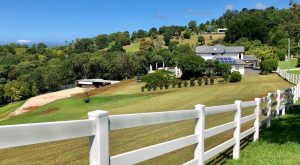
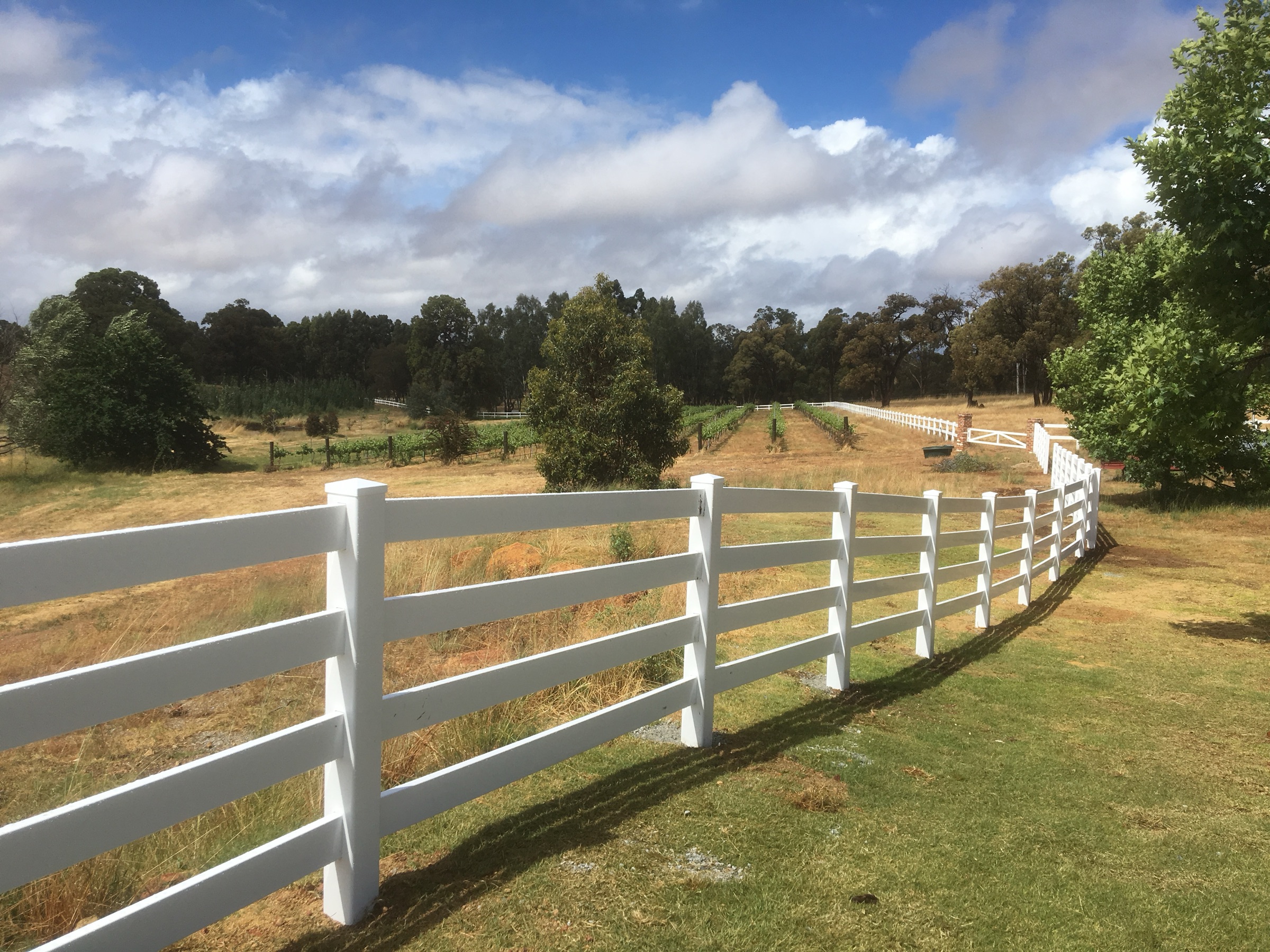
Cambridge's preference for open streetscapes means picket fencing is the natural choice for front boundaries. PVC picket styles meet the open-to-solid ratio requirements and keep the street view open and attractive. At the lower heights Cambridge prefers, a picket fence with a 1:2 open-to-solid ratio (33% open) will comfortably comply. For anything taller, you'll need to move to a much more open design – and at the 4:1 ratio (80% open), you're looking at widely spaced pickets or a minimal rail-style fence. Check that your chosen profile's picket width doesn't exceed the 75mm maximum.
Secondary street fences (City Beach and Floreat):
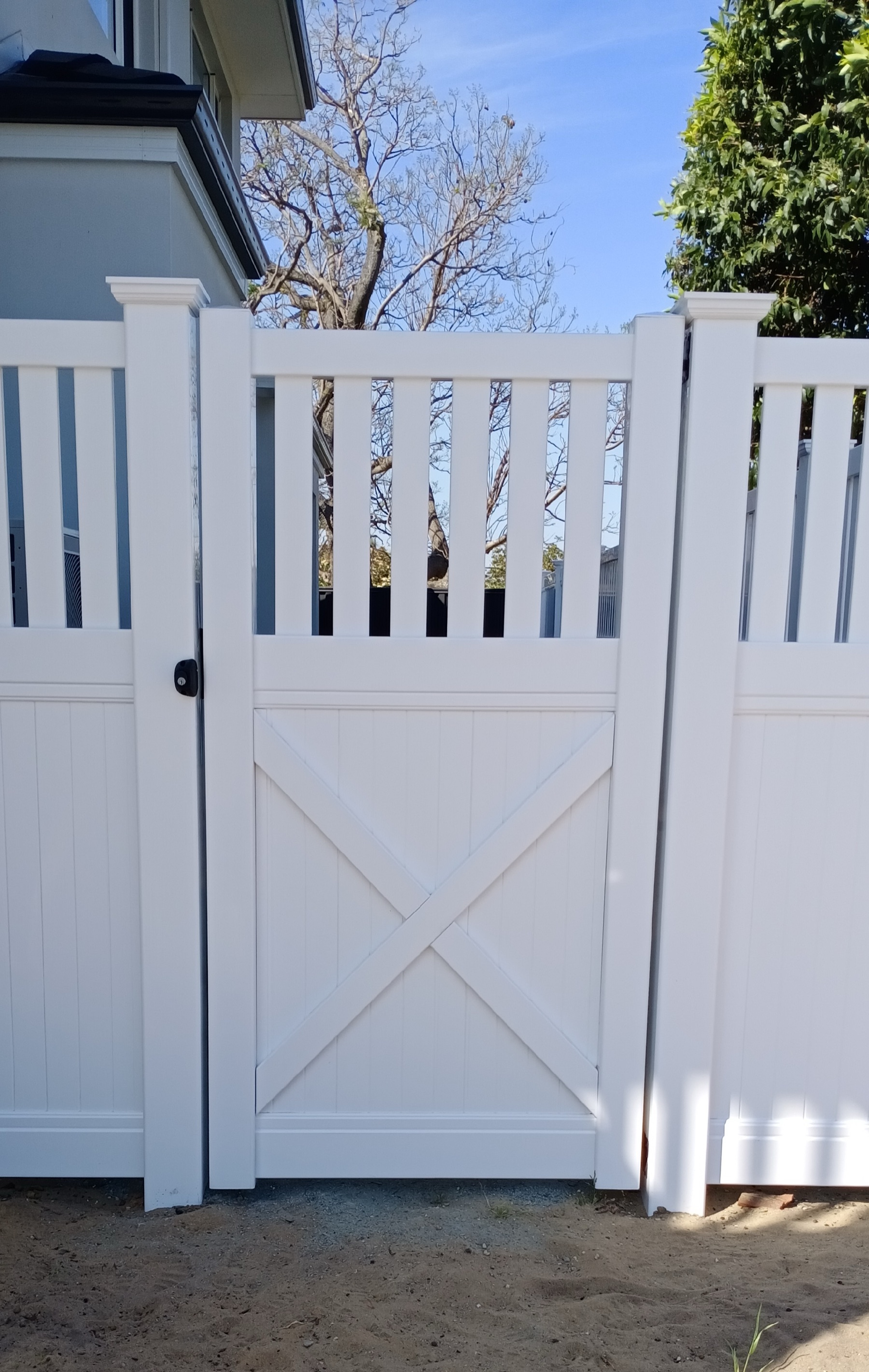
The 60% rule means you'll likely need a combination approach – PVC privacy fencing or semi-privacy fencing for the 60% of the fence that can go to 1.8 metres, with a lower or more open section for the remaining 40%. PVC picket is a good option for the open sections.
Side and rear fences:
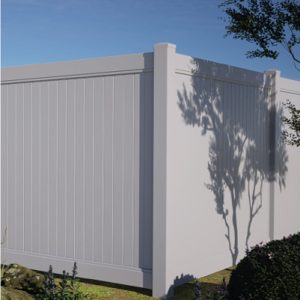
This is where Cambridge is generous. PVC privacy fencing up to 2.5 metres without planning approval gives you plenty of room. Hampton's Privacy and Hampton's Semi Privacy are the options here – and if a client wants extra height for privacy from a two-storey neighbour, Cambridge lets you go higher than most councils allow.
Pool surrounds:
PVC is an accepted material for pool barriers. It meets the minimum 1.2 metre height requirement and handles pool chemicals (chlorine, salt) without corroding or staining the way metal fencing can.
For Probuild trade partners: If you're quoting a job in Cambridge and need to check product specifications against the open-to-solid ratios, give us a call. We can confirm which profiles meet the permeability requirements for each zone – particularly the 80% open requirement for taller front fences, which rules out a lot of standard designs.
Before You Quote – Checklist for Contractors
- Check the suburb. City Beach and Floreat have stricter secondary street rules than Wembley and West Leederville. Know which set of rules applies before you quote.
- Check if the property is heritage-listed. Contact the Town's planning team or check the Heritage List. Heritage properties need additional approval.
- Measure for permeability. Cambridge's open-to-solid ratios are stricter than most Perth councils – up to 80% open for taller fences. Check your picket widths against the 75mm maximum and slat widths against the 50mm maximum.
- Factor in the DA. Most front fences in Cambridge will need a development application. Add the fee ($147–$295) and processing time to the job, and let the customer know upfront.
- Know the side/rear allowance. Up to 2.5 metres behind the street setback without planning approval – this is more generous than most councils and worth mentioning to clients who want extra height.
- Check for retaining walls. Fence above retaining must be maximum 1.5 metres and 50% visually permeable.
- Confirm with the council. If there's any doubt, call the Town on (08) 9347 6000. It takes five minutes and can save you a rejected application.
Before You Start – Checklist for Homeowners
- Understand Cambridge's position on front fences. The Town prefers open streetscapes with no front fence. If you want to build one, keep it low and open – that's what's most likely to be approved.
- Know your front fence limits – 1.2 metres is the general maximum, with strict permeability requirements. Taller fences need to be up to 80% open.
- Remember the landscaping rule – at least 60% of your front setback area must be landscaped. This is a policy requirement, not a guideline.
- Side and rear fences are straightforward – up to 2.5 metres without planning approval, which gives you good options for privacy.
- If you're in City Beach or Floreat on a corner lot, your secondary street fence can only be 1.8 metres for 60% of its length. The other 40% needs to be lower or more open.
- Talk to your neighbours before you start, especially for boundary fences. Under the Dividing Fences Act, you generally share the cost equally for a "sufficient fence."
- If you want an installer who knows the product, we can connect you with an experienced local contractor who works with PVC fencing regularly. Give us a call or organise an installer through the website.
Need a hand? If you're planning a fence in Cambridge and want to talk through your options, give us a call. We can help you work out what style and height suits your property and the council's requirements, and if you need an installer, we'll connect you with someone who knows the product inside out.
Contact the Town of Cambridge
| General enquiries | (08) 9347 6000 |
| mail@cambridge.wa.gov.au | |
| Website | cambridge.wa.gov.au |
| Planning policies | Local Planning Policies page |
| Heritage | Heritage & Character page |
| Address | 1 Bold Park Drive, Floreat WA 6014 |
This guide is based on the Town of Cambridge's Local Planning Policy 3.1 (Streetscape), Policy 2.1, the Private Property Local Law 2016, and the WA Residential Design Codes as at March 2026. Council rules can change – always confirm with the Town's planning team before you start work. Probuild PVC Fencing is not a planning authority and this is general guidance only.