We manufacture PVC fencing, so we're obviously going to lean one way on this. We're upfront about that. But we've been in the fencing industry in Perth since 2008, and we've seen enough Colorbond and PVC go up across the metro area to give you a genuinely useful comparison. We'll cover the things that actually matter when you're choosing between the two – rust, heat, noise, maintenance, design, cost, and how they hold up over time.
If you're a contractor, the same information applies – and there's a section at the end on what PVC means for quoting and margins compared to Colorbond jobs.
In this article:
Rust and Corrosion – The Coastal Angle
This is the big one, and it's the reason a lot of our customers in Perth's coastal suburbs end up choosing PVC.
Colorbond is steel with a multi-layer coating system. When that coating is intact, it handles weather well. The problem is that coatings get compromised – at cut edges during installation, around screw points, anywhere the panel gets scratched by a branch or a bike or a wheelie bin. Once the bare steel underneath is exposed, it corrodes. And in coastal areas where salt air is a daily reality, that corrosion happens faster than most people expect.
If you live in Scarborough, Fremantle, Hillarys, Cottesloe, Trigg, or anywhere along the coast from Mandurah up to Two Rocks, your fence is dealing with salt-laden sea breeze almost every afternoon in summer. That salt settles on the fence surface, attracts moisture, and creates the conditions for rust – particularly at fixings, panel joins, and any point where the coating has been nicked.
BlueScope recommends washing Colorbond fencing every six months in coastal areas (within about a kilometre of the beach) to slow this down. That's reasonable maintenance, but it's maintenance that a lot of people don't do. And even with regular washing, exposed edges and screw points are still vulnerable.
PVC can't rust. There's no metal coating to scratch through, no steel underneath to corrode. Salt air, pool chemicals, bore water, irrigation spray – none of it causes corrosion because there's nothing to corrode. That's not a marketing angle, it's just the nature of the material.
For suburbs like South Fremantle and North Fremantle where the sea breeze comes through daily, or Scarborough where houses are copping salt spray from the Indian Ocean, this is a practical consideration that affects how long your fence lasts and how it looks five or ten years in.
Worth knowing: Colorbond's standard fencing warranty is 10 years. That warranty requires six-monthly maintenance in accordance with BlueScope's recommendations, and it doesn't cover damage from scratches, cuts, or impacts that compromise the coating. In coastal Perth, where the coating is under constant salt exposure, those terms matter.
Maintenance
Both PVC and Colorbond are low-maintenance compared to timber, and we're honest about that. Neither of them needs painting, staining, or sealing the way a timber fence does.
Colorbond maintenance is mostly about washing. BlueScope recommends hosing it down regularly to remove salt, dirt, and debris – more often near the coast, as mentioned above. If you get a scratch or chip, you should touch it up with a matching paint to prevent rust.
PVC maintenance is a hose-down when it looks dirty. That's about it. There's no coating to touch up because there's no coating – the colour goes through the material. You can use a mild detergent and a soft cloth for stubborn marks, but most of the time a garden hose does the job.
Where PVC has a clear advantage is around pools and in areas exposed to chemicals. Chlorinated pool water and salt-chlorinated splash will corrode metal fencing over time – you'll see it as discolouration and rust spots at the base of Colorbond panels near pool surrounds. PVC handles chlorine and salt water without any reaction, which is why it's a popular choice for pool barriers in Perth.
Bore water is another Perth-specific factor. A lot of properties in the northern suburbs use bore water for reticulation, and that water often has a high mineral and salt content. When it sprays onto a Colorbond fence regularly, it can accelerate corrosion at any weak points in the coating. PVC isn't affected by bore water at all.
Design Options
This is where the two products are genuinely different in what they offer.
Colorbond fencing is essentially flat steel panels in a range of colours. The panels are all the same profile – there's no variation in the actual design. You can choose your colour, you can choose your height, and that's about it. It does what it does well, but if you're after a specific look – picket, semi-privacy, a fence that suits a heritage home or a coastal property – Colorbond doesn't offer that.
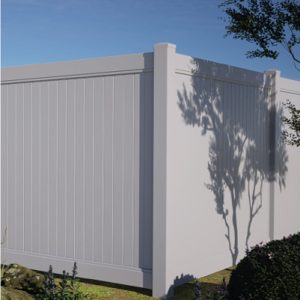
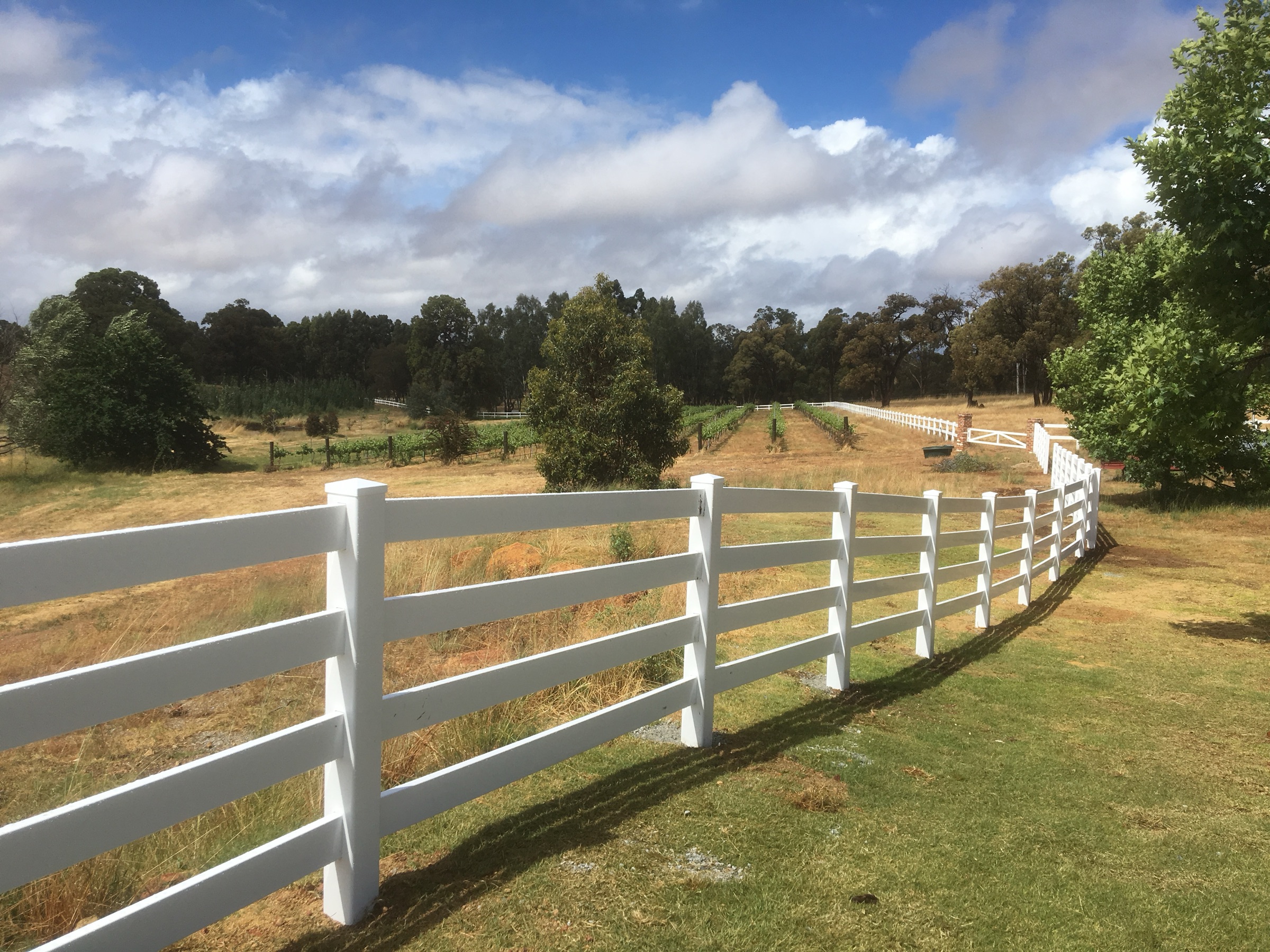
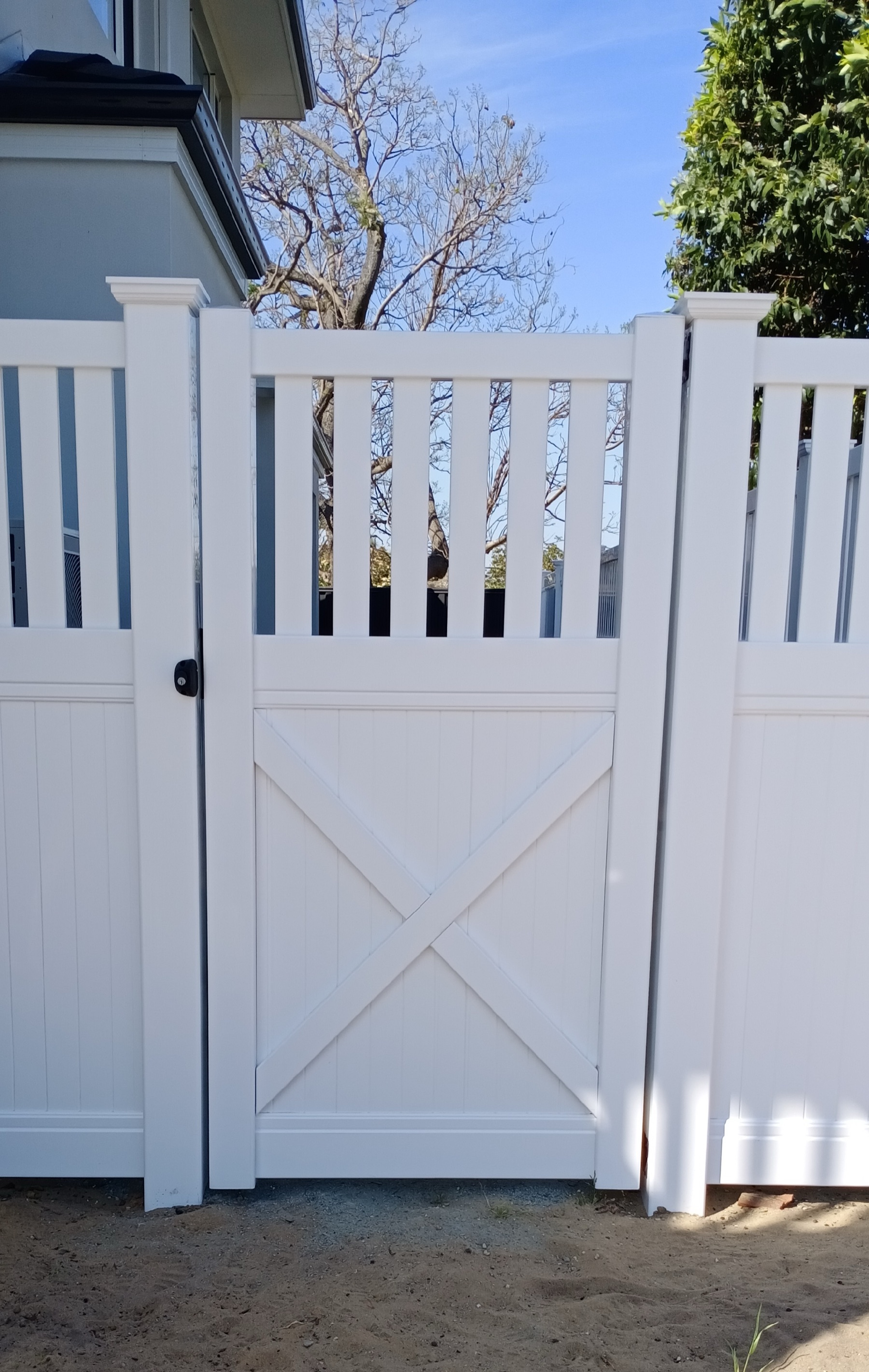
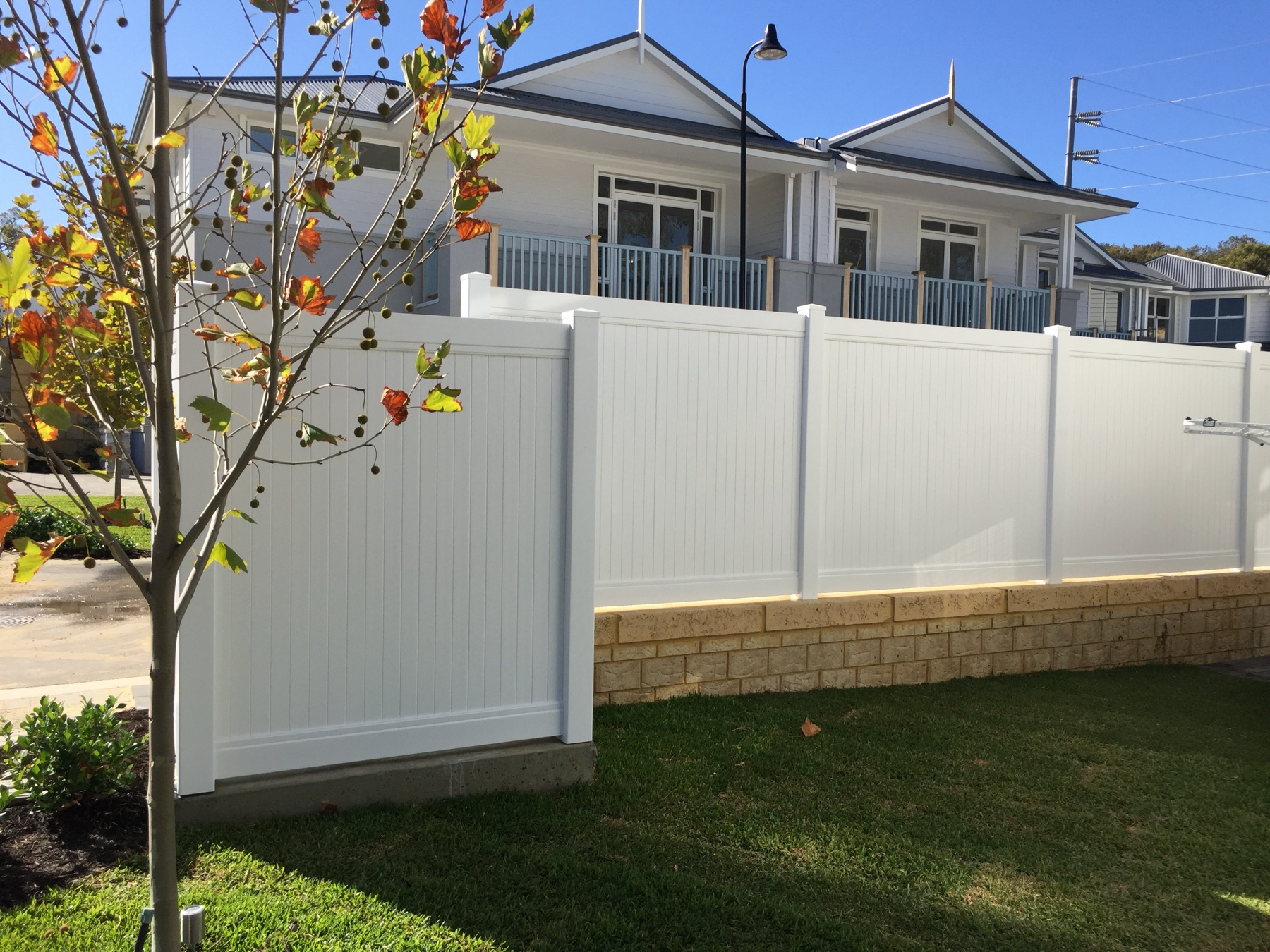
PVC fencing comes in a much wider range of profiles. At Probuild, we have over 30 styles across privacy, picket, semi-privacy, brick infill, and rural fencing. That includes everything from a classic colonial picket through to modern slim-line designs and full privacy panels.
We also have an exclusive range of designs that we manufacture on our own custom machinery in Malaga – styles that no other PVC fencing company in Australia can make. That includes our Blade Picket and Blade X Picket (a flat slat design, both straight and angled), Modern Slim Picket (a 35x35mm profile unique to Probuild), The Willow (a distinctive decorative picket), and our front-facing picket range in Federation, Colonial, and Traditional styles. Nobody else can do front-facing pickets.
For homeowners, that range means you can find a style that actually suits your property – whether that's a Hamptons-style privacy fence, a heritage-appropriate picket for a character home in Fremantle, or something more contemporary for a new build. For contractors, it means you can offer clients options that they can't get from a Colorbond supplier.
Heat on Hot Days
Perth gets properly hot. When it's 40 degrees in February and the afternoon sun is hitting your back fence, the material that fence is made of matters – especially if you've got kids and pets in the backyard.
Colorbond is steel. Steel absorbs heat from direct sunlight and radiates it back. On a 40-degree day, a dark Colorbond fence on the western side of your property can be genuinely hot to the touch. BlueScope's Thermatech technology has improved the thermal performance of their colour range, but the reality is that metal in direct sun gets hot. If you've ever touched a car bonnet on a summer afternoon, you know the feeling.
PVC doesn't conduct and radiate heat the same way metal does. It stays noticeably cooler to the touch on hot days. That matters if your kids are playing near the fence, if your dog likes to lie along the fence line, or if you're sitting in the backyard and you'd rather not have a wall of radiated heat on one side.
It's not a dramatic difference indoors, but in a backyard on a Perth summer day, it's noticeable and it contributes to how comfortable the space feels.
Wind Noise
This is one that people don't think about until they've got a Colorbond fence and a strong sea breeze rolling in.
Colorbond panels can vibrate and drum in the wind. If the supporting rails aren't perfectly spaced for the gauge of steel, the panels flex under wind pressure and produce a humming or rattling sound. In Perth's windier suburbs – and that covers a good chunk of the coastal strip – this is a common complaint. A quick look through Bunnings community forums and Whirlpool will turn up plenty of threads from homeowners trying to fix noisy Colorbond fences with silicone dabs and rubber spacers.
PVC panels are thicker and more rigid in their profile, and they don't vibrate the same way. You won't get that metallic drumming sound in the wind. It's a small thing, but if you're spending time in your backyard and the Fremantle Doctor is blowing, a quiet fence is a nicer fence.
Durability and Lifespan
Colorbond fencing carries a 10-year warranty from BlueScope, covering perforation (rust-through) and paint flaking or peeling. That warranty is conditional on regular maintenance, including six-monthly washing in coastal areas. Some Colorbond fences last well beyond 10 years, particularly inland where salt exposure is minimal and the coating stays intact.
PVC fencing from Probuild carries a 30-year limited warranty. PVC doesn't rust, rot, or degrade from UV exposure the way timber does, and it's not susceptible to termites. The material is engineered to handle Australian conditions – sun, heat, salt, moisture – without breaking down.
The practical difference shows up over time. A Colorbond fence in a coastal suburb might start showing rust at fixings and edges within five to eight years, even with maintenance. A PVC fence in the same location will look essentially the same as the day it went in, because there's no corrosion mechanism at work.
| Colorbond | PVC (Probuild) | |
|---|---|---|
| Manufacturer warranty | 10 years | 30 years (limited) |
| Warranty conditions | Six-monthly maintenance required; scratches and impact damage excluded | Standard use and conditions |
| Rust risk | Yes – at cut edges, screw points, scratches, especially coastal | None – no metal content |
| Termite risk | None | None |
| UV degradation | Coating may fade over time | UV-stabilised; colour through the material |
Cost – Upfront and Long-Term
We're going to be straightforward here because cost is usually the first question people ask.
For a standard 1.8-metre boundary fence, supplied and installed, Colorbond in Perth currently runs between about $90 and $150 per metre, with most jobs falling in the $95 to $130 range. PVC fencing is broadly similar for standard privacy profiles, starting around $120 per metre installed. Premium PVC profiles – some of the exclusive designs, taller panels, or custom work – can be higher.
So upfront, Colorbond can be slightly cheaper for a basic boundary fence. That's an honest assessment and we're not going to pretend otherwise.
Where PVC pulls ahead is in lifecycle cost. Over 15 to 20 years, a Colorbond fence – especially in a coastal suburb – may need sections replaced due to rust, touch-up painting on scratches, and regular washing to maintain the warranty. In some cases, particularly near the ocean, the fence may need full replacement before the 20-year mark.
A PVC fence installed today should still be standing and looking good in 25 to 30 years without any of those additional costs. No repainting, no rust repair, no panel replacements. When you spread the cost over the life of the fence, PVC typically works out cheaper in the long run.
If you're doing it yourself, PVC is also lighter and easier to handle than steel panels, which can reduce installation time and the need for extra help on-site.
Quick cost comparison – 30 metres of 1.8m boundary fencing (installed):
| Colorbond | PVC (standard privacy) | |
|---|---|---|
| Upfront cost (approx.) | $2,850 – $3,900 | $3,600 – $4,500 |
| Maintenance over 20 years | Washing, touch-ups, possible panel replacement | Occasional hose-down |
| Likely replacement | 15–20 years (coastal); 20–25 years (inland) | 25–30+ years |
| Estimated 30-year cost | Higher (replacement + maintenance) | Lower (original fence still standing) |
Impact Damage
Things hit fences. Footballs, cricket balls, bikes, lawnmowers, the odd reversing trailer. It happens.
When a Colorbond panel gets dented, the dent is permanent. You can't pop it out or bend it back. The panel either stays dented or you replace it. And if the impact has scratched through the coating, you've now got a rust point as well.
PVC has more flex to it. It absorbs minor impacts better than rigid steel and returns to shape in most cases. A hard enough hit can crack PVC, but it takes significantly more force than it takes to dent Colorbond. And if a PVC panel does get damaged beyond repair, individual panels can be replaced without affecting the rest of the fence run.
For families with kids who kick balls around the backyard, or properties where the fence line runs along a driveway, PVC's flexibility is a practical advantage.
What Contractors Should Know
If you're a fencing contractor who's mostly worked with Colorbond, here's what PVC means for your business.
Installation is different, but not harder. PVC is lighter than steel, which makes handling and transport easier. The panel and post system is straightforward once you've done a couple of jobs. If you haven't installed PVC before, we'll walk you through the quoting process and installation so you're confident before you start.
Design variety means more options for your customers. With Colorbond, you're offering flat panels in a range of colours. With PVC, you can offer over 30 styles – pickets, privacy, semi-privacy, brick infill – including exclusive designs that customers genuinely can't get anywhere else. When a customer wants something that suits a Hamptons-style renovation or a heritage property, you've got an answer that Colorbond can't match.
Coastal jobs become easier to quote with confidence. If you're doing work in Scarborough, Fremantle, Hillarys, or anywhere on the coastal strip, you know Colorbond has a shelf life in salt air. Quoting PVC for coastal properties means you're recommending a product that won't come back to you with rust complaints in five years. That's better for your reputation and better for the customer relationship.
Margins are solid. PVC is a premium product and customers expect to pay accordingly. You're not competing on price the way you are with standard Colorbond boundary fencing where every second quote is a race to the bottom. PVC customers are typically choosing on quality, design, and longevity – which means the conversation is different and the margins reflect that.
Pool fencing is a strong category. PVC handles chlorine and salt water without corroding, which makes it a natural recommendation for pool barriers. If you're doing pool fencing work, PVC is an easy conversation to have with the customer.
For trade enquiries: If you're a contractor interested in supplying PVC fencing to your customers, give us a call or visit our trade portal. We can talk you through the product range, pricing, and how installation works.
Which One Is Right for You?
Both Colorbond and PVC are good fencing products, and we're not going to tell you that Colorbond is rubbish – it's not. Millions of metres of it go up across Australia every year and it does its job. But the two products suit different situations, and here's how we'd think about it honestly.
PVC is the stronger choice if:
- You're in a coastal suburb or anywhere within a few kilometres of the ocean – Scarborough, Fremantle, Hillarys, Cottesloe, Mandurah, Two Rocks, or anywhere along WA's coastline
- Your fence is near a pool, spa, or salt-chlorinated water feature
- You want a specific design – picket, semi-privacy, heritage-style, or something beyond flat panels
- You're thinking long-term and want to avoid replacement and maintenance costs down the track
- You use bore water for reticulation and it sprays onto the fence line
- Heat matters – you want a backyard that's comfortable in summer
- You want a quiet fence that doesn't drum in the wind
Colorbond might suit if:
- You're well inland with minimal salt exposure and your priority is the lowest possible upfront cost for a basic boundary fence
- You're happy with flat panels and colour choice is your main design consideration
- You're replacing a section of existing Colorbond and want to match what's already there
For a lot of Perth properties – especially anything west of the freeway or within a few suburbs of the coast – PVC is the more practical long-term choice. When you factor in the 30-year warranty, the zero rust risk, the design options, and the lower lifetime cost, it's a decision that makes sense for the property and for the budget over time.
Want to have a look at the range? You're welcome to visit us at our Malaga factory to see the full range of styles and colours in person – it makes a difference seeing it up close. If you'd like an installer who knows the product, we can connect you with an experienced local contractor. Give us a call or get in touch through the website.
This comparison is based on our experience manufacturing and supplying PVC fencing in Perth since 2008, current industry data, and publicly available warranty information from BlueScope Steel. We've tried to be fair to both products – but if you have questions about anything we've covered here, give us a call and we're happy to talk it through.