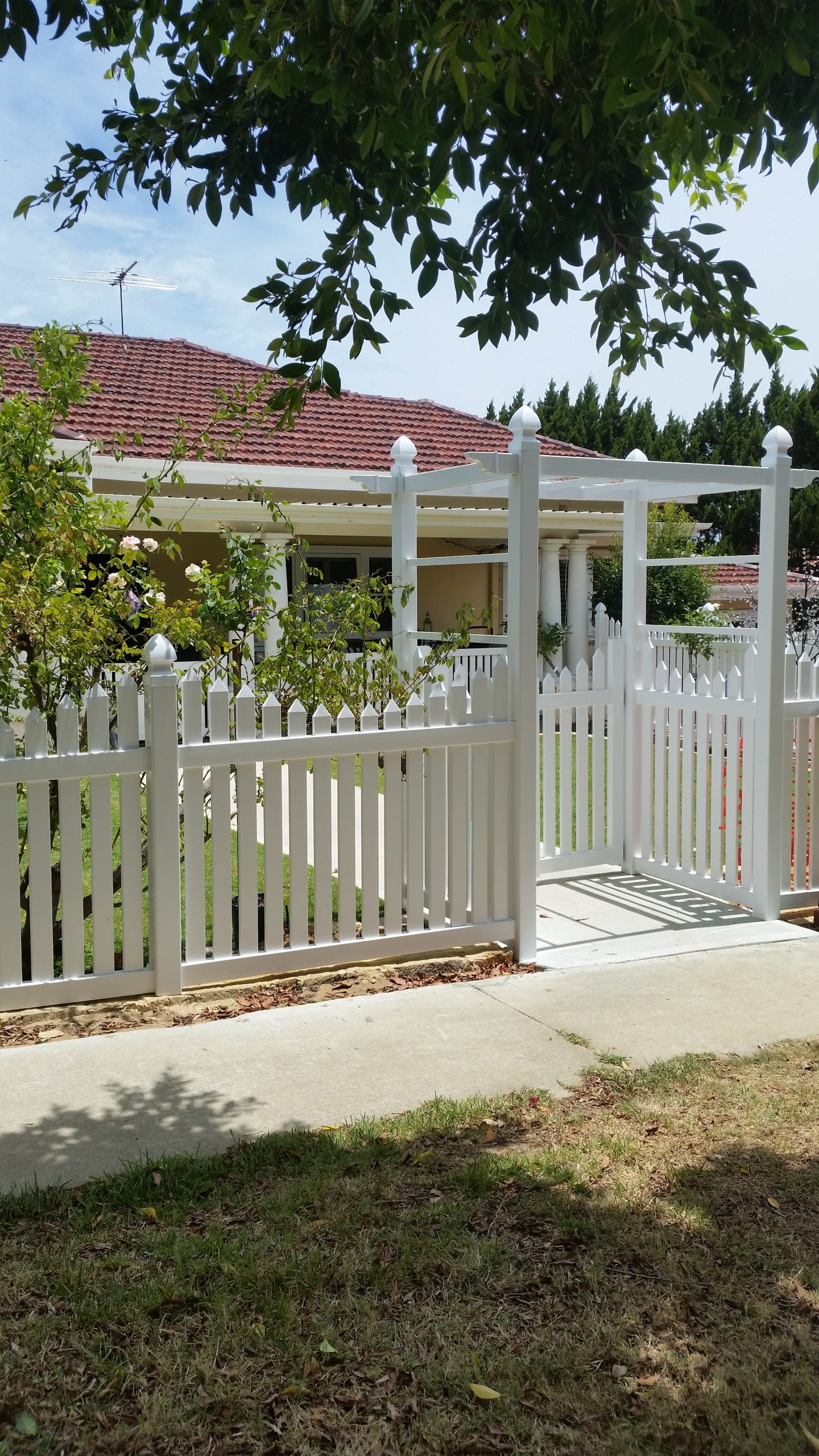
Joondalup is one of the more straightforward councils in Perth to work in. There are no heritage overlay zones across the coastal suburbs, the front fence rules follow the standard R-Codes, and most side and rear jobs don't need any approvals at all. This guide covers the fencing rules for the City of Joondalup – including Hillarys, Sorrento, Ocean Reef, Burns Beach, Currambine, Mullaloo, Padbury, Kinross, Kallaroo, and Craigie.
We've pulled this from the City's Fencing Local Law 2014 (as amended in 2022), the Residential Development Local Planning Policy, and the WA Residential Design Codes (R-Codes). It was current as at March 2026, but council rules do get updated – always confirm with the City's planning team before you start work.
Quick reference: In standard residential areas, your front fence can be solid up to 1.2 metres. Above that, it needs to be visually permeable (gaps that allow a line of sight through the fence) up to a maximum of 1.8 metres. No heritage overlay zones in the coastal suburbs – standard rules apply across the board.
Front Fence Rules – By R-Code Density
Front fence rules in Joondalup vary slightly depending on your lot's R-Code density. The solid height limit is the same across the board, but how that height is measured changes.
Solid fencing can go up to 1.2 metres in all residential zones. Above that, the fence has to be visually permeable – meaning it needs gaps that allow a clear line of sight through the fence.
Total height for a front fence is 1.8 metres, including the permeable section. Piers can go up to 1.8 metres with a maximum width of 400mm.
How the measurement changes by lot type
| Lot type | Solid height | Measured from | Front setback (distance from boundary to building line) |
|---|---|---|---|
| R20 | 1.2m | Midpoint of the verge | 6 metres |
| R20/25, R20/30, R20/40 | 1.2m | Natural ground level | 4 metres |
| R20/60 | 1.2m | Natural ground level | 2 metres |
For contractors, the R20 measurement is the one to watch. The height is measured from the midpoint of the verge directly adjacent to the lot, not from the base of the fence. If the verge slopes, that measurement point can shift the effective height. Check it on site before you quote.
If you're not sure of the R-Code for a property, use the City's IntraMaps property mapping tool – it takes 30 seconds.
What "visually permeable" actually means
This gets quoted wrong a lot, so here's the actual definition from the R-Codes:
- If your gaps are 50mm or wider, at least one-third of the total fence surface needs to be open space.
- If your gaps are narrower than 50mm, at least half the total fence surface needs to be open.
In practical terms, a standard picket fence with evenly spaced pickets and gaps will comfortably meet these requirements. If you're using a slatted or louvre-style design with narrower gaps, you'll need to check that the 50% open rule is met.
For contractors: measure the gaps and calculate the total surface area ratio before you quote. Getting this wrong means a rejected application or a fence that has to come down.
Driveway sightlines
Within 1.5 metres of where your driveway meets the street, the fence can't be higher than 750mm solid. Piers in this zone can go up to 1.8 metres but must not exceed 350mm x 350mm. Everything above 750mm in this area needs to be visually permeable. It's a safety requirement and councils enforce it.
Corner lots
Corner lot rules depend on your R-Code:
- R20 lots: Along the secondary street, the fence can be solid up to 1.2 metres for at least 50% of the boundary length. Above 1.2 metres, it needs to be visually permeable.
- Dual-coded lots (R20/25 through R20/60): The fence must address both streets with equal importance. Along the secondary street, fencing above 1.2 metres must be visually permeable for at least 50% of the boundary length, and it needs to allow surveillance from an outdoor living area or major opening.
Just replacing a side or rear fence? Most backyard fence jobs in Joondalup are straightforward – up to 1.8 metres, no approval needed. The section below covers it. The front fence rules only apply if your fence faces a street.
Side and Rear Fences
Away from the front of the property, the rules are more straightforward:
- Maximum height: 1.8 metres above natural ground level.
- No development approval needed for standard boundary fences (non-masonry, up to 1.8 metres).
- No building permit needed for non-masonry fences up to 1.8 metres that comply with the Fencing Local Law.
- Masonry fences (brick, block, stone) need a building permit once they go above 750mm.
In-ground depth
This is a detail that's specific to Joondalup and worth knowing. The Fencing Local Law requires a minimum in-ground depth of 600mm (or 25% of the total sheet length, whichever is greater). This applies to the "sufficient fence" standard – corrugated fibre cement or steel sheeting that forms a single continuous sheet for the total height and depth, lapped and capped with snap-fit capping.
For contractors installing PVC: while PVC isn't constructed the same way as sheet fencing, the 600mm in-ground depth is a good benchmark to work to for structural stability, especially in the sandy soils common across Joondalup's coastal suburbs.
Retaining walls and fences
If the fence sits on top of a retaining wall, the combined height is measured from natural ground level. This is an important consideration on sloping blocks, which are common in suburbs like Ocean Reef and Burns Beach. If the combined height exceeds standard limits, you'll need planning approval.
Privacy screens
A privacy screen (set at least 100mm inside a dividing fence) that exceeds 2.3 metres from natural ground level requires development approval.
Heritage Areas – Joondalup Is a Clean Run
This is where Joondalup is noticeably easier than many other Perth councils. The City has just 41 places on its Local Heritage Survey across the entire municipality, and only one property – the Luisini Winery – is on the State Heritage Register.
More importantly for fencing work, there are no broad heritage overlay zones in any of Joondalup's coastal suburbs. Hillarys, Sorrento, Ocean Reef, Burns Beach, Currambine, Mullaloo, Padbury, Kinross, Kallaroo, and Craigie are all predominantly post-1970s residential developments. Standard fencing rules apply across the board without any heritage-related restrictions.
The handful of heritage-listed places include Marmion Marine Park and Bishops House in Hillarys, and the former Whaling Station site and Sorrento Community Hall in Sorrento. If your property happens to be one of the 41 listed places, check with the City's planning team – but for the vast majority of residential properties in Joondalup, heritage is not something you need to think about.
For contractors, this means one less thing to check before quoting. No heritage maps to consult, no additional development application (DA) requirements, no character assessments on materials. You can quote to the standard rules with confidence.
Compare that to Fremantle, which has approximately 2,500 heritage-listed places across 23 heritage areas. If you've been burned by heritage complications on a Fremantle job, you'll appreciate how straightforward Joondalup is.
Pool Fencing
Pool barriers in Joondalup follow the statewide rules under the Building Act 2011 and Australian Standard AS 1926.1:
- Minimum barrier height: 1.2 metres from all ground levels
- Non-climbable zone: no climbable objects within 900mm of the barrier, and horizontal rails must be more than 900mm apart
- Gate: must swing outward (away from the pool), self-closing, self-latching, latch at least 1.5 metres above ground
- Vertical member spacing: gaps must not exceed 100mm
- Ground clearance: gap under the fence must not exceed 100mm
- A building permit is always required before installing a pool or spa
- The barrier must be installed before filling the pool with water
- The City inspects pool barriers at least once every four years
- A "pool" includes any structure with water deeper than 300mm – including portable and blow-up pools
Boundary fence as pool barrier (post-2016 pools)
If your pool was approved on or after 1 May 2016 and you're using the boundary fence as the pool barrier, that fence needs to be a minimum of 1.8 metres in height with a 900mm non-climbable zone on the pool owner's side. This is a step up from the standard 1.2 metre pool barrier requirement, and it catches people out – especially when the existing boundary fence is 1.8 metres but has a horizontal rail within 900mm of the top.
Front fences as pool barriers
If your front fence doubles as a pool barrier, it needs to meet both the pool safety requirements under AS 1926.1 and the planning requirements for front fences. That means you need a fence that satisfies pool barrier height, spacing, and non-climbable zone rules while also meeting the visual permeability requirements above 1.2 metres. It's a tight brief, but it can be done with the right product.
When Do You Need Planning Approval?
You don't need a DA for:
- Side and rear boundary fences up to 1.8 metres (non-masonry, compliant with the Fencing Local Law)
- Front fences that meet all the standard height and permeability requirements for your lot's R-Code density (solid up to 1.2 metres, permeable above, piers within spec, sightlines clear)
You do need a DA for:
- Front fences that exceed the standard height or permeability limits
- Boundary or dividing fences that don't comply with the Residential Development Local Planning Policy
- Privacy screens exceeding 2.3 metres from natural ground level
- Fences adjoining public open space that don't meet the City's public space policy
- Fences on top of retaining walls where the combined height exceeds standard limits
You need a building permit for:
- Masonry fences over 750mm in height
- Dividing fences exceeding 1.8 metres
- All swimming pool barriers
Processing time: Standard assessment is 60 days. If neighbour consultation or state agency input is required, it extends to 90 days.
Amendment or extension fee: $295
Apply online: my.joondalup.wa.gov.au
Penalties
If a fence doesn't comply with the Fencing Local Law, the City can issue a breach notice. Penalties range from a $125 infringement notice up to a $5,000 fine, with a daily penalty of up to $500 for continuing offences. It's cheaper and faster to get it right the first time.
Dividing Fence Disputes
Dividing fences between neighbours are governed by the Dividing Fences Act 1961 (WA), not the local law. The local law sets the "sufficient fence" standard, which determines what a neighbour can be compelled to contribute to.
What is a "sufficient fence" in Joondalup?
Under the Fencing Local Law, a sufficient fence on a residential lot is corrugated fibre-reinforced cement or steel sheeting (think Hardifence or Colorbond), 1.8 metres high, with 600mm in-ground depth, lapped and capped per manufacturer specs. That's the minimum standard for cost-sharing purposes.
If you want to install a higher-specification material – like PVC – you can, but your neighbour can only be required to contribute the cost of a "sufficient fence." You may need to cover the difference yourself.
The dispute process
- Serve written notice on your neighbour proposing the fence work, including the type of fence, estimated cost, and proposed cost split.
- Wait 21 days for a response.
- If no agreement is reached, contact the City of Joondalup's free mediation service on (08) 9400 4000 or email info@joondalup.wa.gov.au.
- If mediation doesn't resolve it, either party can lodge a Dividing Fences Application (Form 53) with the Magistrates Court of WA.
The free mediation is worth using – it resolves most disputes without the cost and time of going to court.
Properties next to parks and reserves
If your property borders public open space, the Dividing Fences Act doesn't apply. You bear the full cost of the boundary fence, including construction and maintenance. The fence also needs to maintain visual connectivity between your property and the public space, which means permeability requirements similar to front fences may apply.
Materials
The Fencing Local Law lists corrugated fibre cement and steel sheeting as the "sufficient fence" materials for residential lots. These are the minimum standard – not the only options.
PVC fencing is not explicitly listed as a sufficient fence material, but it's also not prohibited and is commonly used across Joondalup. The "sufficient fence" definition only really matters if you end up in a cost-sharing dispute with a neighbour – it sets the baseline for what they can be asked to contribute to. It doesn't restrict what you can build on your own property.
Prohibited materials: broken glass, asbestos, materials likely to collapse, and pre-used materials that haven't been painted or treated. Barbed wire, electric fences, and razor wire require written approval from the City.
Gates in boundary fences must open inward or slide parallel on the inside of the fence. If your gate doesn't meet this, you'll need written approval from the City.
Because PVC fencing up to 1.8 metres doesn't require a building permit in Joondalup, contractors can get started sooner than they could with masonry, which needs a permit at just 750mm.
The Coastal Angle
Joondalup is one of Perth's most coastal councils. Hillarys, Sorrento, Mullaloo, Ocean Reef, Burns Beach, and Kallaroo are all right on the water, and even suburbs further inland like Currambine, Kinross, Padbury, and Craigie get consistent salt air from the afternoon sea breeze.
PVC handles coastal conditions well. It doesn't rust, it doesn't corrode, and there's no coating to scratch through. Colorbond in coastal areas will eventually show rust spots where the coating is damaged – near the ocean, that can happen within a few years. Timber in salt air needs regular treatment and still deteriorates.

For a suburb like Hillarys or Burns Beach where the sea breeze comes through daily, PVC is a practical choice that won't need replacing or recoating down the track. The sandy soils in these suburbs also make installation straightforward – posts go in easily and the 600mm in-ground depth is achievable without hitting rock.
What This Means for PVC Fencing in Joondalup
Here's a quick summary of how the rules above translate to actual product choices for Joondalup properties:
Front fences (all residential zones):
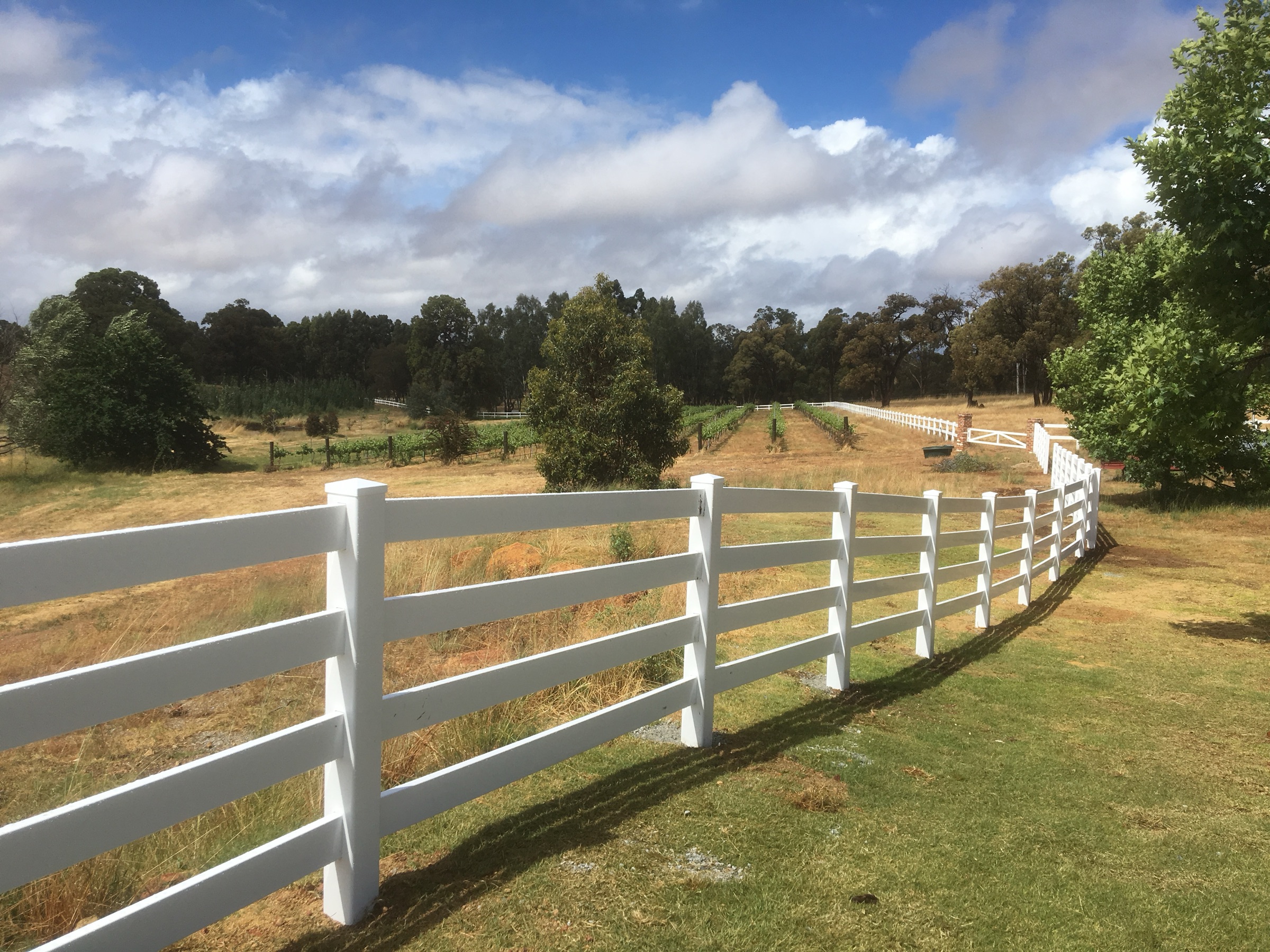
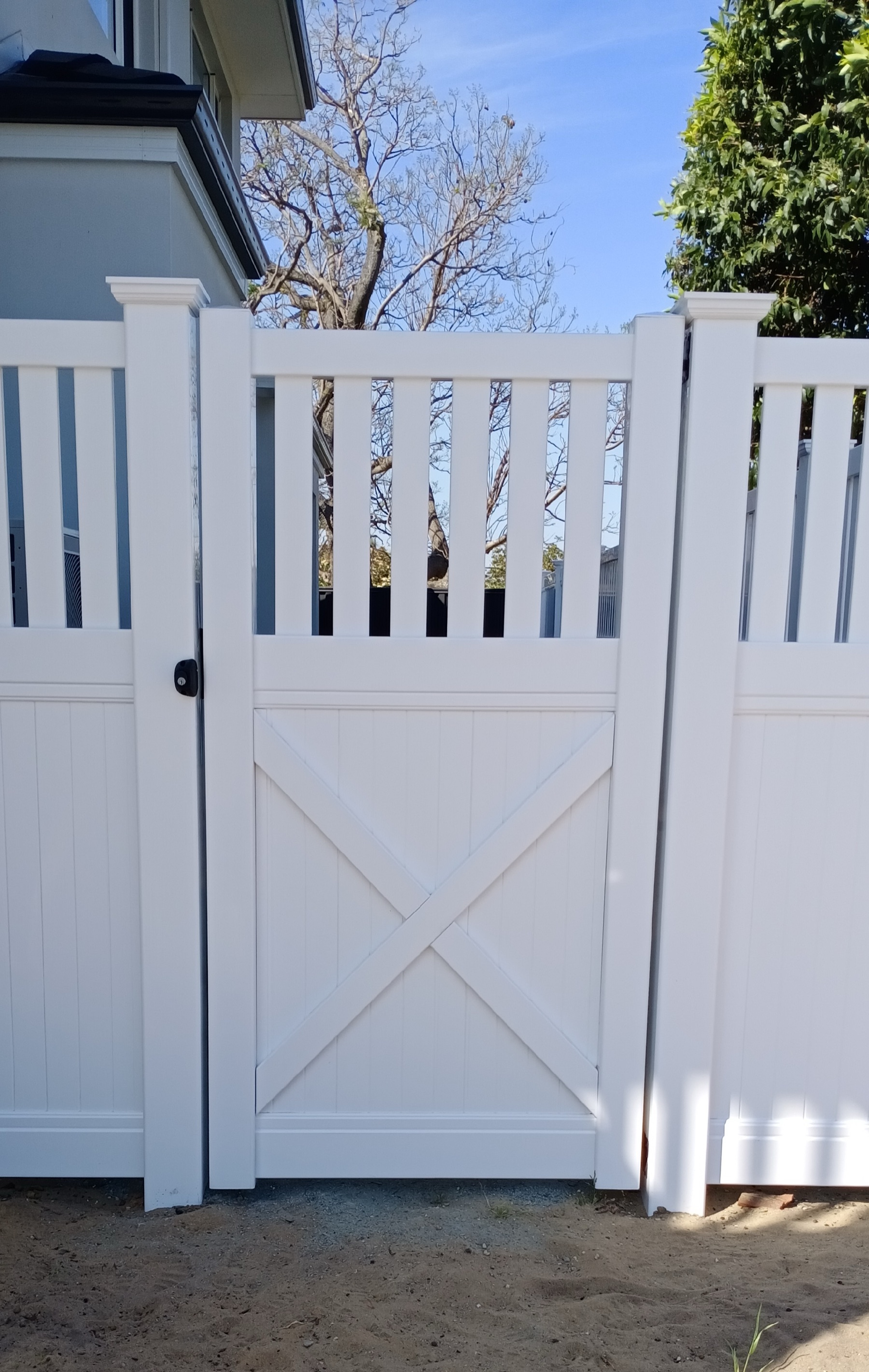
PVC privacy fencing works up to 1.2 metres. Above that, PVC picket fencing meets the visual permeability requirements and can take the fence to the full 1.8 metres. The combination of a solid base with picket above is a clean look that complies. For R20 lots, remember the height is measured from the midpoint of the verge, not the base of the fence.
Side and rear fences:
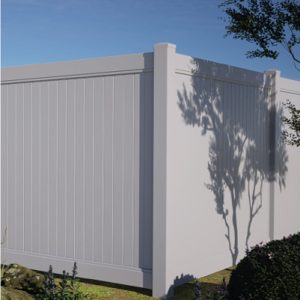
PVC privacy fencing up to 1.8 metres – no DA needed, no building permit needed. This is where most residential PVC fencing goes in Joondalup. Hampton's Privacy and Hampton's Semi Privacy are the two privacy styles in the range.
Pool surrounds (post-2016 pools):
If you're using the boundary fence as your pool barrier, it needs to be 1.8 metres with a 900mm non-climbable zone on the pool side. PVC is an accepted material for pool barriers and handles pool chemicals (chlorine, salt) without corroding or staining the way metal fencing can.
Corner lots:
The secondary street side needs to be visually permeable above 1.2 metres for at least 50% of the boundary length. PVC picket fencing handles this well and gives you a consistent look on both street frontages.
For Probuild trade partners: If you're quoting a job in Joondalup and need to check product specifications against permeability requirements, give us a call. We can confirm which profiles meet the gap and surface area ratios for each zone.
Before You Quote – Checklist for Contractors
- Check the property's R-Code. Use the City's IntraMaps tool to confirm the density code. This determines how the front fence height is measured and which setback applies.
- Measure for permeability. Know the gap widths and surface area ratios before you specify a product for any front fence or corner lot job.
- Check for retaining walls. Combined height rules apply. This is especially relevant in Ocean Reef and Burns Beach where sloping blocks are common.
- Confirm the pool situation. If the boundary fence doubles as a pool barrier, it needs to be 1.8 metres with a 900mm non-climbable zone. Check when the pool was approved – the rules changed in 2016.
- Factor in the in-ground depth. The Fencing Local Law specifies a minimum 600mm in-ground depth for the sufficient fence standard. Work to this as your benchmark.
- Confirm with the council. If there's any doubt, call the City on (08) 9400 4000 (Monday to Friday, 8:30am to 5pm). It takes five minutes and can save you a rejected application.
Before You Start – Checklist for Homeowners
- Check your property's R-Code using the City's IntraMaps property mapping tool. This tells you which front fence rules apply to your lot.
- Know your front fence limits – 1.2 metres solid in all residential zones, visually permeable above that to a maximum of 1.8 metres. No heritage complications in the coastal suburbs.
- For side and rear fences, you can generally go up to 1.8 metres without any approval (non-masonry materials).
- If you have a pool approved after May 2016 and want to use the boundary fence as a barrier, it needs to be 1.8 metres with a 900mm non-climbable zone on the pool side.
- Talk to your neighbours before you start, especially for boundary fences. Under the Dividing Fences Act, you generally share the cost equally for a "sufficient fence." If you want PVC, you may need to cover the cost difference above the Colorbond or Hardifence standard.
- If you have a dispute, the City of Joondalup offers free mediation – call (08) 9400 4000 before going to the Magistrates Court.
- If you want an installer who knows the product, we can connect you with an experienced local contractor who works with PVC fencing regularly. Give us a call or organise an installer through the website.
Need a hand? If you're planning a fence in Joondalup and want to talk through your options, give us a call. We can help you work out what style and height suits your property, and if you need an installer, we'll connect you with someone who knows the product inside out.
Contact the City of Joondalup
| General enquiries | (08) 9400 4000 |
| info@joondalup.wa.gov.au | |
| Online lodgement | my.joondalup.wa.gov.au |
| Property mapping | IntraMaps |
| Address | 90 Boas Avenue, Joondalup WA 6027 |
| Hours | Monday – Friday, 8:30am – 5:00pm |
This guide is based on the City of Joondalup's Fencing Local Law 2014 (as amended 2022), the Residential Development Local Planning Policy, and the WA Residential Design Codes as at March 2026. Council rules can change – always confirm with the City's planning team before you start work. Probuild PVC Fencing is not a planning authority and this is general guidance only.