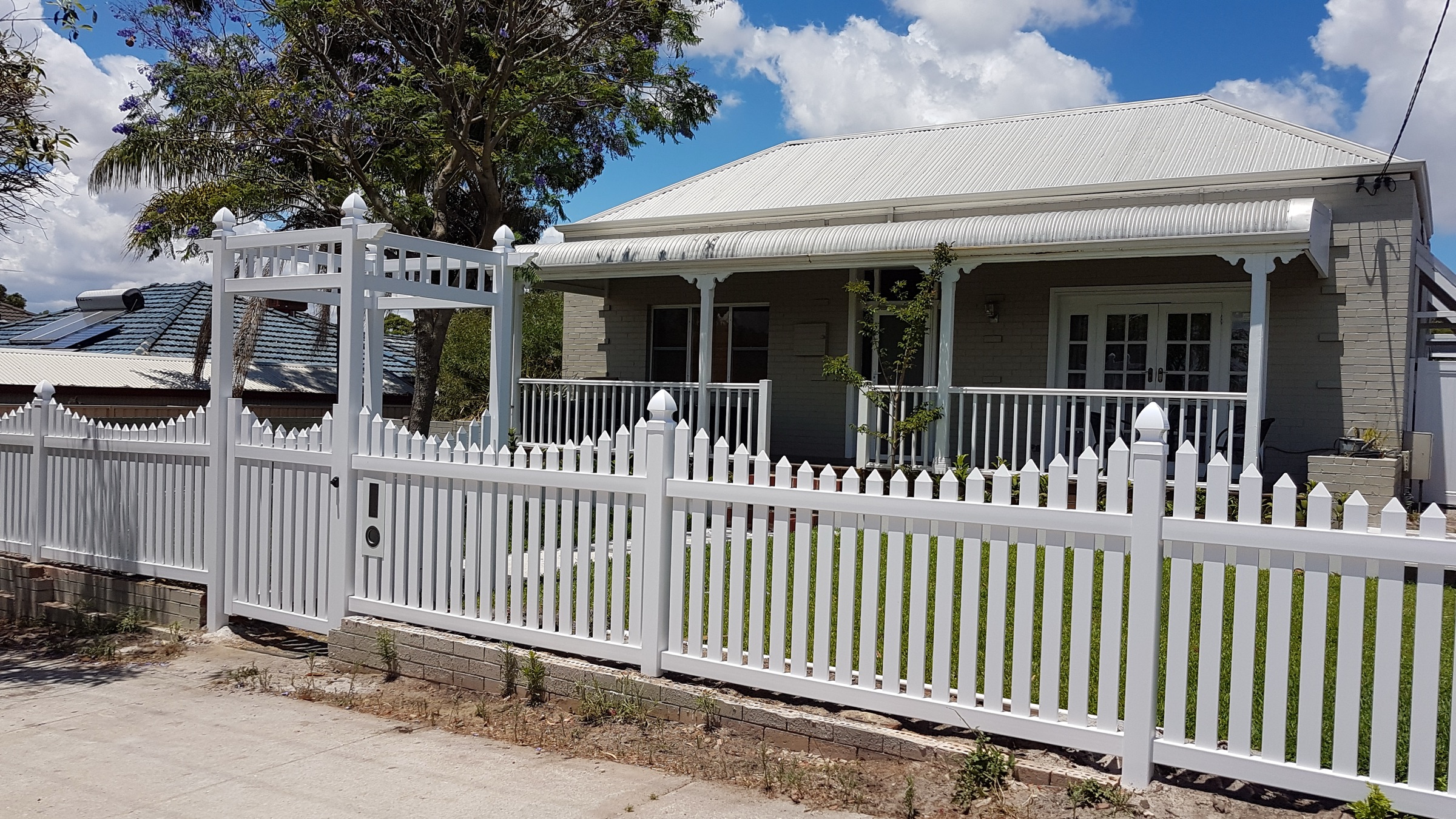
The City of Nedlands covers some of Perth's most established suburbs — Dalkeith, Floreat, Mount Claremont, Shenton Park, Karrakatta, and parts of Swanbourne. It's a council area where the properties are large, the streetscapes are leafy, and the fencing rules are actually more straightforward than you might expect. This guide covers the fencing rules for the whole City of Nedlands, from Dalkeith through to Shenton Park.
We've pulled this from the City's Local Planning Policy 1.1 — Residential Development (updated December 2024), the Residential Design Codes (R-Codes), and the City's heritage and foreshore policies. It was current as at March 2026, but council rules do get updated — always confirm with the City's planning team before you start work.
Quick reference: In standard residential areas, your front fence can be solid up to 1.2 metres. Above that, it needs to be visually permeable (gaps that allow a line of sight through the fence) up to a maximum of 1.8 metres. Pillars can go up to 2.1 metres — more generous than most Perth councils. And here's the big one: PVC fences under 1.8 metres don't need a building permit. Masonry fences need one at just 0.75 metres.
Front Fence Rules — The Basics
These apply across the City of Nedlands on standard residential lots. The rules come from LPP 1.1, which was updated in December 2024.
Solid fencing can go up to 1.2 metres above natural ground level on the street side. Above that, the fence has to be visually permeable — meaning it needs gaps that allow a clear line of sight through the fence.
Total height for a front fence is 1.8 metres, including the permeable section.
Pillars can go up to 2.1 metres, with a maximum size of 500mm x 500mm. That's more generous than most Perth councils — Fremantle allows 2.0 metres, for comparison. The December 2024 update also removed the previous minimum separation requirement between pillars, which gives you more flexibility with the design.
What "visually permeable" actually means
This gets quoted wrong a lot, so here's the actual definition from the R-Codes:
- If your gaps are 50mm or wider, at least one-third of the total fence surface needs to be open space.
- If your gaps are narrower than 50mm, at least half the total fence surface needs to be open.
In practical terms, a standard picket fence with evenly spaced pickets and gaps will comfortably meet these requirements. If you're using a slatted or blade-style design with narrower gaps, you'll need to check that the 50% open rule is met.
For contractors: measure the gaps and calculate the total surface area ratio before you quote. Getting this wrong means a rejected application or a fence that has to come down.
Driveway sightlines
On the vehicle access side of the property, the solid height drops to 750mm. Above that, the fence has to be visually permeable up to the 1.8 metre maximum. This is measured from natural ground level and applies to the section of fence adjacent to the driveway.
Corner lots
The City applies the R-Codes Clause 5.2 sightline criteria. A 1.5 metre truncation (where the fence is cut back at an angle) is required at corner lots so drivers and pedestrians can see oncoming traffic. On secondary street boundaries, fencing within the secondary street setback (the area between your front boundary and the main building line) needs to be designed in accordance with the R-Codes permeability requirements for at least 50% of the street boundary behind the primary street setback.
Entry features and gatehouses
Nedlands allows roofed, open-sided entry features (gatehouses) within the front setback, which is worth knowing for higher-end properties in Dalkeith and Floreat. The limits are:
- Maximum height: 3.5 metres
- Maximum width: 2 metres
- Maximum area: 4 square metres
- Must comply with sightline criteria
Just replacing a side or rear fence? Most backyard fence jobs in Nedlands are straightforward — up to 1.8 metres, no approval needed. The section below covers it. The front fence and heritage rules further down only apply if your fence faces a street.
Side and Rear Fences
Away from the front of the property, the rules are more straightforward:
- Maximum height: 1.8 metres above natural ground level.
- No development approval needed for standard boundary fences that meet this height.
- PVC, timber, Colorbond, and fibre cement fences up to 1.8 metres don't need a building permit either.
- Masonry fences (brick, limestone, rendered block) need a building permit once they go above 750mm.
That building permit threshold is a genuine advantage for PVC. A masonry fence at 1.0 metre needs a permit, engineering, and inspections. A PVC fence at 1.8 metres doesn't need any of that.
One thing to be aware of in Nedlands: if you're installing screening that's detached from a dividing fence, the City treats it as a wall for setback purposes. That means it may trigger different setback requirements than a fence sitting on the boundary line.
Fences Above Retaining Walls
This comes up a lot in the western suburbs where blocks have level changes. Nedlands has a specific rule for this:
- Fences above retaining walls are capped at 1.5 metres in height (not the usual 1.8 metres).
- The fence must be 50% visually permeable.
- The combined height of the retaining wall plus fence shouldn't create an unreasonable impact on adjoining properties.
For contractors, this means you can't just run a full privacy fence on top of a retaining wall in Nedlands. Semi-privacy fencing or picket fencing will meet the 50% permeability requirement. If you need to check whether a specific profile meets this threshold, give us a call and we can confirm the gap and surface area ratios.
Retaining walls over 500mm need a building permit and structural engineer sign-off — that's separate from the fence itself.
Heritage Areas
This is where Nedlands is simpler than a lot of Perth councils. Compared to Fremantle's 2,500 heritage-listed places across 23 heritage areas, Nedlands has a much lighter touch.
The City has been working on Local Planning Policy 6.2 — Heritage-Protected Places, and as of early 2026, only a handful of streets have been considered for Heritage Area designation:
- Tyrell Street (a portion — part of it was removed from consideration in June 2024)
- Mountjoy Road
- Meriwa Street
- Clifton Street
These are all in the Nedlands suburb itself, not in Dalkeith, Floreat, or Mount Claremont.
What heritage designation means for fencing
Within a Heritage Area, properties are classified as either contributory or non-contributory. For contributory properties, any external changes visible from the street — including a new front fence — need development approval and have to be sympathetic to the heritage character.
The good news: works to the rear that aren't visible from the street are not subject to Heritage Area requirements. Basic maintenance is also exempt. So a side or rear fence on a heritage-listed property is generally straightforward.
Dalkeith — no heritage overlay
Dalkeith has a reputation for its older, established homes, but it does not currently have a formal Heritage Area overlay. Individual properties may be on the City's Municipal Heritage Inventory, which could trigger additional considerations for a development application (DA), but there's no blanket heritage restriction across the suburb.
St Johns Wood Estate (Mount Claremont)
One area to be aware of: the City adopted LPP 5.13 — St Johns Wood Estate Fencing in July 2024. This is a separate, estate-specific policy with design guidelines for fencing across eight zones within the estate. If you're quoting a job in St Johns Wood, check this policy — it's more specific than the standard rules.
River Frontage — Dalkeith Properties on the Swan
This is the one that's unique to Nedlands. The City has an extensive Swan River foreshore running from Broadway around Point Resolution to Watkins Road, and many Dalkeith properties have direct river frontage. These properties have an additional layer of regulation that doesn't apply anywhere else in the council area.
What the rules are
Properties bordering Crown Reserve land along the Swan River must use open-view fencing on the river-side boundary. Maximum height is still 1.8 metres, but you can't install a solid privacy fence on this boundary.
This is managed by the Department of Biodiversity, Conservation and Attractions (DBCA), not the City of Nedlands. Any development application for a property adjoining the river foreshore gets referred to DBCA for assessment, and any alteration to existing boundary walls or fences on the river side may need DBCA approval.
What this means in practice
- Standard side and rear fencing rules (1.8 metres) apply to boundaries with other private properties — that doesn't change.
- The river-side boundary requires open-view fencing — picket or semi-privacy styles work well here.
- Existing limestone retaining walls on river boundaries may have heritage or environmental significance.
- Before you start any fence or wall work on a river boundary, talk to both the City's planning team and DBCA.
For contractors quoting a Dalkeith river property, factor in the DBCA referral time. It adds to the approval process and the customer needs to know that upfront.
Pool Fencing
Pool barriers in Nedlands follow the statewide rules under the Building Act 2011 and Australian Standard AS 1926.1:
- Minimum barrier height: 1,200mm
- Maximum gap in barrier: 100mm
- Gate: self-closing from all positions, swings away from the pool area, latch at least 1,500mm above ground
- Non-climbable zone: 900mm from the top of the barrier — no handholds, footholds, or horizontal surfaces greater than 10mm depth
- Boundary fence as pool barrier: minimum 1,800mm drop from the fence top to finished ground on the pool side
- A building permit is always required for pool barrier fencing, regardless of material or height
- The City inspects pool barriers at least once every four years
Post-May 2016 pools
If your pool plans were received after May 2016, there are additional requirements: no climbable objects, steps, retaining walls, or ground level changes within 500mm of the barrier, and the 900mm non-climbable zone from the top of the barrier must be clear of lattice, thick plants, tree branches, and equipment.
Windows and doors near the pool
Windows opening toward the pool area can have a maximum of 100mm opening, or need protective screens (fly screens aren't sufficient). For pools with plans received after 5 November 2001, doors opening directly to the pool area are prohibited — with some indoor pool exceptions.
PVC is a practical choice for pool barriers. It handles pool chemicals — chlorine, salt — without corroding or staining the way metal fencing can, and it meets the AS 1926.1 requirements for height, gaps, and structural integrity.
When Do You Need Planning Approval?
You don't need a DA for:
- A front fence that meets all the standard height and permeability limits in LPP 1.1 (1.2 metres solid, permeable above to 1.8 metres, pillars within size limits)
- Side and rear dividing fences up to 1.8 metres
- Fences that comply with all applicable local planning policy provisions
You do need a DA for:
- Front fences that exceed the standard heights or don't meet the permeability requirements
- Fences in Heritage Areas on contributory properties (where visible from the street)
- Any fence that varies from the provisions of LPP 1.1
- Fences on properties subject to specific precinct requirements under LPP 5.14
Building permits — separate from planning
| Material / Type | Building permit needed? |
|---|---|
| Non-masonry fence (PVC, Colorbond, timber) up to 1.8m | No |
| Non-masonry fence over 1.8m | Yes |
| Masonry fence (brick, limestone, block) over 0.75m | Yes |
| Pool barrier fencing (any material) | Yes — always |
| Retaining wall over 0.5m | Yes |
DA fees: Typically $147–$295 for minor fencing works — use the City's fee calculator for current figures.
How to apply: Complete the Development Application form and submit via the City's online enquiry form or on USB storage media.
No Fencing Local Law — What That Means
This is one of the more unusual things about Nedlands. The City repealed its Fencing Local Law in 2016 and never replaced it. All fencing requirements are now managed through Local Planning Policies instead of a standalone local law.
The practical effect is on dividing fence disputes. Under the Dividing Fences Act 1961, a "sufficient fence" is defined first by local law — but Nedlands doesn't have one. So the default falls back to the Act's own definition: a substantial fence that is ordinarily capable of resisting the trespass of cattle and sheep. This is the legal wording from the 1961 Act — in practice, for residential properties in Nedlands, a sufficient fence is a standard 1.8 metre boundary fence.
In practice, a standard 1.8 metre Colorbond, timber, or PVC fence comfortably meets that definition. But it's worth knowing this if you get into a cost-sharing discussion with a neighbour, because there's no council-prescribed standard to point to.
Cost sharing basics
- Adjoining owners share costs equally for erecting or repairing a dividing fence.
- If one owner wants a higher standard fence, they can only claim half the cost of a sufficient fence from the neighbour.
- If the neighbouring land is vacant, cost recovery is deferred until they build or occupy.
The Coastal Angle
Swanbourne is right on the coast, and the rest of the City of Nedlands isn't far behind — Floreat, Mount Claremont, and Shenton Park all get consistent salt air from the afternoon sea breeze. Even Dalkeith, sitting on the Swan River, has its own moisture and salt exposure.
PVC handles these conditions well. It doesn't rust, it doesn't corrode, and there's no coating to scratch through. Colorbond in coastal and river-adjacent areas will eventually show rust spots where the coating is damaged — near the coast, that can happen within a few years. Timber in salt air needs regular treatment and still deteriorates.
For the western suburbs where property values are high and street presentation matters, a fence that still looks the way it did when it went in — without ongoing maintenance — makes practical sense.
What This Means for PVC Fencing in Nedlands
Here's a quick summary of how the rules above translate to actual product choices for Nedlands properties:
Front fences (standard areas):
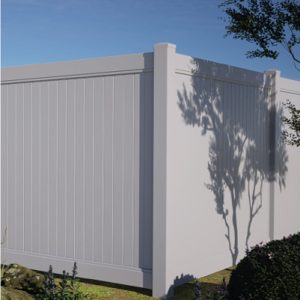
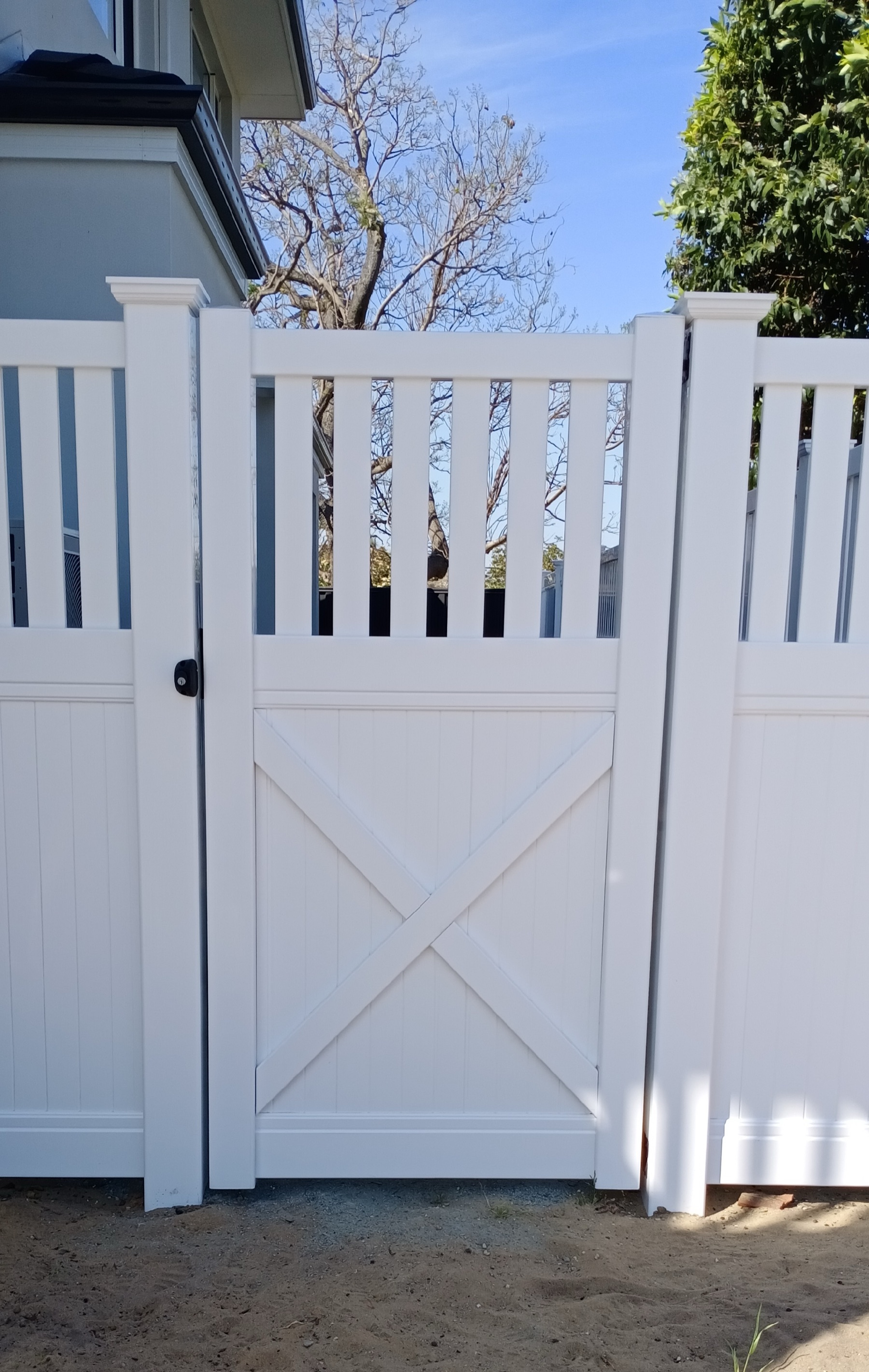
PVC privacy fencing works up to 1.2 metres. Above that, PVC picket or semi-privacy fencing meets the visual permeability requirements and can take the fence to the full 1.8 metres. The combination of a solid base with picket above is a clean look that complies. Pillars up to 2.1 metres give you more room to create an entrance feature, which suits the larger Dalkeith and Floreat properties.
Front fences (heritage streets):
Only a few streets in the Nedlands suburb are affected. If you're on a contributory property, the fence needs to suit the heritage character — PVC picket styles like Federation, Colonial, and Hampton work well for this and meet the permeability requirements.
Side and rear fences:
PVC privacy fencing up to 1.8 metres — no DA needed, no building permit needed. This is where most residential PVC fencing goes in Nedlands.
Fences above retaining walls:
Capped at 1.5 metres with 50% permeability. PVC semi-privacy fencing or picket styles meet this requirement.
Dalkeith river properties:
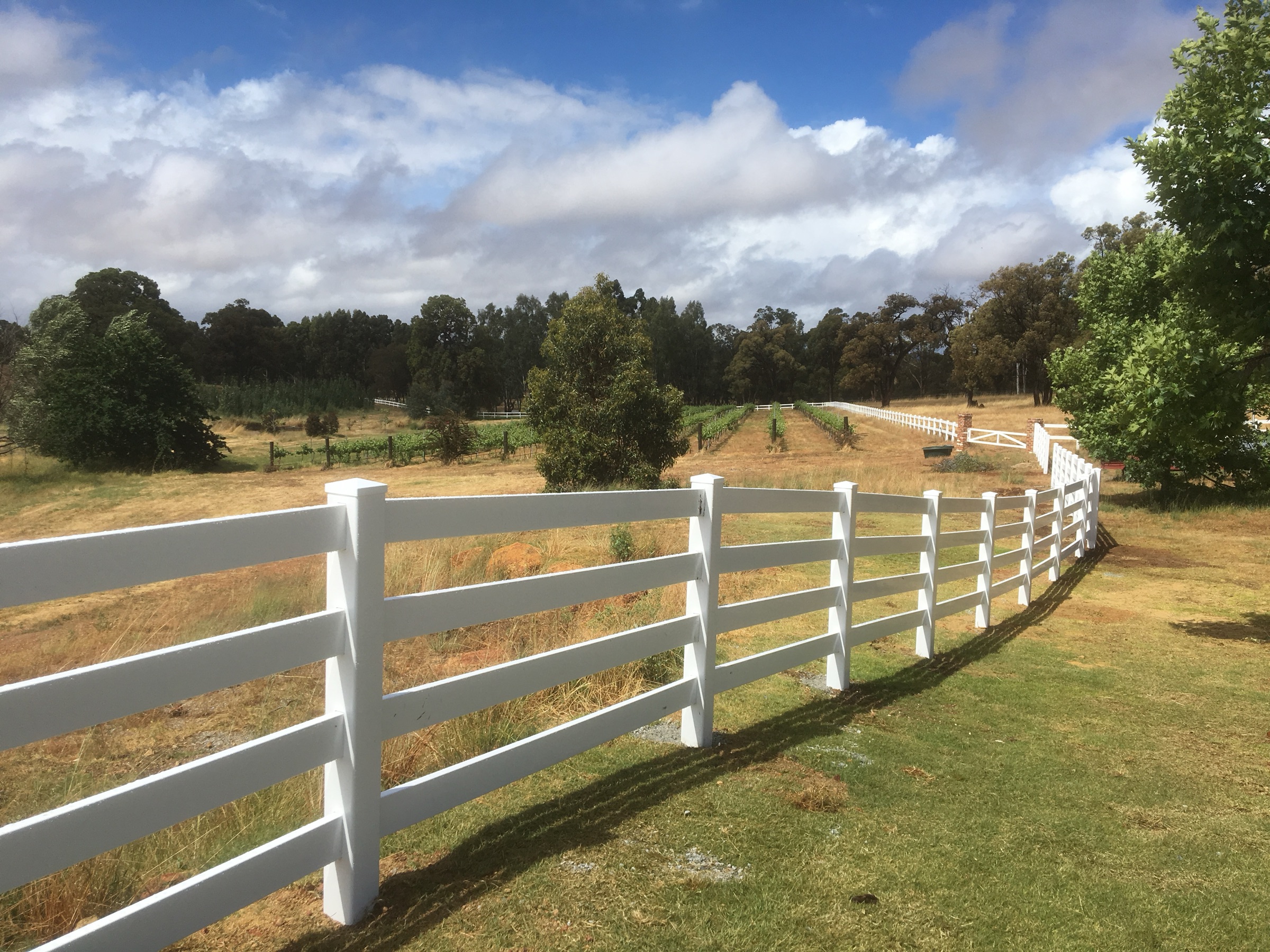
The river-side boundary needs open-view fencing. PVC picket is a natural fit — it meets the open-view requirement, handles the river moisture, and looks good from both sides.
Pool surrounds:
PVC is an accepted material for pool barriers. It meets the minimum 1,200mm height requirement and handles pool chemicals without corroding or staining.
For Probuild trade partners: If you're quoting a job in Nedlands and need to check product specifications against permeability requirements — especially for retaining wall combos or river-frontage properties — give us a call. We can confirm which profiles meet the gap and surface area ratios for each situation.
A Note on Swanbourne
Swanbourne is listed as a City of Nedlands suburb, but the Town of Claremont also has jurisdiction over parts of it. The boundary runs through the suburb, so which council's rules apply depends on exactly where the property sits. Check your rates notice or call the City of Nedlands on 9273 3500 to confirm. If your property falls under Claremont, the fencing rules may be different.
Before You Quote — Checklist for Contractors
- Confirm the council. If the property is in Swanbourne, check whether it falls under Nedlands or Claremont — the rules may differ.
- Check for heritage listing. If it's on Tyrell Street, Mountjoy Road, Meriwa Street, or Clifton Street in the Nedlands suburb, check whether the property is contributory. If it is, you'll need a DA for any front fence work visible from the street.
- Check for river frontage. Dalkeith properties on the Swan River need open-view fencing on the river-side boundary and may require DBCA referral.
- Measure for permeability. Know the gap widths and surface area ratios before you specify a product — especially for retaining wall combos (50% permeability required) and front fences above 1.2 metres.
- Check for retaining walls. Fence height on top of a retaining wall is capped at 1.5 metres with 50% permeability. Retaining walls over 500mm need a building permit and structural engineer sign-off.
- Factor in the DA if needed. Fees are typically $147–$295. Let the customer know the cost and processing time upfront.
- Confirm with the council. If there's any doubt, call the Duty Planner on 9273 3500 (Monday to Friday, 8:30am to 5:00pm). It takes five minutes and can save you a rejected application.
Before You Start — Checklist for Homeowners
- Check which council you're in. If you're in Swanbourne, confirm whether your property falls under the City of Nedlands or the Town of Claremont. Your rates notice will tell you, or call 9273 3500.
- Know your front fence limits — 1.2 metres solid, permeable above that to 1.8 metres, pillars up to 2.1 metres.
- If your property is on the river, the river-side boundary needs open-view fencing and may need DBCA approval. Talk to the City's planning team before you start.
- For side and rear fences, you can generally go up to 1.8 metres without any approval (non-masonry materials like PVC).
- If there's a retaining wall, the fence on top is capped at 1.5 metres and needs to be 50% permeable.
- Talk to your neighbours before you start, especially for boundary fences. Under the Dividing Fences Act, you generally share the cost equally for a sufficient fence. Nedlands has no fencing local law, so a standard 1.8 metre non-masonry fence is the practical benchmark.
- If you want an installer who knows the product, we can connect you with an experienced local contractor who works with PVC fencing regularly. Give us a call or organise an installer through the website.
Need a hand? If you're planning a fence in the City of Nedlands and want to talk through your options, give us a call. We can help you work out what style and height suits your property, and if you need an installer, we'll connect you with someone who knows the product inside out.
Contact the City of Nedlands
| General enquiries | 9273 3500 |
| council@nedlands.wa.gov.au | |
| Duty Planner | Monday – Friday, 8:30am – 5:00pm, via 9273 3500 |
| Planning info | nedlands.wa.gov.au/development/planning |
| Policies | nedlands.wa.gov.au — policies and framework |
| Address | 71 Stirling Highway, Nedlands WA 6009 (corner Smyth Road) |
This guide is based on the City of Nedlands' Local Planning Policy 1.1 — Residential Development (December 2024), the WA Residential Design Codes, and the City's heritage and foreshore policies as at March 2026. Council rules can change — always confirm with the City's planning team before you start work. Probuild PVC Fencing is not a planning authority and this is general guidance only.