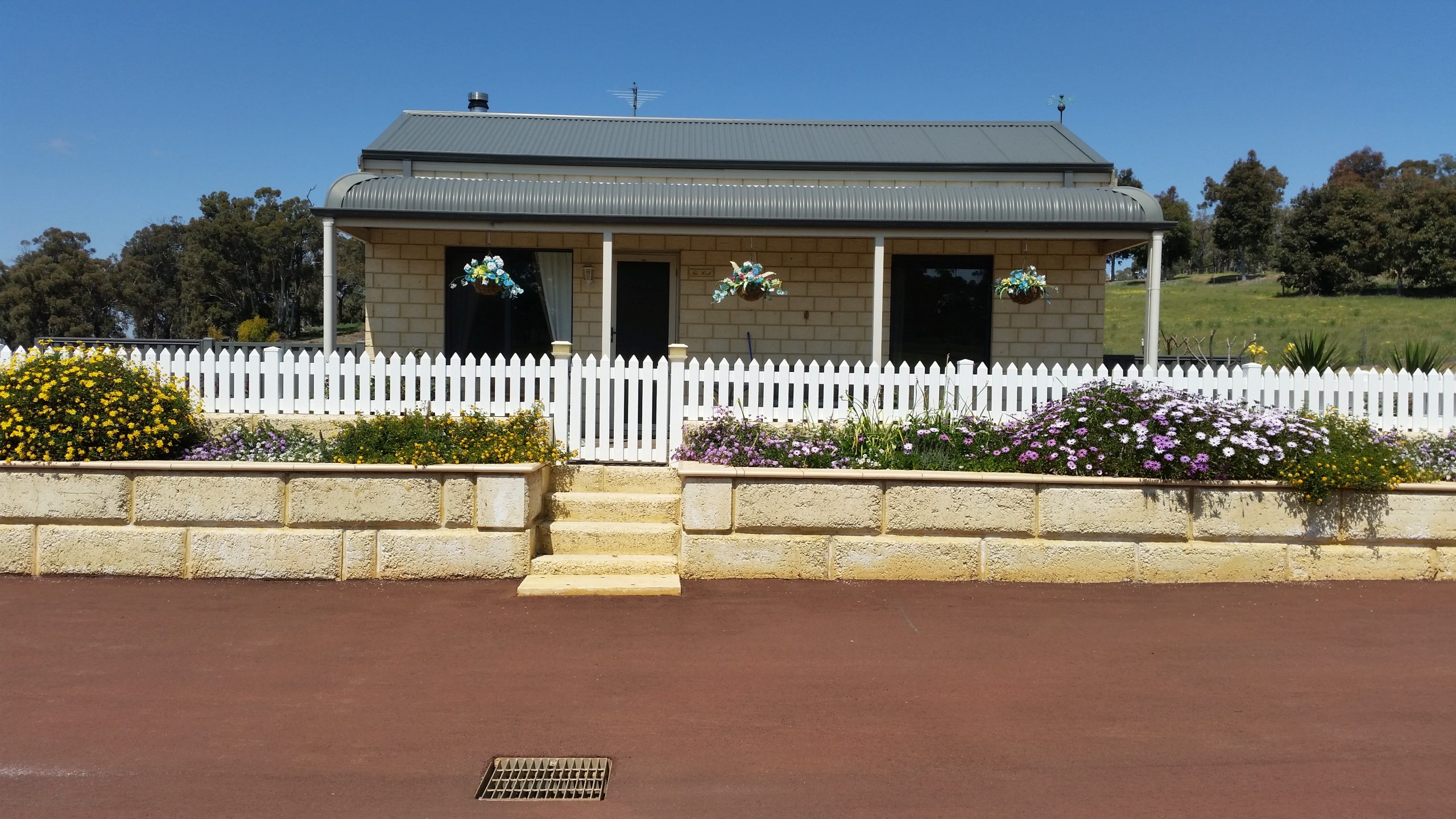
The City of Wanneroo stretches a long way up the coast, and if you're working in the suburbs from Mindarie north through Clarkson, Quinns Rocks, Alkimos, Butler, and beyond, the fencing rules are more straightforward than most Perth councils. No heritage precincts in the coastal area, PVC is explicitly approved in the local law, and there's a clear "sufficient fence" standard that covers most backyard jobs without needing a permit. That said, the newer estates have developer covenants (additional design rules set by the estate developer that apply on top of council rules) that can catch people out, so it's worth knowing where the extra rules sit.
We've pulled this from the City of Wanneroo's Fencing Local Law 2021, the Residential Design Codes (R-Codes), and the City's published guidelines. It was current as at March 2026, but council rules do get updated – always confirm with the City's planning team before you start work.
Quick reference: In standard residential areas, your front fence can be solid up to 1.2 metres. Above that, it needs to be visually permeable (gaps that allow a line of sight through the fence) up to a maximum of 1.8 metres. Side and rear fences sit between 1.75 metres and 1.85 metres under the "sufficient fence" standard – and PVC panel is explicitly named as an approved material.
Front Fence Rules – The Basics
These apply across the City of Wanneroo on standard residential lots.
Solid fencing can go up to 1.2 metres above natural ground level, measured from the primary street side. Above that, the fence has to be an open fence – the Wanneroo term for visually permeable – up to a maximum of 1.8 metres.
Pillars and piers can also go up to 1.8 metres, with a maximum horizontal dimension of 400mm x 400mm, and they must be separated by visually permeable fencing.
What "open fence" actually means
The City of Wanneroo defines an "open fence" in section 1.4(1) of the Fencing Local Law 2021, and it's worth understanding because this is what gets measured:
- If your gaps are 50mm or wider, at least one-third of the total fence surface needs to be open space.
- If your gaps are narrower than 50mm, at least half the total fence surface needs to be open.
A standard picket fence with evenly spaced pickets and gaps will meet these requirements comfortably. If you're using a slatted design with narrower gaps, you'll need to check the 50% open rule is met.
For contractors: measure the gaps and calculate the total surface area ratio before you quote. Getting this wrong means a rejected development application (DA) or a fence that has to come down.
Driveway sightlines and corner truncation
Where a fence sits next to a vehicle access point or a street intersection, it must be truncated (cut back at an angle) with a minimum dimension of 1.5 metres, or the fence must be reduced to no more than 750mm in height. This is a safety requirement under section 2.4 of the local law and the City enforces it.
On corner lots with uniform fencing, the fence must also be visually permeable across the truncation and for 3 metres along the adjoining side boundary.
Just replacing a side or rear fence? Most backyard fence jobs in Wanneroo's coastal suburbs are straightforward – between 1.75 metres and 1.85 metres, PVC is explicitly approved, and no permit is needed. The section below covers it.
Front Fence Materials – What's Allowed
Section 2.3(1) of the Fencing Local Law 2021 sets out what you can use for a front fence on a residential lot:
- Face finished brick
- Concrete
- Stone
- Timber palings
- A combination of the above or similar
The front fence must complement the dwelling and not detract from the streetscape.
Excluded materials for front fences: fibre cement sheeting and sheet metal.
PVC is not explicitly listed for front fences the way it is for side and rear boundaries (more on that below). However, the "or similar" wording provides scope for PVC to be accepted where it complements the home. If you're considering a PVC front fence in Wanneroo, it's worth confirming with the City's planning team before you go ahead – a quick phone call can save a lot of time.
Side and Rear Fences – Where PVC Is Explicitly Approved
This is the big one for PVC fencing in the City of Wanneroo. Schedule 1 of the Fencing Local Law 2021 sets out the "sufficient fence" standard for residential lots behind the front setback (the area between your front boundary and the main building line), and PVC panel is explicitly named as an approved material.
The approved materials under Schedule 1 are:
- Corrugated fibre-reinforced pressed cement sheeting
- Timber palings
- Masonry (brick, stone, concrete)
- Factory coloured sheet metal post and panelled fence
- PVC panel (eg. Duralock)
- Any combination of the above
The council's fencing local law names "PVC panel (eg. Duralock)" as an accepted material — this covers all PVC panel fencing, including Probuild products.
Why this matters: PVC panel fencing is not just tolerated under a "similar materials" provision – it is expressly named in the local law as a sufficient fence material. That means your neighbours cannot object to PVC as a material, you don't need a building permit, and there's no ambiguity about whether it's allowed. The City of Wanneroo is one of the more PVC-friendly councils in Perth.
Height requirements
A sufficient fence on a residential lot must be between 1.75 metres and 1.85 metres in height. This is slightly different from the standard 1.8 metres you'll see in most other councils – Wanneroo gives a range rather than a fixed number.
In practical terms, this means a standard 1.8 metre PVC privacy fence or picket fence sits comfortably within the range. For contractors, it's worth knowing the tolerance is there – you're compliant anywhere from 1.75 to 1.85 metres.
No building permit needed
Section 1.5(3) of the Fencing Local Law 2021 is clear: a dividing fence constructed and maintained as a sufficient fence under the local law does not require a building permit. Since PVC panel is explicitly listed in Schedule 1, a standard PVC boundary fence between 1.75 metres and 1.85 metres can be erected without a building permit.
Compare that to masonry fencing, which needs a building permit once it goes above 750mm and requires engineer sign-off.
New Estates and Developer Covenants
This is the section that matters most if you're working in the newer coastal suburbs. Several estates in the Wanneroo corridor have developer covenants and design guidelines that sit on top of the City's Fencing Local Law. You need to comply with both.
For contractors: If you're quoting a job in Alkimos, Yanchep, or any estate that's still within its covenant period, check the lot's covenant documentation before you specify materials. A covenant that says "Colorbond only" will override the local law's approval of PVC – at least until the covenant lapses.
Shorehaven (Alkimos) – Peet Limited
All house plans, including fencing and landscaping, must be submitted for approval before construction. Colorbond is typically provided for side and rear boundaries as part of the developer's fencing package. Specific fencing covenant details are in the individual land sales contract. The approval body is Zuidveld Marchant Hur (ZMH) – (08) 9227 0900.
Trinity (Alkimos) – Satterley / LWP
Building and design covenants apply, and plans must be submitted for approval before construction. Fencing requirements are set out in the estate's design guidelines document.
Yanchep Golf Estate – Peet Limited
Protective covenants are in place and all house plans must be submitted for Peet's approval. Covenant management is handled by Residential Covenant Management – (08) 9561 8405.
Mindarie Keys
This is a more established estate (primarily 1990s–2000s development). Original developer covenants may still technically apply but are less commonly enforced in established areas. The standard City of Wanneroo Fencing Local Law 2021 applies.
What happens when covenants lapse?
Developer covenants typically have a sunset period (an expiry date after which the developer's rules no longer apply and only the standard council rules remain) – often five to ten years from the date of the estate's development. Once a covenant lapses or becomes unenforceable, PVC fencing is an approved material under the local law and can be installed. If you're in an older part of a newer estate and the original Colorbond is due for replacement, it's worth checking whether the covenant is still active. If it's not, you have more options.
Pool Fencing
Pool barriers in the City of Wanneroo follow the statewide rules under the Building Act 2011 and Australian Standard AS 1926.1:
- Minimum barrier height: 1.2 metres
- Maximum gap under the barrier: 100mm
- Maximum gap between vertical members: 100mm
- Minimum spacing between horizontal climbable elements: 900mm
- Gate: must open away from the pool, self-closing, self-latching
- A building permit is always required before installing a pool or spa barrier
- The City inspects pool barriers on a rolling four-year cycle across five zones
- A "pool" includes any structure with water deeper than 300mm – including portable and inflatable pools
Pools installed on or after 1 May 2016 must comply with AS 1926.1-2012 and AS 1926.2-2007. Pools installed before that date must comply with AS 1926.1-1993. All pools approved and installed on or after 5 November 2001 must be isolated from the dwelling by a compliant barrier.
PVC pool fencing can be used provided it meets the relevant Australian Standard. PVC picket styles with vertical members can be designed to comply with pool barrier gap and height requirements.
When Do You Need Planning Approval?
You don't need a DA for:
- Side and rear boundary fences that meet the "sufficient fence" standard (including PVC, between 1.75 m and 1.85 m)
- Front fences that are solid up to 1.2 metres and visually permeable above that, up to 1.8 metres total
- Front fences built from approved materials that complement the dwelling
You do need a DA for:
- Front fences that exceed 1.8 metres in total height
- Front fences that are solid above 1.2 metres
- Front fences built from materials that don't comply with section 2.3(1)
- Any fence that doesn't meet the standard R-Codes height and permeability limits
Building permit requirements
A building permit is required for:
- A masonry fence exceeding 750mm in height
- Any fence where part of it exceeds 500mm in height and is used as a retaining wall
- A non-masonry fence exceeding 1.8 metres in height
The key exception: a sufficient fence under Schedule 1 (which includes PVC panel) does not require a building permit. This is spelled out in section 1.5(3) of the local law.
The City provides a Building Application Fee Calculator and a Development Application Fee Calculator on their website for checking costs.
The Coastal Angle
The City of Wanneroo's coastal suburbs run from Mindarie all the way north through Clarkson, Quinns Rocks, Alkimos, and up to Two Rocks and Yanchep. Every one of these suburbs sits within a few hundred metres to a couple of kilometres of the Indian Ocean, and the salt air is constant.
PVC handles coastal conditions well. It doesn't rust, it doesn't corrode, and there's no coating to scratch through or repaint. Colorbond in coastal areas will eventually show rust spots where the coating is damaged – near the ocean, that can happen within a few years. Timber in salt air needs regular treatment and still deteriorates over time.

In suburbs like Mindarie and Quinns Rocks where properties are right on the water, this matters. A Colorbond fence installed near the coast will need maintenance and eventually replacement sooner than the same fence installed 20 kilometres inland. PVC doesn't have that problem – the material itself is unaffected by salt air.
What This Means for PVC Fencing in Wanneroo
Here's how the rules above translate to actual product choices for properties in Wanneroo's coastal suburbs:
Side and rear fences:
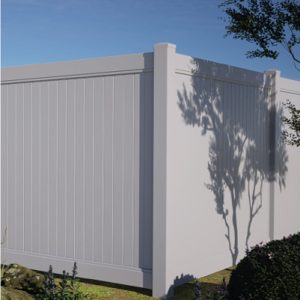
PVC privacy fencing between 1.75 metres and 1.85 metres – no DA needed, no building permit needed, and PVC is explicitly approved in the local law. This is where most residential PVC fencing goes in Wanneroo, and the compliance pathway is as clean as it gets.
Front fences (standard areas):
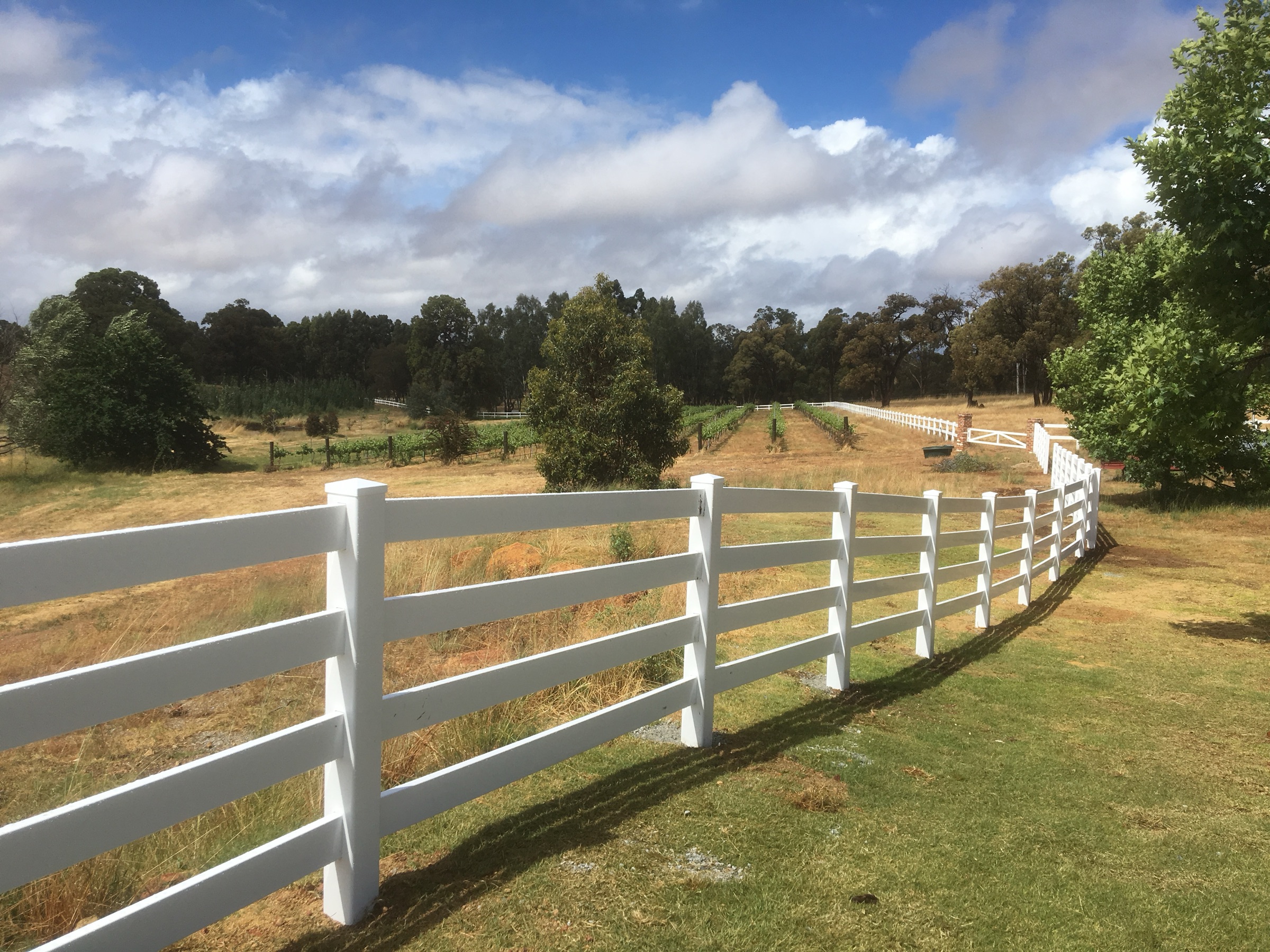
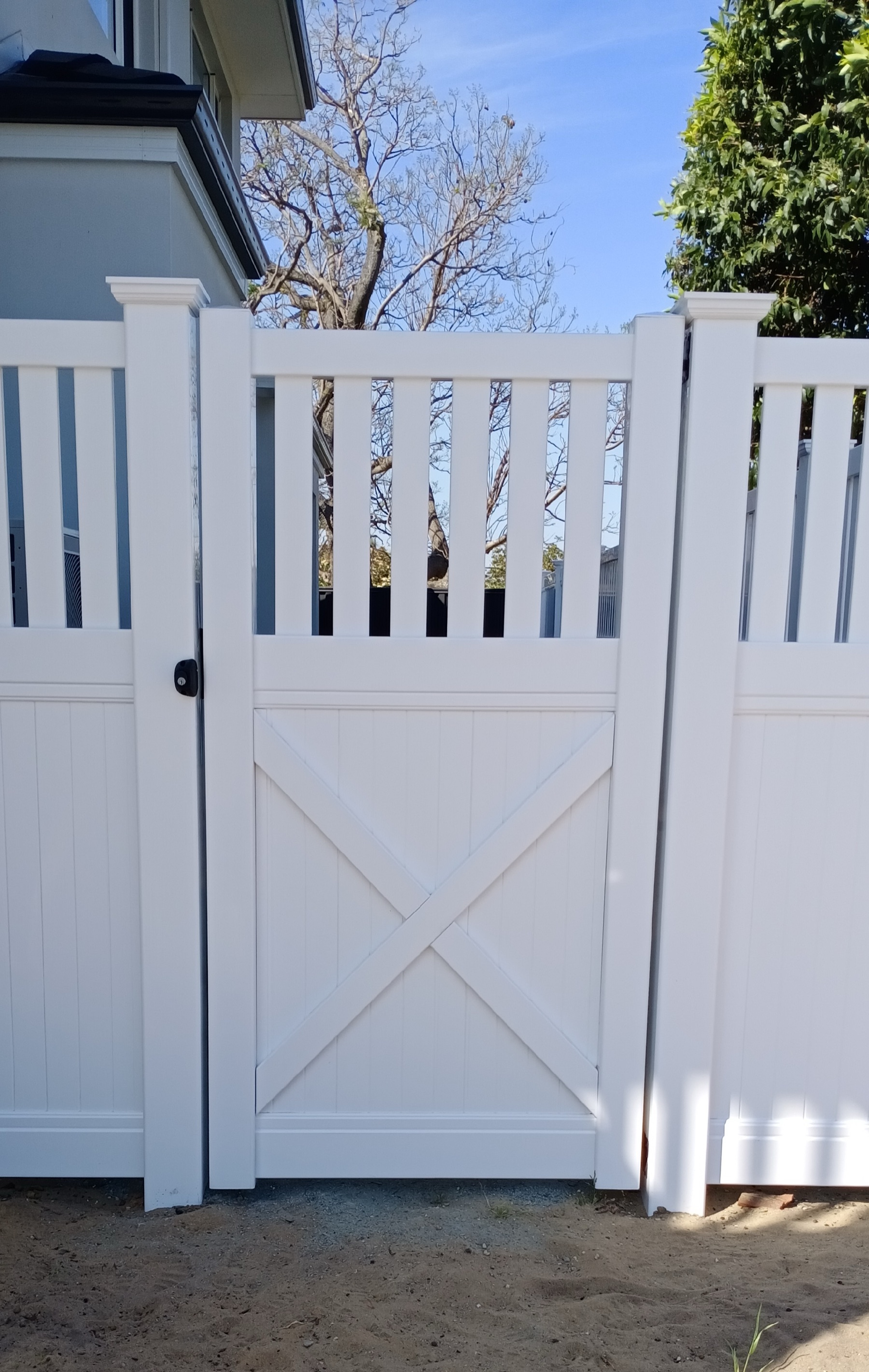
PVC privacy fencing works up to 1.2 metres as a solid section. Above that, PVC picket or semi-privacy fencing meets the visual permeability requirements and can take the fence to the full 1.8 metres. PVC isn't explicitly listed for front fences, so confirm with the City's planning team before you proceed – but the "or similar" provision means it's generally accepted where it complements the dwelling.
Pool surrounds:
PVC is an accepted material for pool barriers provided it meets AS 1926.1. PVC picket styles with vertical members can be designed to comply with the gap and height requirements, and PVC handles pool chemicals (chlorine, salt) without corroding or staining.
New estates with active covenants:
Check the covenant first. If it specifies Colorbond only, you'll need to wait until the covenant lapses or seek a variation. Once it's lapsed, the local law applies and PVC panel is an approved material.
For Probuild trade partners: If you're quoting a job in the City of Wanneroo and want to confirm product specifications against the sufficient fence requirements or the permeability rules, give us a call. We can confirm which profiles meet the standards for each application.
Before You Quote – Checklist for Contractors
- Check if the property is in a covenanted estate. Shorehaven, Trinity, Yanchep Golf Estate, and other newer developments may have design guidelines that restrict materials beyond what the local law requires. Ask the homeowner for their covenant documentation or check with the developer's approval body.
- Confirm the covenant status. If the estate is older than five to ten years, the covenant may have lapsed. If it has, the standard Fencing Local Law 2021 applies and PVC panel is explicitly approved.
- Know the height range. Wanneroo's sufficient fence standard is 1.75 metres to 1.85 metres – not a fixed 1.8 metres. You're compliant anywhere in that range.
- Check front fence materials. PVC is explicitly approved for side and rear boundaries but falls under "or similar" for front fences. If the job includes a front fence, confirm acceptability with the City before you quote.
- Measure for permeability on front fences. Above 1.2 metres, the fence must be an "open fence." Know the gap widths and surface area ratios before you specify a product.
- Check for retaining walls. If the fence sits on top of a retaining wall, the retaining wall portion above 500mm needs a building permit and structural engineer sign-off.
- Confirm with the council if there's any doubt. Call (08) 9405 5000 – it takes five minutes and can save you a rejected application.
Before You Start – Checklist for Homeowners
- Check if your property has an active developer covenant. If you bought in a newer estate like Shorehaven, Trinity, or Yanchep Golf Estate, your lot may have design guidelines that restrict fencing materials. Check your land sales contract or call the estate's approval body.
- Know your front fence limits – 1.2 metres solid, up to 1.8 metres total with the section above 1.2 metres visually permeable. Front fence materials need to complement your home.
- For side and rear fences, PVC panel is explicitly approved by the City of Wanneroo. A standard fence between 1.75 metres and 1.85 metres doesn't need a building permit or a DA.
- Talk to your neighbours before you start, especially for boundary fences. Under the Dividing Fences Act, you generally share the cost equally for a "sufficient fence." In Wanneroo, that's a fence between 1.75 metres and 1.85 metres built from an approved material – which includes PVC.
- If your neighbour disagrees on the material, PVC is explicitly named in the local law as sufficient. They can prefer a different material, but they can't object to PVC on the grounds that it's not approved.
- If you want an installer who knows the product, we can connect you with an experienced local contractor who works with PVC fencing regularly. Give us a call or organise an installer through the website.
Need a hand? If you're planning a fence in the City of Wanneroo and want to talk through your options, give us a call. We can help you work out what style and height suits your property, and if you need an installer, we'll connect you with someone who knows the product inside out.
Contact the City of Wanneroo
| General enquiries | (08) 9405 5000 |
| Website | wanneroo.wa.gov.au |
| Front fence info | Front Fence Approvals page |
| DA fee calculator | Development Application Fee Calculator |
| Building fee calculator | Building Application Fee Calculator |
| Pool safety | Pool and Spa Barrier Safety |
| Fencing Local Law 2021 | Download PDF |
| Address | 23 Dundebar Road, Wanneroo WA 6065 |
This guide is based on the City of Wanneroo's Fencing Local Law 2021, the WA Residential Design Codes, and the City's published guidelines as at March 2026. Council rules can change – always confirm with the City's planning team before you start work. Probuild PVC Fencing is not a planning authority and this is general guidance only.