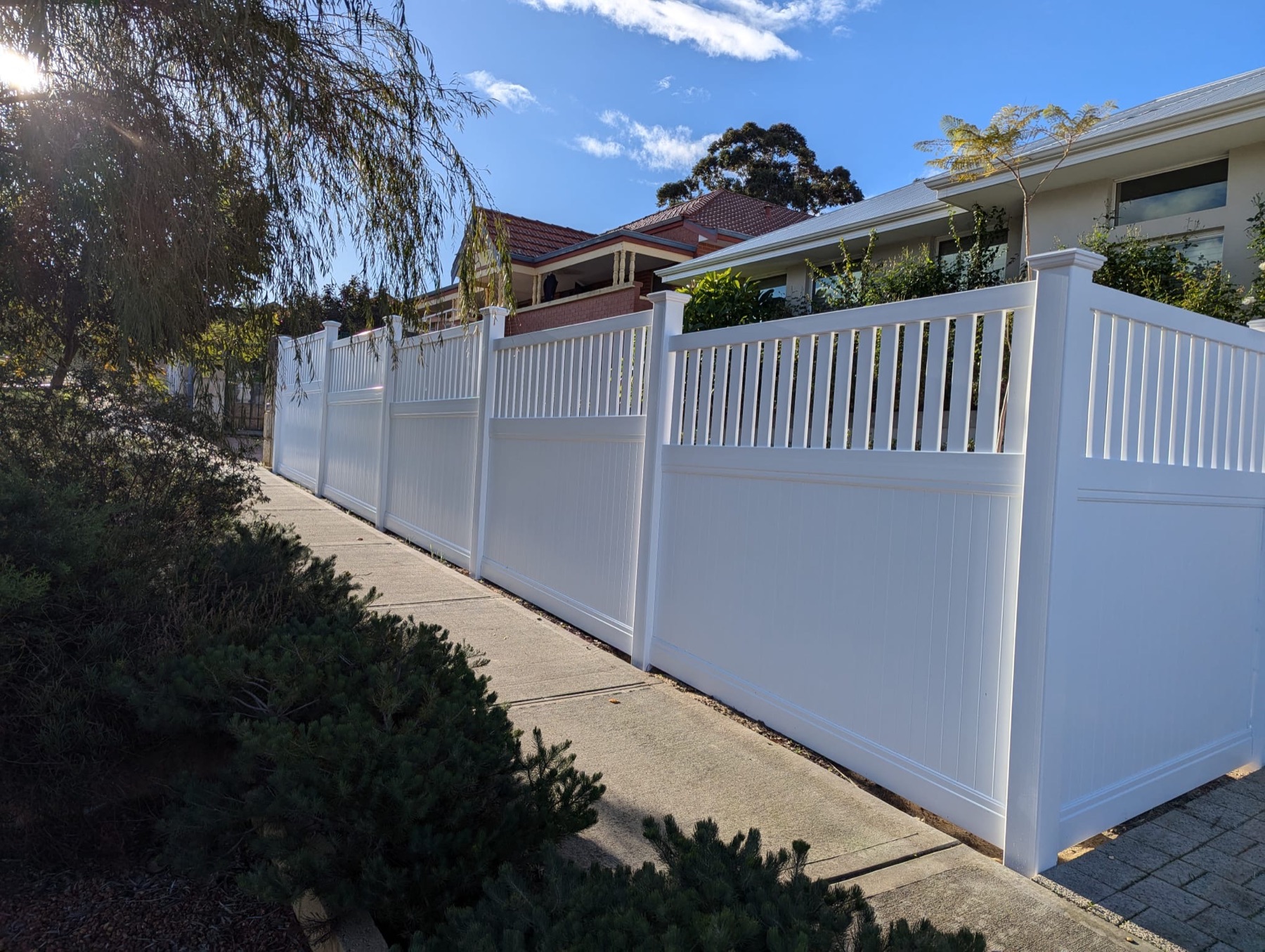
Perth is a coastal city. That sounds obvious, but it matters more than most people realise when they're choosing a fence. The metro area stretches 125 kilometres along the Indian Ocean from Two Rocks down to Singleton, and the whole built-up area is only about 45 kilometres wide. That means the majority of Perth properties are within 10 kilometres of the ocean, and a huge number are within five. At that distance, salt air is a genuine factor in how long your fence lasts and how much maintenance it needs.
This article covers the material science behind coastal fencing in plain English. If you're a contractor quoting a coastal job, this is useful context for explaining material choices to your customer. If you're a homeowner in Scarborough or Cottesloe wondering why your metal fence is showing rust after a few years, this explains what's going on and what the alternatives are.
In this article:
- What salt air does to fencing materials
- Colorbond near the coast
- Timber near the coast
- PVC near the coast
- Perth's coastal suburbs — and why this matters
- Pools near the coast — double exposure
- Wind
- Heat
- What this means for contractors
- What this means for homeowners
- Council fencing guides for coastal suburbs
What Salt Air Does to Fencing Materials
The ocean produces salt spray constantly. Waves break, wind picks up tiny salt particles, and those particles travel inland. In Perth, the afternoon sea breeze (the Fremantle Doctor) pushes salt air across the metro area every day during summer. That's not occasional exposure — it's daily, for months at a time.
Salt accelerates corrosion in metal. In technical terms, chloride ions in salt break down the passive oxide layer that protects metals like steel and aluminium. Once that protective layer is compromised, moisture gets to the bare metal and oxidation starts. In plain terms: salt finds any weakness in a metal surface and rust follows.
The Australian Standard AS 4312 classifies corrosion environments by distance from the coast. Within 200 metres of surf beaches is classified as C5 — the most severe atmospheric corrosion category. From 200 metres to one kilometre is C4 (calm seashore). From one kilometre to 10 kilometres is C3 (coastal). These classifications exist because the corrosion rates at each distance are measurably different, and materials need to be specified accordingly.
What matters for fencing is this: any material with a metal component — steel panels, aluminium frames, galvanised posts, screws, brackets — is subject to accelerated corrosion within that coastal zone. The closer to the water, the faster it happens.
The numbers: Zinc corrosion rates in a coastal C5 environment can exceed 4.2 micrometres per year, compared to less than 0.7 micrometres per year inland. That's six times faster degradation of the protective zinc coating that most steel fencing relies on.
Colorbond Near the Coast
Colorbond is a good product. It works well in most of Australia, and for inland properties it's a reliable, low-maintenance fencing option. This isn't about saying Colorbond is bad — it's about being honest that steel has limitations in coastal environments, and those limitations are worth understanding before you commit to a material.
Colorbond steel is a sandwich of layers: a steel base, a zinc or zinc-aluminium alloy coating (Zincalume), a conversion layer, a primer, and a topcoat of baked-on paint. Each layer protects the one beneath it. The system works well until one of those layers gets breached.
Near the coast, there are a few common breach points:
- Cut edges. When a Colorbond panel or post is cut on site during installation, the freshly cut edge exposes bare steel. The zinc coating self-heals small cuts over time, but larger cuts — the kind that happen during every fencing installation — can remain vulnerable. Near the coast, those cut edges are exposed to salt spray from day one.
- Screw and rivet points. Every fastener that penetrates the panel surface creates a small breach in the coating system. Installers use compatible fasteners, but the point where metal meets metal under constant salt exposure is still a weak spot over time.
- Scratches and mechanical damage. Garden tools leaning against the fence, kids kicking balls into it, dogs scratching at the base, branches rubbing in the wind. Every scratch that gets through the paint layer exposes the metal beneath it. Inland, these minor scratches are cosmetic. Near the coast, they become corrosion entry points.
- Panel overlaps and crevices. Where panels overlap or sit in channels, moisture can collect and salt can concentrate. These crevice points are where you often see the first signs of corrosion on coastal Colorbond fences.
BlueScope's own warranty reflects this reality. The standard Colorbond fencing warranty is 10 years, but the terms include requirements for maintenance (washing with fresh water at least every six months in coastal areas) and exclusions for damage from improper installation, mechanical damage, and contact with certain substances. The warranty estimator on BlueScope's website adjusts coverage based on your distance from the coast — the closer you are, the shorter the coverage period for some products. Within 200 metres of surf, some warranty categories drop significantly or don't apply at all.
None of this means a Colorbond fence near the coast will fail immediately. A well-installed Colorbond fence with regular maintenance can last a reasonable time in coastal areas. But the maintenance requirement is real, and the vulnerability at cut edges and fastener points is a genuine long-term consideration.
Timber Near the Coast
Timber fencing near the coast faces a different set of challenges, but the outcome is similar: more maintenance and a shorter lifespan than you'd get inland.
Salt air draws moisture, and timber absorbs moisture. In coastal areas, the cycle of salt deposit, moisture absorption, drying, and redeposition accelerates the breakdown of timber fibres. Hardwoods resist this better than softwoods, but all timber fencing near the coast needs more frequent treatment than the same fence five kilometres further inland.
The practical impact is on the maintenance cycle. A timber fence inland might need repainting or restaining every five to seven years. Near the coast, that cycle shortens to every two to four years, depending on the exposure. The timber itself can start showing signs of grey weathering, splitting, and surface degradation within the first couple of years if it's not treated and maintained.
The metal components in a timber fence — brackets, screws, nails, post supports — are also subject to the same salt corrosion as any other metal near the coast. Rust staining from corroding fasteners is a common issue on coastal timber fences, and it's often the fasteners that fail before the timber does.
PVC Near the Coast
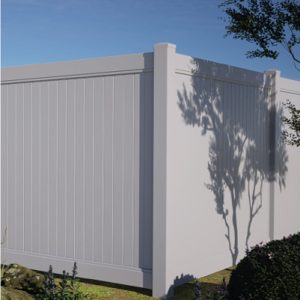
PVC is a polymer. It contains no metal in its panel and rail construction, no organic material that absorbs moisture, and no coating that can be scratched through to expose a vulnerable layer underneath. The material itself is the finished surface — there's nothing underneath it that salt, moisture, or UV can get to and degrade.
In practical terms, that means:
- No rust. There's no metal to corrode. Salt spray lands on the surface, and when it rains or when you hose the fence down, it washes off. The salt doesn't interact with PVC the way it interacts with steel.
- No rot. PVC doesn't absorb moisture. The salt-and-moisture cycle that breaks down timber has no effect on PVC. The material doesn't swell, warp, split, or decay.
- No coating to breach. Unlike Colorbond, where the protective system can be compromised by cuts, scratches, and fastener points, PVC is the same material all the way through. A scratch on a PVC fence is cosmetic — it doesn't expose a different, vulnerable material underneath.
- UV stability. Quality PVC fencing is UV-stabilised for Australian conditions. Perth gets some of the highest UV levels in the country, and coastal suburbs get the double hit of UV plus salt. PVC manufactured for Australian conditions is formulated to handle both.
The maintenance for PVC fencing near the coast is essentially the same as it is anywhere else: an occasional wash with a hose to keep it looking clean. That's not a warranty requirement to prevent corrosion — it's just cleaning.
Worth knowing: PVC fencing fasteners and internal reinforcement can include metal components (aluminium or galvanised steel inserts in posts, for example). For coastal installations, it's worth specifying marine-grade or stainless steel internal hardware. The PVC panels and rails themselves are unaffected by salt, but the hardware inside the posts should be appropriate for the environment. We can talk you through what's needed for your specific location.
Perth's Coastal Suburbs
Perth isn't a city with a few beachside suburbs. The entire western edge of the metro area is coastline, running from Two Rocks in the north through to Mandurah in the south. Some of Perth's most established and sought-after suburbs are right on the water or within a few kilometres of it.
Here's a selection, running roughly north to south:
| Suburb | Distance to coast | Council area |
|---|---|---|
| Mindarie / Quinns Rocks | On the coast | City of Wanneroo |
| Hillarys / Sorrento / Padbury | On the coast / under 3 km | City of Joondalup |
| Trigg / Scarborough / Doubleview | On the coast / under 3 km | City of Stirling |
| City Beach / Floreat | On the coast / under 3 km | Town of Cambridge |
| Swanbourne / Claremont | On the coast / under 3 km | Town of Claremont / City of Nedlands |
| Cottesloe / Mosman Park | On the coast | Town of Cottesloe / Town of Mosman Park |
| North Fremantle / Fremantle / South Fremantle | On the coast | City of Fremantle |
| South Beach / Port Beach | On the coast | City of Fremantle |
| Coogee / North Coogee / Spearwood | On the coast / under 3 km | City of Cockburn |
| Rockingham / Safety Bay / Shoalwater | On the coast | City of Rockingham |
| Mandurah / Halls Head / Falcon | On the coast | City of Mandurah |
And it's not just the beachfront properties. Suburbs like Innaloo, Karrinyup, Wembley Downs, Dianella, and Balcatta are all within 10 kilometres of the coast. Under the Australian Standard, that puts them within the C3 coastal corrosion zone. The Fremantle Doctor carries salt air across all of these suburbs every afternoon during summer.
When you add it up, the majority of Perth's residential properties are within the distance where salt air has a measurable effect on metal surfaces. That's not a niche concern — it's relevant to most fencing jobs in the metro area.
Pools Near the Coast — Double Exposure
If you have a pool on a coastal property, your pool fence is dealing with two corrosive environments at once: salt air from the ocean and chemical exposure from the pool water itself.
Saltwater pools produce chloride directly. Chlorine-treated pools create a chemical environment that accelerates metal corrosion, particularly when pool water splashes onto fencing or when chemical-laden air sits around the pool area. Aluminium pool fencing in coastal areas is particularly affected — the combination of salt air and pool chemicals can cause visible white oxidation and pitting within a few years.
PVC is unaffected by pool chemicals. Chlorine, salt, bromine — none of these interact with PVC the way they interact with metals. A PVC pool fence on a coastal property handles both the ocean salt and the pool chemistry without any change to the material over time.
For contractors quoting pool fencing in coastal suburbs, PVC is worth presenting as the long-term option. The upfront cost is higher than aluminium, but there's no recoating, no replacement of corroded sections, and no callbacks for oxidation issues down the track.
Wind on Coastal Properties
Coastal properties in Perth cop more wind than inland suburbs. The sea breeze is stronger and more consistent near the water, and winter storms hit coastal areas hardest. A fence on a beachside property in Scarborough or Trigg is dealing with regular wind loads that a fence in Midland or Armadale never sees.
PVC fencing handles wind well. The material has a degree of flex, which means it absorbs wind load rather than resisting it rigidly. A quality PVC privacy fence with reinforced posts can handle wind speeds well above what Perth typically experiences, even during storm events. The panels flex slightly under load and return to position, rather than taking the full force as a rigid structure.
There's also the noise factor. Colorbond panels can rattle and drum in strong wind — that metallic booming sound during a storm is familiar to anyone with a steel fence. PVC panels don't produce the same resonance. They're quieter in wind, which is a practical benefit on properties that are already dealing with constant sea breeze.
Heat on Coastal Properties
Perth's coastal suburbs still get hot. The sea breeze takes the edge off summer afternoons, but before it arrives, 40-degree days hit the coast just as hard as anywhere else. Metal fencing absorbs and radiates heat — a dark Colorbond fence in full sun can be too hot to touch on a Perth summer day.
PVC doesn't conduct heat the way metal does. It stays noticeably cooler to the touch in the same conditions. If the fence is next to an outdoor living area, a path, or anywhere people and pets are regularly in contact with it, that's a practical difference worth considering.
What This Means for Contractors
If you're quoting fencing jobs in Perth's coastal suburbs, the material conversation is one of the most important parts of the quote. Here's how the coastal angle plays out in practice:
Explaining the recommendation. Most customers default to Colorbond because it's what they know. On a coastal property, you're doing them a service by explaining how salt air affects metal fencing over time. You're not talking them out of Colorbond — you're giving them information so they can make a proper decision. This article is a useful reference to send through when a customer asks why you're recommending PVC.
Quoting the long-term cost. PVC has a higher upfront material cost than Colorbond. But near the coast, the total cost of ownership shifts. Colorbond may need touch-ups, recoating of damaged areas, or panel replacement within 10 to 15 years. PVC needs a hose-down. When you frame it as a 20-year cost rather than a day-one cost, the numbers tell a different story.
Pool fencing jobs. Coastal pool fencing is where PVC really earns its premium. The combination of salt air and pool chemicals makes metal fencing a maintenance headache. PVC handles both without any material degradation. If you're quoting pool fencing within 10 kilometres of the coast, PVC should be in the conversation.
Warranty conversations. Customers often assume their Colorbond fence warranty covers everything for 10 years. It's worth knowing that BlueScope's warranty has coastal distance conditions, maintenance requirements (six-monthly fresh water wash), and exclusions for mechanical damage to the coating. PVC doesn't have those conditions because the failure modes they're designed to address — corrosion, coating breach, rust — don't apply to PVC.
For Probuild trade partners: If you're quoting a coastal job and want to compare material specs or talk through product recommendations for a specific suburb, give us a call. We deal with coastal fencing jobs across Perth every week and we're happy to help you work through the options.
What This Means for Homeowners
If your property is within 10 kilometres of the Perth coastline — and most Perth properties are — it's worth factoring coastal conditions into your fencing decision. This doesn't mean Colorbond or timber won't work. It means they'll work differently near the coast than they do inland, and the maintenance commitment is higher.
A few things worth thinking about:
- If your current fence is showing rust — particularly at screw points, panel edges, or where it's been scratched — that's salt corrosion at work. Touching up the paint helps temporarily, but the underlying issue is that the coating system has been breached and salt is getting to the metal. It will keep happening.
- If you're replacing an existing fence — this is the time to consider whether you want to go through the same cycle again. If the old fence was metal and it's failed because of coastal corrosion, replacing it with the same material in the same location will give you the same result.
- If you're building new — you're starting with a blank slate. Choosing PVC for a coastal property means you're not signing up for the maintenance cycle that metal and timber fencing require near the ocean.
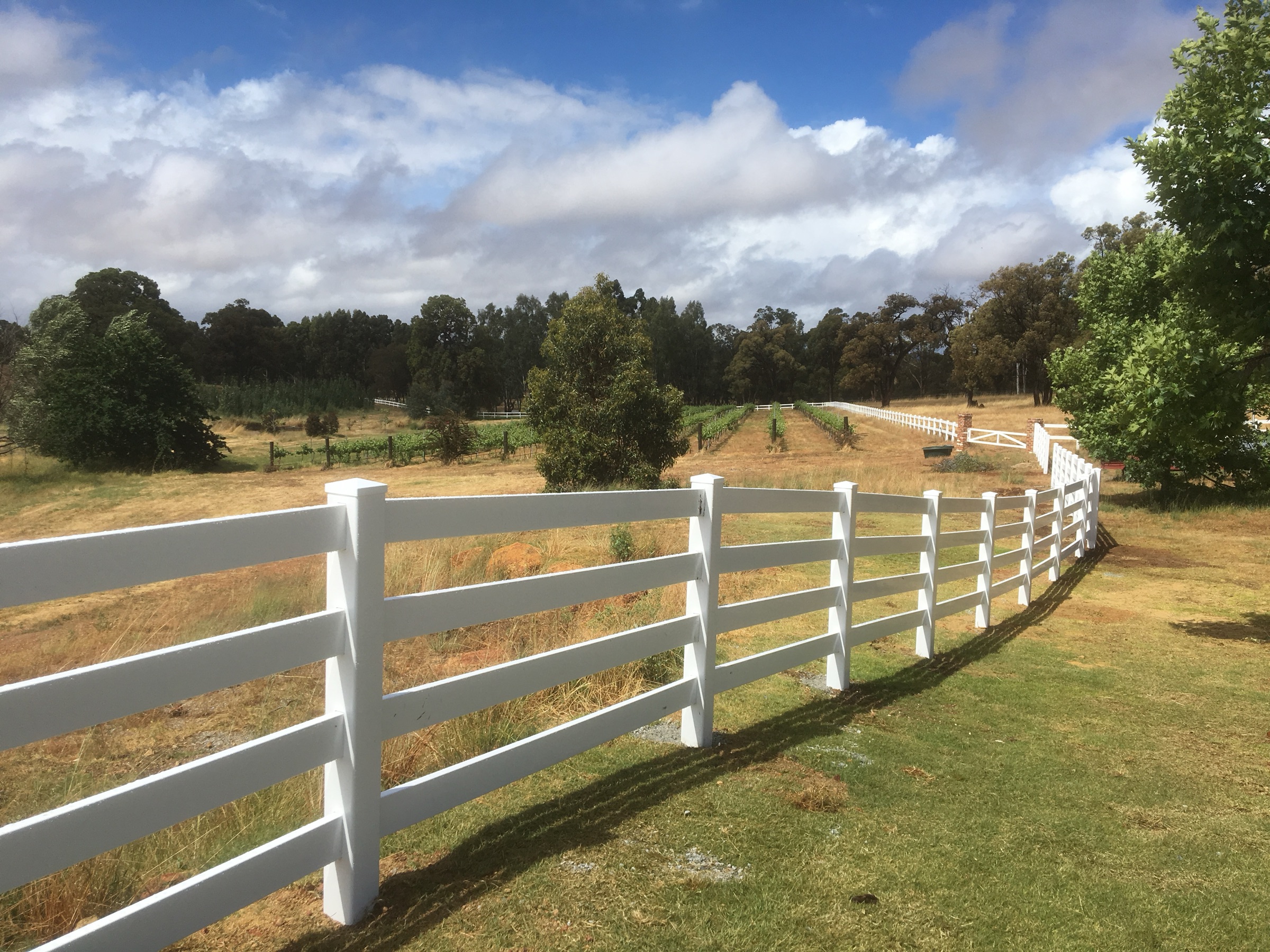
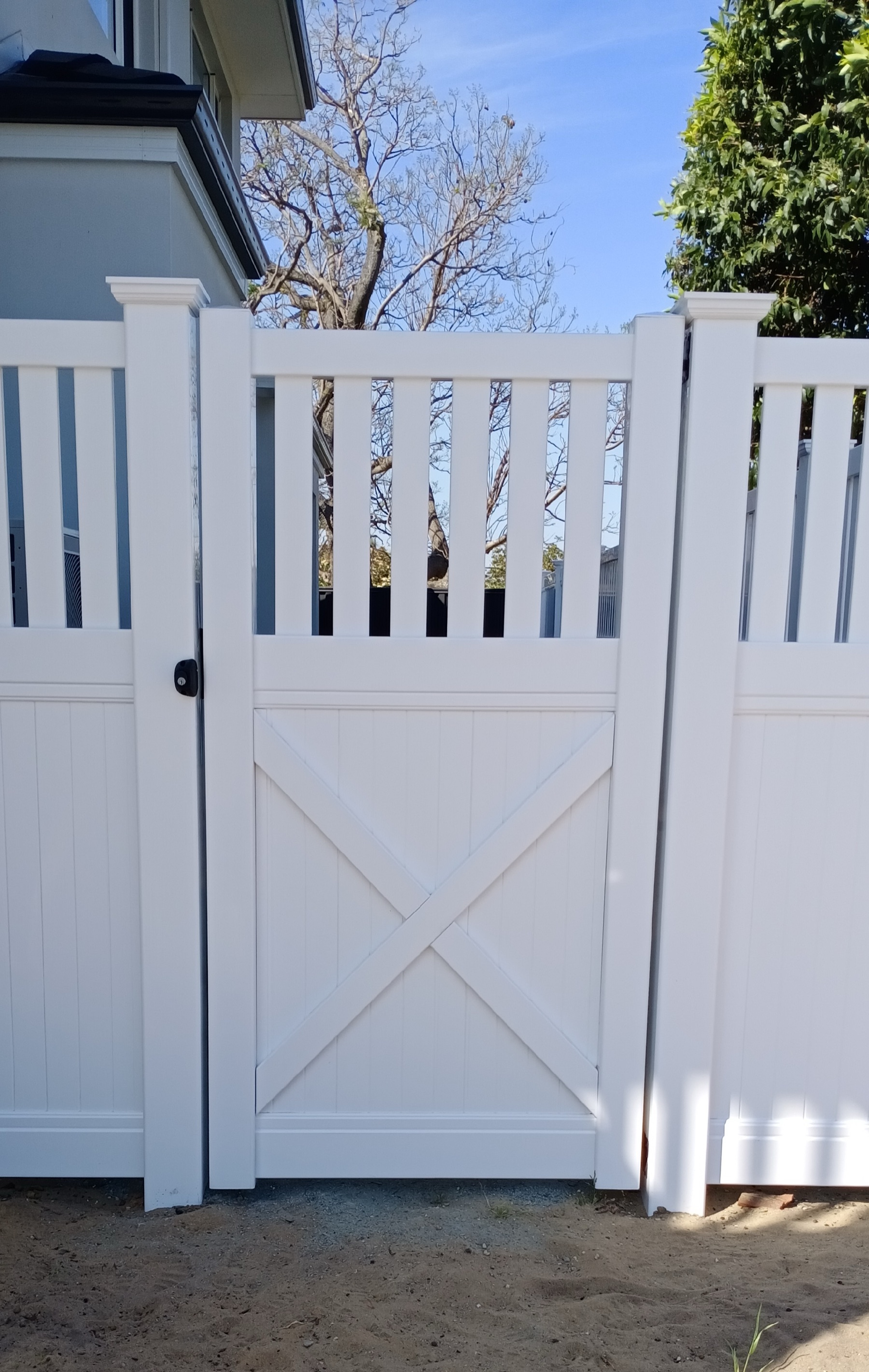
PVC fencing comes in a wide range of styles — privacy, semi-privacy, picket, and custom designs. Whatever look you're going for, there's a PVC option that works. And because it's made from a material that genuinely handles salt air without deteriorating, you're not compromising on longevity to get the style you want.
If you'd like to talk through what would work for your property, give us a call. If you'd like an experienced installer who knows the product, we can connect you with a local contractor who works with PVC fencing regularly.
Ready to go? Organise an installer through our website or give us a call on (08) 9300 9220 to talk through your options.
Council Fencing Guides for Coastal Suburbs
If you're working on a fencing project in one of Perth's coastal council areas, we've written detailed guides to the fencing rules for each one. These cover front fence heights, visual permeability requirements, heritage overlays, pool fencing, and what needs planning approval.
- Fencing rules in the City of Fremantle — covers Fremantle, South Fremantle, North Fremantle, Hilton, and the West End
- Fencing rules in Cottesloe
- Fencing rules in Mosman Park
- Fencing rules in Claremont
- Fencing rules in the Town of Cambridge — covers City Beach, Floreat, and Wembley
- Fencing rules in Nedlands — covers Nedlands and Swanbourne
- Fencing rules in the City of Stirling — covers Scarborough, Trigg, Doubleview, Karrinyup, and more
- Fencing rules in the City of Joondalup — covers Hillarys, Sorrento, Padbury, and more
- Fencing rules in the City of Wanneroo — covers Mindarie, Quinns Rocks, and more
Each guide is written for both contractors and homeowners, with checklists for quoting and planning.
This article is based on publicly available information from BlueScope Steel, the Australian Standard AS 4312 (Atmospheric Corrosivity Zones in Australia), and general material science. Corrosion rates and material performance vary depending on specific location, exposure, installation quality, and maintenance. Probuild PVC Fencing is a fencing supplier, not a materials testing authority — this is general guidance to help you make an informed decision about fencing materials for coastal properties.