Perth's climate creates fencing challenges that few other Australian cities match. Intense summer heat, high UV radiation, coastal salt air, and strong seasonal winds degrade conventional fencing within years. Understanding PVC fencing UV exposure performance - and how PVC handles heat and salt - explains why Perth property owners consistently choose PVC over timber and metal alternatives.
Perth's Extreme Climate Environment
Perth experiences some of Australia's most demanding outdoor conditions for fencing materials. Summer temperatures regularly reach extreme levels. The UV Index is classified as extreme during peak summer months. Properties near the coast experience continuous salt air exposure that accelerates corrosion in metal and rot in timber. Winter storms bring strong winds that test structural integrity across all fence types.
These environmental factors compound over decades. A material that tolerates heat reasonably well might still fail when salt air and UV exposure are added simultaneously. Perth's combination of stressors creates one of the most demanding fencing environments in Australia.
Salt-resistant coastal fencing is a priority for properties near WA's coastline. Our privacy fence styles are designed with WA conditions in mind, from coastal suburban blocks to inland properties.
How Heat Degrades Conventional Fencing
Metal fencing expands significantly with temperature. This expansion creates stress on fasteners and framework connections. Repeated expansion and contraction cycles loosen fasteners, create gaps between panels, and stress connections over time. Structural integrity deteriorates gradually.
Timber responds to heat differently. As surface moisture evaporates during summer heat, the exposed surface dries and contracts whilst interior grain retains moisture. This differential drying creates internal stress. Grain surfaces split and check as coatings fail to protect against this internal movement.
Paint and coating failure accelerates in Perth's heat. Protective coatings develop microcracks from thermal cycling. These cracks expose the underlying material to oxidation and moisture. Regular recoating becomes routine maintenance rather than occasional touch-up.
Solar UV Radiation and PVC Fencing UV Exposure Performance
PVC fencing UV exposure management starts with understanding what UV radiation does to materials. UV photons break molecular bonds in organic polymers, causing colour fading, surface chalking, and structural weakening over time. Without adequate UV protection, outdoor fencing materials progressively lose performance properties.
Paint and stain coatings provide temporary UV protection but thin with weathering. As coatings degrade, the substrate begins experiencing direct UV exposure. PVC fencing UV exposure resistance comes from a fundamentally different approach - UV stabilisers built throughout the material.
These stabilisers absorb UV radiation before it can break polymer chains. Because they're integrated throughout the material - not applied to the surface - PVC fencing UV exposure protection doesn't diminish over time the way coatings do. Colour and structural properties are maintained across decades of Perth sun.
Salt Air Corrosion Mechanisms
Coastal properties experience continuous salt air deposits on all exposed surfaces. Salt creates corrosion when moisture is present, driving oxidation in ferrous metals. Steel fencing develops rust where protective coatings fail. Timber absorbs salt-laden moisture, creating conditions for fungal growth and accelerated rot.
Salt-resistant coastal fencing requires materials that don't react chemically with salt. PVC is chemically inert to salt exposure. The non-porous surface prevents salt adhesion and moisture absorption, eliminating the corrosion and rot pathways that destroy steel and timber in coastal positions.
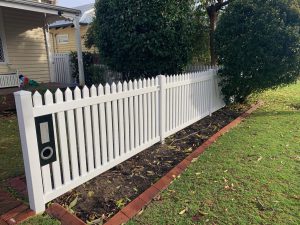
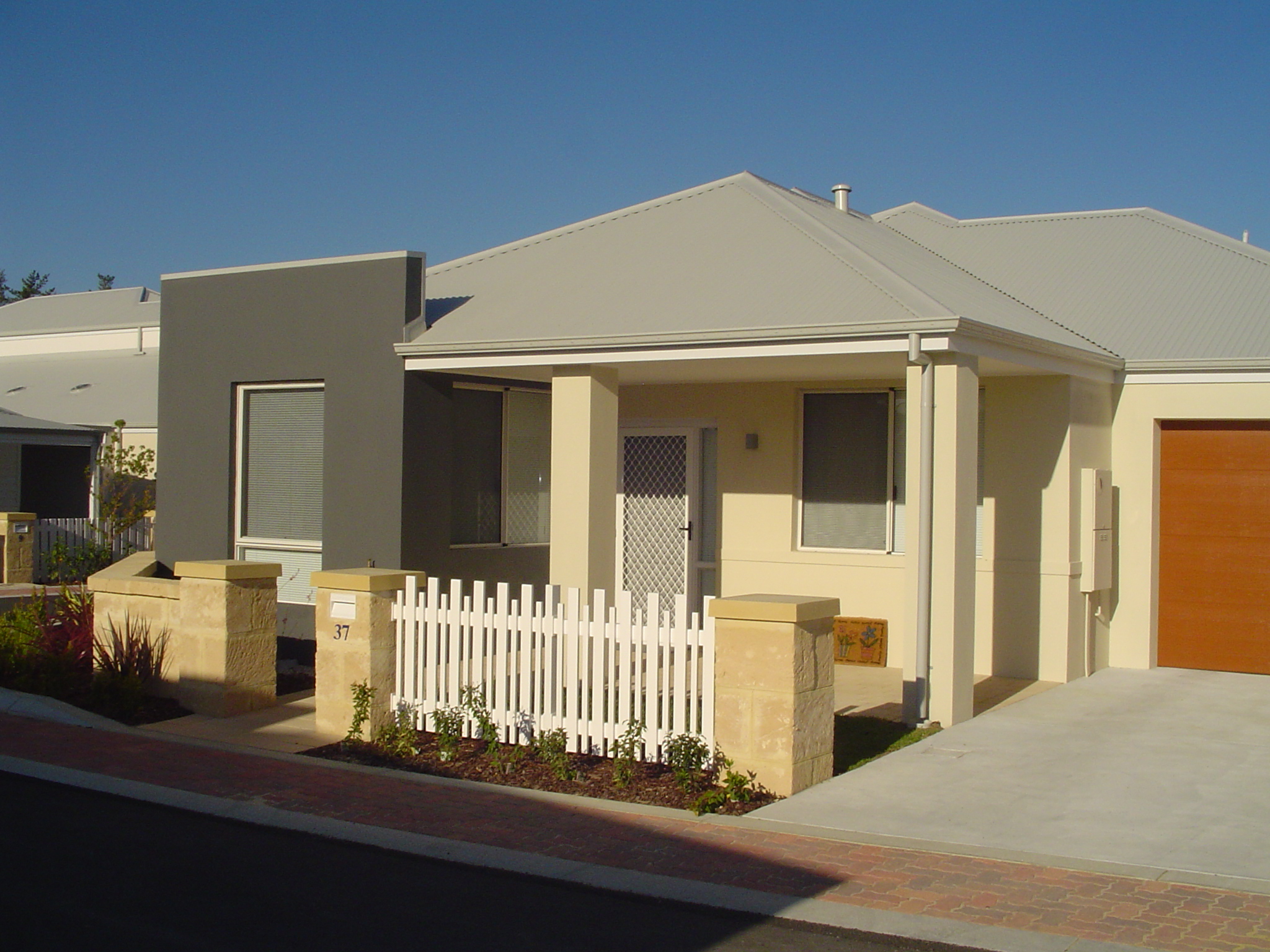
Our modern picket fence styles are a popular choice for coastal suburban properties. Salt-resistant coastal fencing with PVC holds its appearance without peeling, rusting, or rotting - a genuine long-term advantage in exposed coastal positions.
PVC Heat Resistance Through Design
PVC accommodates thermal expansion through deliberate design. Post and rail systems use routed channels that allow rails to expand and contract freely without binding. Privacy panel systems incorporate expansion gaps between panels that allow each panel to move independently. This accommodation prevents panel buckling and stress concentration across WA's wide temperature range.
Impact modifiers in the material maintain flexibility across temperature extremes. At low temperatures, virgin PVC absorbs impact without cracking. At high temperatures, it maintains structural integrity. WA's temperature range falls well within the performance envelope of properly formulated PVC fencing.
UV Stabilisation in PVC Formulations
UV resistant PVC fencing is our standard formulation - all panels include UV stabilisers as an integral part of the material. Titanium dioxide absorbs UV radiation and converts it to heat rather than allowing it to break polymer chains. This protection remains constant throughout the material depth.
Testing confirms that PVC fencing UV exposure resistance remains consistent across decades, with colour change staying within minimal limits under sustained Australian UV conditions. As the outermost surface weathers over years, material underneath maintains full UV protection.
As Probuild PVC Fencing, we are the only PVC fencing manufacturer in WA. Our UV formulation is developed for Australian conditions - not adapted from products designed for milder climates.
Hardware and Fastener Selection for Coastal Durability
The corrosion resistance of PVC material means little if the hardware fails. We specify corrosion-resistant stainless steel fasteners throughout our fencing systems. Stainless steel resists salt spray corrosion indefinitely, ensuring hardware performance matches the PVC material's longevity.
Gate hinge and latch hardware is selected for both corrosion resistance and mechanical durability. Salt-resistant coastal fencing requires hardware that can match the PVC material's durability in the most exposed positions.
Our pool area fencing benefits directly from this approach. Pool surrounds receive intense UV exposure year-round, and the full system - panels, posts, hardware, and gates - is specified for long-term coastal performance.
Coastal Installation Performance
Salt-resistant coastal fencing is one of the primary reasons Perth and regional WA property owners choose PVC. Coastal installations maintain their appearance without rust remediation, protective coating application, or structural repair.
The non-porous PVC surface prevents salt accumulation and moisture absorption. There is no corrosion pathway, no surface degradation mechanism, and no structural weakening from long-term coastal exposure. An occasional rinse with fresh water removes surface deposits and restores appearance.
PVC fencing UV exposure resistance and salt air resistance work together in coastal positions. A material that handles both stressors simultaneously - without maintenance - is exactly what Perth coastal properties require.
Our livestock boundary fencing is equally suited to coastal rural properties. Horse and livestock fencing near the coast benefits from the same salt-resistant properties as residential fencing, with zero ongoing maintenance.
Comparison with Alternative Materials
Timber fencing fails in Perth conditions despite regular maintenance. In coastal positions, rot progresses faster because of salt moisture absorption. Treatment and repainting requirements accumulate throughout the fence's life. Eventually, replacement becomes more economical than continued upkeep.
Colorbond steel fencing performs better than timber but still faces challenges in Perth. Powder coatings fail where imperfections exist, initiating sub-surface rust. Fastener corrosion requires periodic attention. In coastal positions, these challenges are more acute.
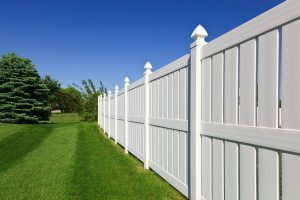
PVC fencing handles Perth's heat, salt air, and PVC fencing UV exposure without degradation. This comprehensive environmental resistance is why PVC fencing is the logical choice for Perth properties.
Maintenance in Perth's Harsh Conditions
Zero maintenance defines the PVC advantage in Perth's climate. No painting required despite intense UV exposure. No treating or staining needed. No rust remediation despite salt air. No structural repair from thermal cycling stress.
Property owners can rinse fencing occasionally with fresh water - genuinely optional for appearance maintenance only. Our custom fence orders carry the same zero-maintenance advantage as our standard range. Custom heights and configurations don't change the maintenance-free nature of the material.
Pool Fencing Safety in Perth Heat
PVC pool fencing provides safety advantages beyond compliance. Metal pool fencing in Perth's summer heat can reach surface temperatures that create burn hazards for children playing barefoot near water. PVC maintains safe surface temperatures even under direct summer sun.
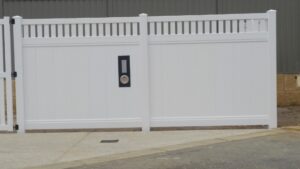
Timber pool fencing develops splinters as it weathers - a hazard in bare-foot pool environments. PVC never develops splinters, sharp edges, or rust. These properties make our electric sliding gates and pool fencing panels the safest material choice for Perth families.
Working with a Perth Fencing Professional
PVC fencing's material advantages are maximised through correct installation. Post embedment, expansion accommodation, and gate hardware alignment all affect long-term performance.
Our local fence experts are trained to our installation specifications across Perth metro and regional WA. A certified installation ensures your fence is set up to perform across decades of Perth's extreme conditions and protects your 30-year limited warranty coverage.
Visit our Perth fence gallery to see completed installations across WA - from coastal suburban homes to rural properties in exposed inland locations.
Conclusion
Perth's climate is demanding. Heat, salt air, and UV radiation create conditions that degrade conventional fencing within years and require ongoing maintenance expenditure. PVC fencing UV exposure performance, combined with salt-resistant coastal fencing properties and heat accommodation through deliberate design, addresses every environmental stressor Perth throws at outdoor structures.
We manufacture everything at our Malaga factory specifically for Australian conditions. Zero maintenance requirements and a 30-year limited warranty make PVC fencing the logical long-term choice. Get Coastal Fencing Advice or call (08) 6276 8172 to discuss your Perth property's specific requirements.