Choosing fencing for a family home involves more than appearance and durability. Materials installed around children's play areas, pool surrounds, and garden boundaries should meet genuine safety standards. Lead-free PVC standards in modern fencing manufacture protect families from health risks that older fencing products could present. Understanding what these standards mean helps Perth families choose fencing with complete confidence.
The History of Lead in PVC Products
Lead-based compounds were once standard as thermal stabilisers in PVC manufacturing. These compounds prevented polymer degradation during extrusion processing. At the time, lead's industrial use was widespread, and its effects in consumer products weren't fully appreciated.
As toxicology research revealed lead's neurotoxic impacts - particularly on developing children - regulatory attention intensified. Regulatory agencies began restricting lead in consumer products, and PVC manufacturers responded by developing lead-free alternatives.
The transition to lead-free PVC standards is now standard practice for responsible manufacturers. Current manufacturing of non-toxic fencing materials represents the outcome of decades of chemical engineering improvement. Modern lead-free formulations meet or exceed the performance of legacy compounds.
How Lead Enters PVC Products
Lead stabilisers functioned during PVC thermal processing. When raw PVC resin reaches extrusion temperatures, the polymer degrades without thermal stabilisation. Lead compounds prevented this degradation during manufacturing.
The health concern with legacy lead formulations comes from leaching potential. Under certain conditions - particularly acidic environments or extended soil contact - lead ions could potentially migrate into surrounding soil or water. While direct skin contact with solid fencing presents minimal absorption risk, environmental persistence and potential soil contamination are legitimate concerns for properties with young children.
Non-toxic fencing materials eliminate any leaching risk throughout the product's service life. This is why lead-free PVC standards matter beyond just the product itself - they protect the environment around the fence, not only the people near it.
Health Risks and Why Lead-Free Matters
Lead neurotoxicity is the primary health concern. Research consistently shows that lead exposure impairs cognitive development in young children, particularly during early brain development. Even low-level exposure can contribute to learning difficulties and behavioural changes.
Lead accumulates in the body over time. Young children are particularly vulnerable through hand-to-mouth behaviour - environmental lead in soil can be ingested accidentally. This is a meaningful risk when fencing contacts ground-level soil in areas where young children play.
Non-toxic fencing materials built to lead-free PVC standards eliminate this risk pathway entirely. Choosing fencing manufactured to these standards is a straightforward protective measure for Perth families with young children.
Modern Lead-Free Stabiliser Technology
Modern calcium-zinc stabiliser chemistry replaces lead compounds through a different thermal protection mechanism. These stabilisers bind to degradation intermediates during processing, preventing thermal decomposition without introducing lead into the material.
This transition is not a performance compromise. Modern lead-free formulations achieve equivalent or superior results compared to legacy lead systems. Current lead-free PVC standards reflect a genuine improvement in both safety and performance over older manufacturing approaches.
Our Hampton privacy range and all products we manufacture use lead-free stabiliser formulations. The material supports both the safety expectations of Perth families and the long-term performance expectations behind our 30-year limited warranty.
Our Lead-Free Manufacturing Commitment
We manufacture all products using lead-free stabiliser systems. Every production batch at our Malaga factory maintains documentation confirming lead-free material composition. Raw material verification before production confirms that incoming resin meets our lead-free formulation requirements.
This commitment to lead-free PVC standards reflects the values behind our manufacturing approach. Families installing fencing around children's play areas and pool surrounds deserve confidence that the material poses no lead risk.
As Probuild PVC Fencing, we are the only PVC fencing manufacturer in WA. We have complete visibility and control over our material composition - something importers and resellers cannot provide to the same degree.
Non-Toxic Fencing for Pool Areas
Pool fencing presents a specific safety context where non-toxic fencing materials matter particularly. Pool users, especially children, are in close and frequent contact with pool surrounds. Any leaching from pool fencing materials would create a direct ingestion risk through incidental water contact.
Lead-free PVC fencing eliminates this concern. Non-toxic fencing materials combined with our UV-stabilised formulation make PVC the safest choice for pool surrounds - safe to touch, safe near pool water, and free of splinters or burn hazards.
Our pool safety systems comply with AS 1926.1 and AS 1926.2 whilst meeting the material safety expectations Perth families bring to poolside applications.
Children and Pet Safety Around the Fence
The greater concern with lead in fencing is environmental contamination - soil contact and potential leaching over the product's service life. Young children in contact with soil near non-toxic fencing materials face no lead accumulation risk through hand-to-mouth transfer.
Pets that chew or interact with fencing present a similar consideration. Our non-toxic fencing materials mean dog and cat contact creates no ingestion risk.
Our safe horse fencing extends this safety to livestock properties. Horses and cattle that chew on rails encounter only inert, lead-free PVC. The material is also free of splinters and sharp edges, creating no physical injury risk for animals in regular contact with the fence.
Comparative Safety with Alternative Materials
Timber fencing safety is complicated by preservative treatments. Older treatments contained arsenic compounds, a known carcinogen. Modern copper-based preservatives are generally safer but still introduce chemicals into soil over time. Families questioning timber safety have a legitimate basis for concern.
Metal fencing safety depends on coating and paint formulations. Older painted metal fencing may contain lead paint - a hazard where children contact deteriorating surfaces. Modern powder coatings are generally safer but still introduce coating-specific chemicals to the surrounding environment.
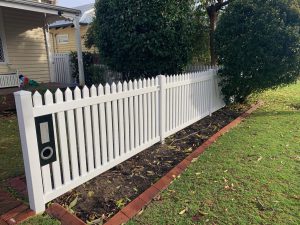
Our picket fence systems and all PVC products offer a simplified safety profile compared to timber or metal. No arsenic, no lead paint, no coating chemicals leaching into soil. Lead-free PVC standards applied to virgin vinyl produce genuinely non-toxic fencing materials with no chemical contamination risk throughout their service life.
Regulatory Framework for Safe Fencing
Australian Consumer Law requires products to meet safety standards and not contain hazardous substances above regulated limits. Manufacturers must ensure their products are safe for the intended use environment.
Lead-free PVC standards align with these regulatory requirements and in many cases exceed minimum compliance. We manufacture to quality standards that address not just regulatory minimums but the genuine safety expectations Perth families bring to every product decision.
For material information confirming our lead-free formulation commitment, our safety information guides provide product documentation for customers who want to verify our manufacturing standards.
Custom Fencing to the Same Safe Standards
Every custom-manufactured product we produce meets the same lead-free PVC standards as our standard range. Custom heights, configurations, and specialty applications all use the same lead-free virgin vinyl formulation.
Our tailored fence solutions give Perth families the ability to specify exact heights and configurations without any compromise on material safety. The manufacturing capability at our Malaga factory ensures lead-free PVC standards apply consistently regardless of product complexity or order size.
Gate Safety for Family Homes
Pool safety gates and residential entry gates receive frequent direct handling. Lead-free PVC standards for gate frames and appropriate hardware selection ensures gate components meet the same safety profile as fencing panels.
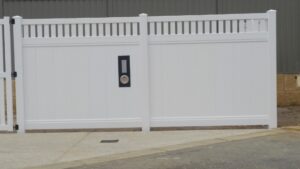
Our pool safety gates include self-closing and self-latching mechanisms for AS 1926.1 compliance, combined with non-toxic PVC frames. Children interacting with pool gates daily encounter material that is inert, splinter-free, and manufactured to the same lead-free PVC standards as the rest of the fence.
Working with Certified Professionals
Proper installation ensures fencing performs to its design intent - for both safety and structural integrity. Our Perth fence professionals are trained in our installation specifications and understand the requirements that affect long-term performance.
Certified installation also ensures pool fencing meets AS compliance requirements - a safety obligation for WA property owners with swimming pools.
Conclusion
Lead-free PVC standards in modern fencing manufacturing represent genuine protection for Perth families. Legacy lead stabilisers created risks that modern formulations have eliminated entirely. We manufacture all products using lead-free stabiliser systems, producing non-toxic fencing materials that create no lead contamination risk throughout their 30-year service life and beyond.
Perth families choosing our fencing benefit from documented lead-free commitment and material safety that extends from children's play areas to pool surrounds to livestock properties. Get Lead-Free Fencing Advice or call (08) 6276 8172 to discuss material safety and product options for your property.