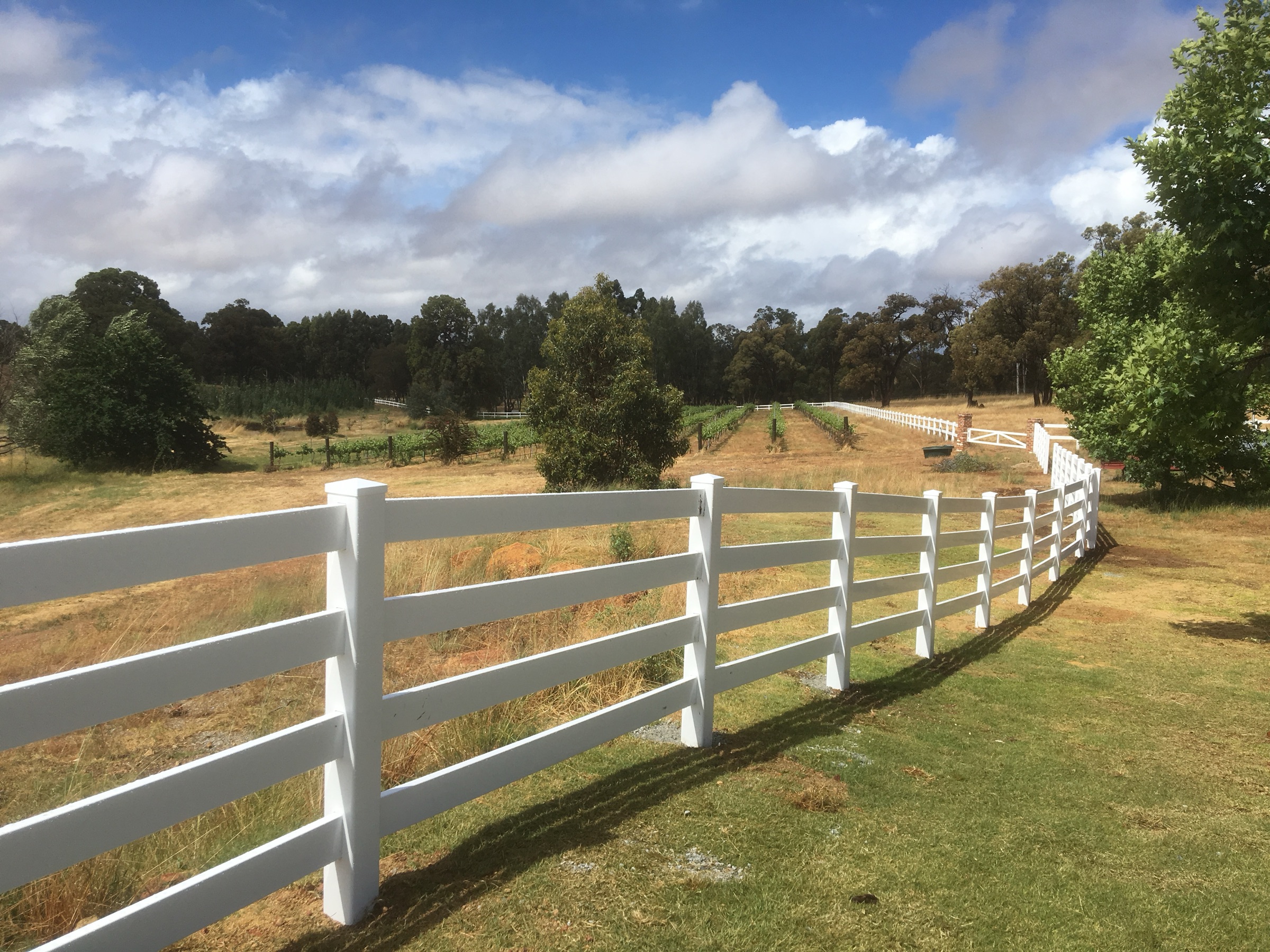
Horse paddock fencing design requires careful attention to specifications that directly impact animal safety and containment reliability. This horse paddock fencing design guide examines three critical parameters - height, spacing, and flexibility - that determine whether equestrian fencing meets modern safety standards or creates unnecessary risks.
We provide design consultation services throughout Perth and regional Western Australia, ensuring horse paddock installations meet proper rail spacing standards whilst accommodating the specific requirements of individual properties. Our manufacturing capabilities allow custom configurations addressing unique site challenges without compromising safety performance.
Understanding Horse Paddock Safety Fundamentals
Proper fence design prevents injuries whilst maintaining reliable containment. Every measurement specification serves a safety purpose, from preventing leg entrapment to ensuring horses cannot reach over or under fence lines. Property owners who understand these horse paddock fencing design principles make informed decisions supporting both animal welfare and long-term property functionality.
Industry standards emerge from decades of documented injuries and resulting research into causation factors. Professional equestrian organisations provide recommendations based on this collective experience, establishing baseline specifications appropriate for different facility types and horse populations.
Proper rail spacing standards prevent the majority of serious fence-related injuries. Foals and young horses prove particularly vulnerable to entrapment incidents when spacing allows partial penetration but prevents withdrawal. Similarly, inadequate height compromises containment, whilst excessive bottom rail clearance creates rolling hazards requiring careful consideration during design.
Fence Height Requirements for Horse Safety
Minimum Height by Horse Type
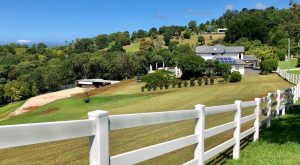
Post and rail fencing height varies according to the horses being contained. General equestrian guidance suggests standard riding horses typically require 1.4 metres or greater from ground to top rail, providing adequate containment whilst preventing horses from easily reaching over fence lines.
Ponies and miniature horses accept lower specifications, with less height generally sufficient for reliable containment. These smaller equines lack the height and reach requiring taller barriers, allowing property owners to reduce material costs in dedicated pony paddocks without compromising safety.
Stallions and particularly athletic horses generally require increased height specifications. Professional breeders typically install taller fencing for stallion containment, recognising these powerful animals' ability to challenge fence lines aggressively.
Height Considerations for Mixed Groups
Properties housing varied horse populations should match specifications to the most demanding occupant. Installing fencing appropriate for the largest, most athletic animals ensures adequate containment across the entire population.
Alternative strategies include dedicated paddock areas with specifications matched to occupant requirements. This targeted approach optimises cost efficiency whilst maintaining safety throughout facilities. Our rural fence designs accommodate the full range of equestrian height requirements through custom manufacturing capability.
Our residential fence styles are available in custom heights for domestic and entry areas on mixed-use properties, using the same UV-stabilised virgin vinyl as our post and rail systems.
Rail Spacing Standards and Entrapment Prevention
Standard Spacing Configurations
The proper rail spacing standards most widely used in equestrian applications specify approximately 300-350mm between rails for adult horses. This measurement prevents leg insertion whilst maintaining structural efficiency through appropriate rail quantity.
Foal-safe specifications require tighter spacing preventing young horses from inserting legs or heads between rails. Many breeding facilities install four-rail configurations with approximately 200-250mm spacing in mare and foal paddocks, accepting increased material costs to eliminate entrapment risks during the vulnerable first months.
Rail count affects both safety and cost. Two-rail designs prove adequate for mature horses in low-risk environments but lack the visual fill preventing horses from perceiving fence lines as passable space. Three-rail configurations represent the widely used standard balancing safety, visibility, and economic efficiency, whilst four-rail systems suit high-value stock and active locations.
Bottom Rail Clearance Requirements
Ground-level clearance of the bottom rail requires careful specification. Equestrian guidance generally recommends clearance high enough that horses cannot easily catch legs when rolling near fence lines, yet low enough to discourage attempts to slide underneath barriers. A clearance of approximately 250-300mm is widely applied in practice.
Excessive bottom rail height creates hazards. Horses rolling near fence lines may inadvertently insert legs beneath rails during the rolling motion. Young horses exploring boundaries may attempt to crawl beneath rails positioned too high above ground level.
Terrain considerations influence bottom rail positioning. Undulating paddocks may require averaged clearance accounting for high and low points along fence lines, whilst properties with significant slope may benefit from stepped configurations maintaining consistent clearance throughout.
Flexibility and Impact Absorption
Material Flexibility Characteristics
PVC fencing is significantly more flexible than wooden rail systems, fundamentally altering impact dynamics when horses contact fence lines. This enhanced flexibility allows materials to absorb force and return to original positions, preventing both fence damage and animal injury during typical paddock activities.
Proper rail spacing standards work synergistically with material flexibility, creating systems that accommodate normal horse behaviour without compromising containment. Rails absorb impact from leaning, rubbing, or accidental collision without permanent deformation, maintaining specified spacing throughout decades of use.
Wooden fencing lacks comparable flexibility characteristics. Rails remain rigid until failure occurs, typically through cracking or complete breakage. This failure mode creates sharp edges and irregular surfaces capable of causing serious injuries.
As Probuild PVC Fencing, we are the only PVC fencing manufacturer in WA. Our horse paddock fencing design consultation takes into account horse types, terrain, and intended use to determine the optimal configuration for each property.
Our custom paddock solutions allow non-standard heights, rail spacing adjustments, and configuration variations for properties with specific safety requirements or unusual site conditions.
Testing Standards and Performance
Virgin vinyl PVC maintains consistent properties throughout temperature ranges common to Western Australian conditions, delivering reliable performance from summer heat to winter cold without brittleness or excessive softening affecting structural integrity.
Our horse paddock fencing design specifications reflect tested performance characteristics. Installations throughout WA demonstrate material behaviour under actual use conditions, providing validation in real-world environments beyond laboratory results.
Visibility and Visual Boundary Establishment
Horses rely heavily on visual cues for spatial awareness and boundary recognition. Fencing colour significantly impacts whether horses perceive and respect fence lines or inadvertently contact barriers during normal paddock movement.
White and almond PVC options provide superior visibility compared to darker wooden alternatives that may blend with shadows, vegetation, or soil backgrounds. This enhanced visibility reduces accidental fence contact, lowering injury risks whilst potentially extending material lifespan through reduced impact frequency.
Proper rail spacing standards contribute to visibility beyond simple colour considerations. Multiple rails create visual fill preventing horses from perceiving fence lines as passable space, discouraging attempts to push through or jump barriers. This psychological containment component works alongside physical barriers to maintain reliable paddock security.
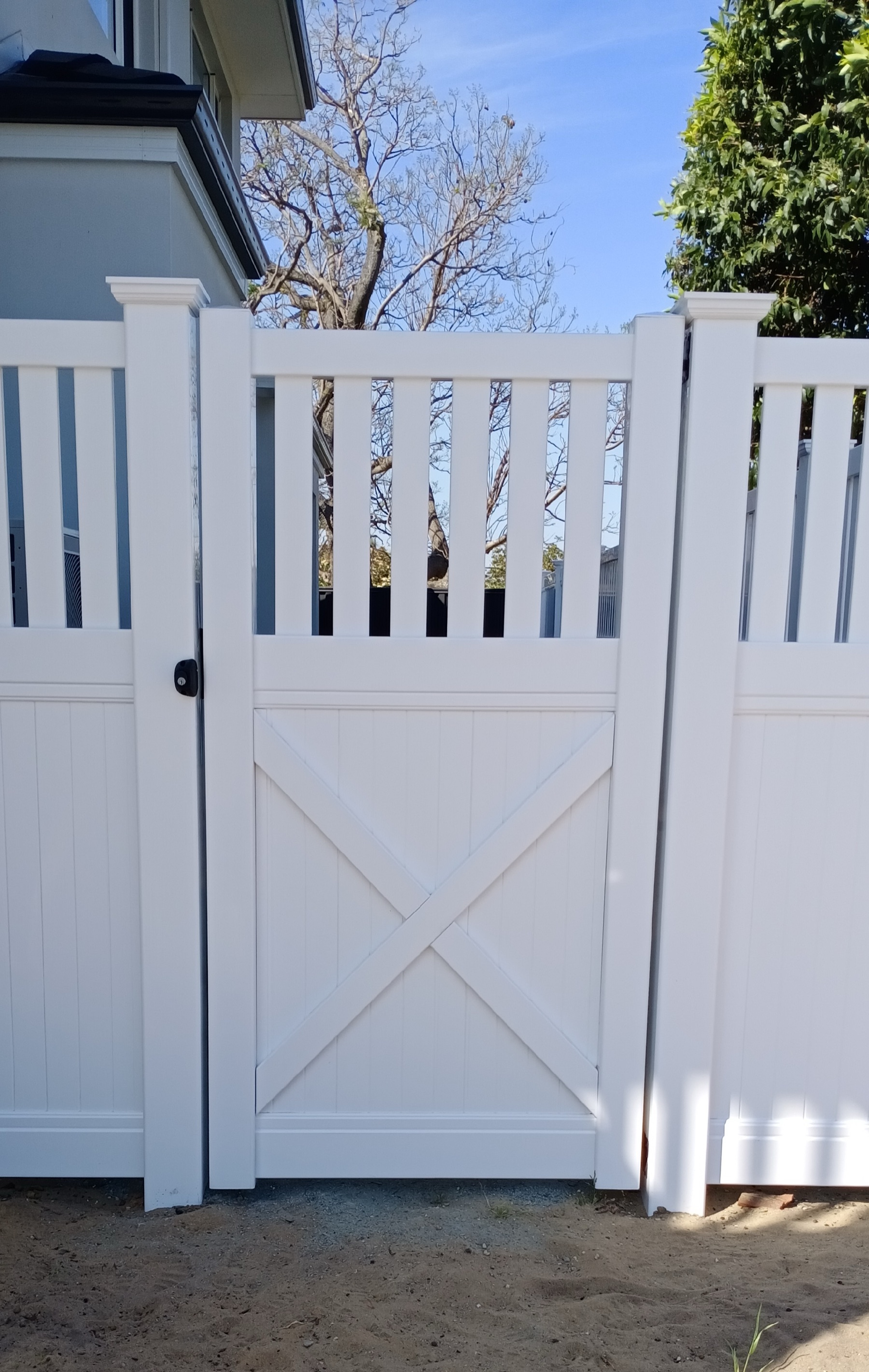
Our horse property gates maintain visual consistency with fence panels, with self-closing and self-latching options appropriate for safe horse management throughout the property.
Properties with pools benefit from our compliant pool enclosures, manufactured to AS 1926 compliance requirements using the same virgin vinyl standards as our equestrian range.
Design Customisation for Western Australian Properties
Site assessment identifies specific challenges affecting horse paddock fencing design implementation. Terrain variations, existing structures, water features, and access requirements all influence optimal fence positioning and configuration. Professional consultation ensures designs accommodate these factors whilst maintaining proper rail spacing standards throughout.
Our Perth equestrian installers conduct site evaluations, develop design recommendations, and provide customised quotations addressing property-specific requirements. This approach prevents common design errors that compromise safety or create unexpected costs during installation.
For detailed specifications on rail configurations, height options, and design considerations, our paddock design guides provide reference material supporting the planning process before consultation begins.
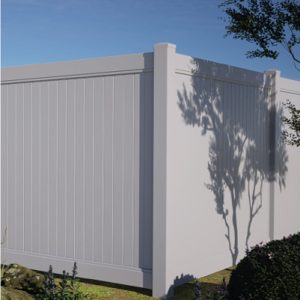
Our paddock screening panels provide visual separation between paddocks or between facility areas, manufactured from the same virgin vinyl as our post and rail systems and covered by the same 30-year limited warranty.
Conclusion
Horse paddock fencing design decisions directly determine animal safety outcomes across decades of property use. Proper rail spacing standards, appropriate height specifications, and material flexibility combine to create fencing systems that contain horses reliably whilst preventing the injuries traditional materials cause.
We manufacture PVC post and rail systems in WA for WA conditions, with custom heights and spacing configurations available to match the specific requirements of any horse property. Plan Your Paddock Fencing or call (08) 6276 8172 to arrange a site assessment and receive detailed design recommendations for your property.